Rainbow Mountain sits on land managed by local Andean communities, and the entrance fees visitors pay go toward the people who live there, not a distant government agency. Understanding who owns this land, what tourism has changed, and how to visit respectfully matters as much as the hike itself. For the full picture of the day, see our complete Rainbow Mountain guide.
Vinicunca before the tourism boom
For generations, this was simply high pastureland used by local herding families, its striking mineral colours largely unknown beyond the immediate area. It sits in the shadow of the wider Ausangate massif, a mountain deeply significant in Andean tradition — see the Ausangate massif behind Vinicunca for more on that connection. Rainbow Mountain’s rise to global fame is recent, and the transformation from a quiet pastoral landscape to one of Peru’s most visited natural attractions happened faster than almost anywhere else in the country.
Who owns the land and who collects the fees
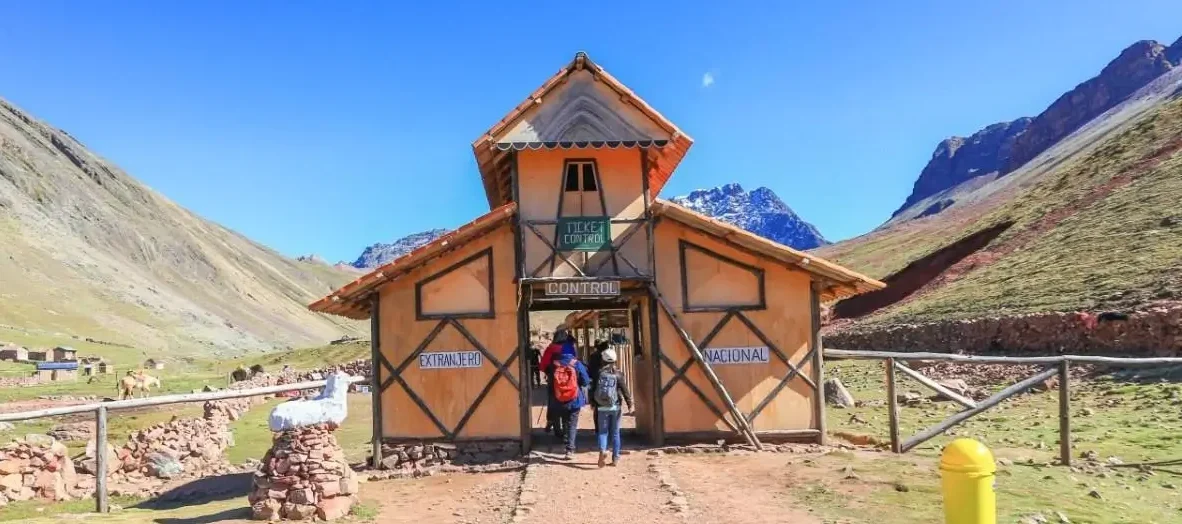
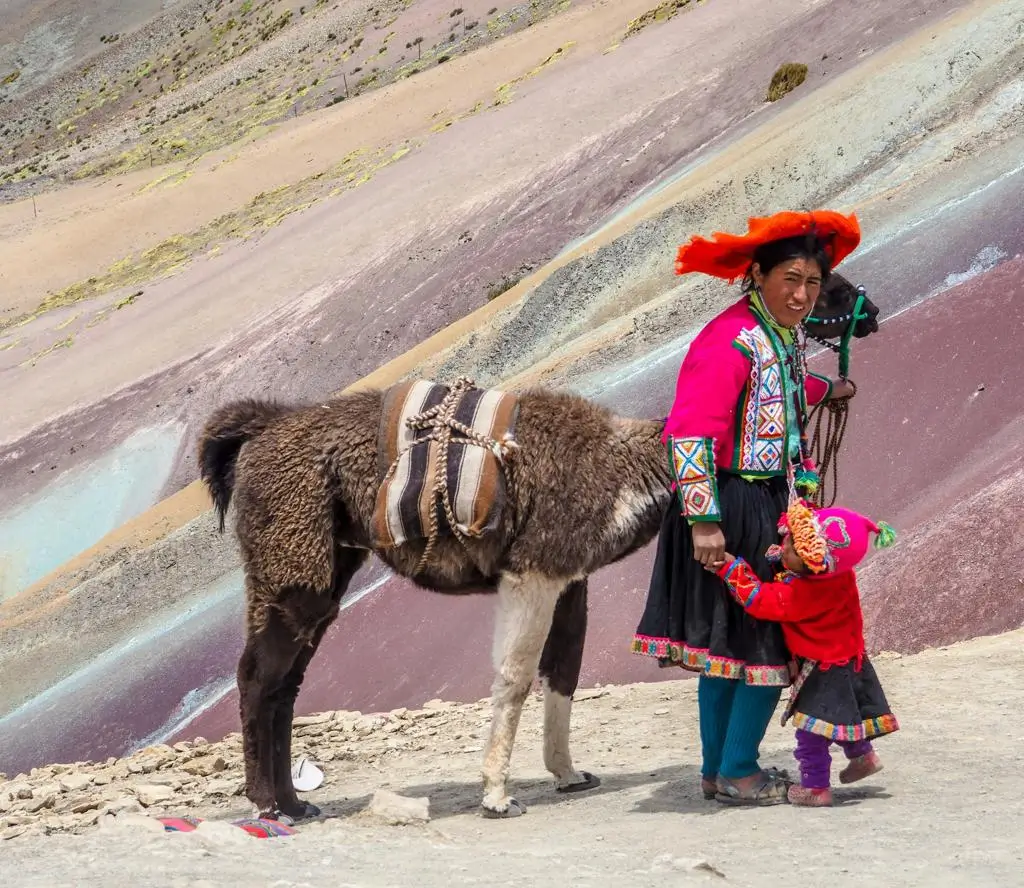
The land Vinicunca sits on belongs to local Andean communities, not the national park system that manages sites like Machu Picchu. Entrance fees are collected locally, at the community-run entrance point along the route — see Rainbow Mountain entrance fees and community tolls for the practical details of what to expect there. This local ownership is part of what makes Vinicunca different from many of Peru’s other major attractions.
What the money funds locally
Entrance fees paid at Vinicunca support the community that manages and maintains the land tourism now depends on. The specifics of exactly how funds are allocated vary and are best confirmed locally rather than assumed, but the basic principle holds: this is community-controlled land, and the fees paying for your visit stay within that structure rather than disappearing into a national fund. If you want to see more of how tourism revenue connects to community projects in the region, our social projects page covers some of that work.
Overtourism: the visible cost on the trail
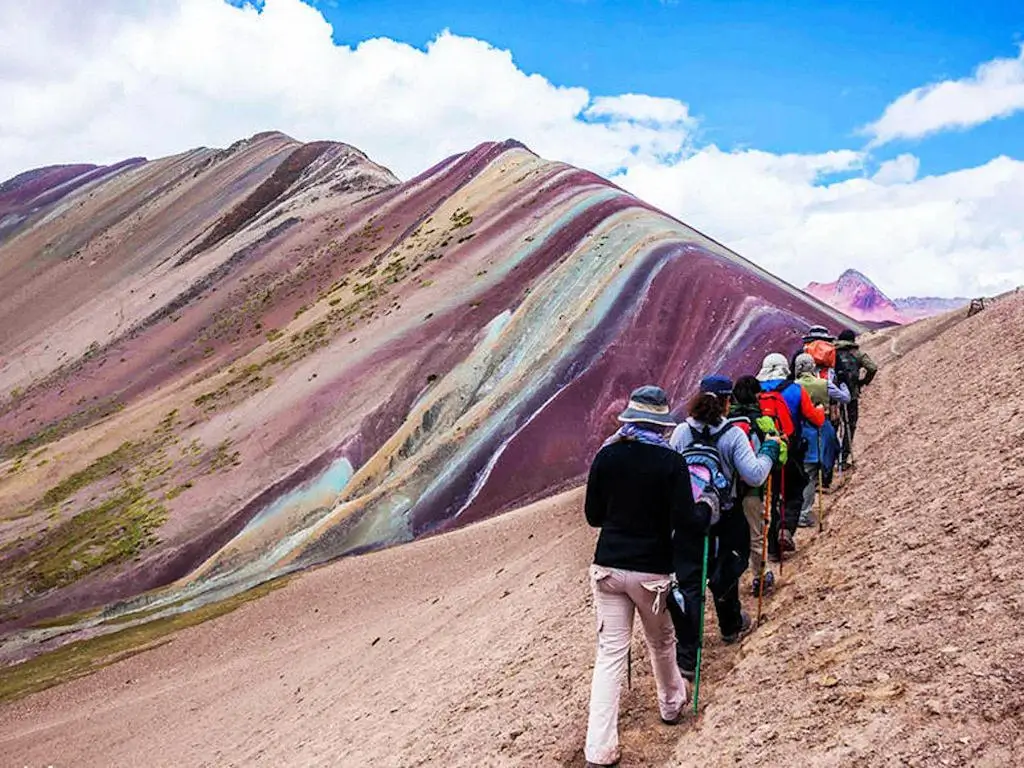
Vinicunca’s rapid rise in popularity has brought real strain: a narrow trail carrying far more foot and horse traffic than it was ever built for, erosion visible in places, and a landscape that can feel crowded during peak hours in the dry season. This is the flip side of the mountain’s fame — a place that was quiet a decade ago now sees a steady stream of visitors daily, and the trail shows it.
| Factor | What’s changed |
|---|---|
| Land use | Pastureland → major tourist attraction |
| Trail condition | Increased erosion from heavy foot and horse traffic |
| Visitor volume | Highest during dry season peak months |
| Fee structure | Community-managed, collected at the entrance point |
Horses and animal welfare
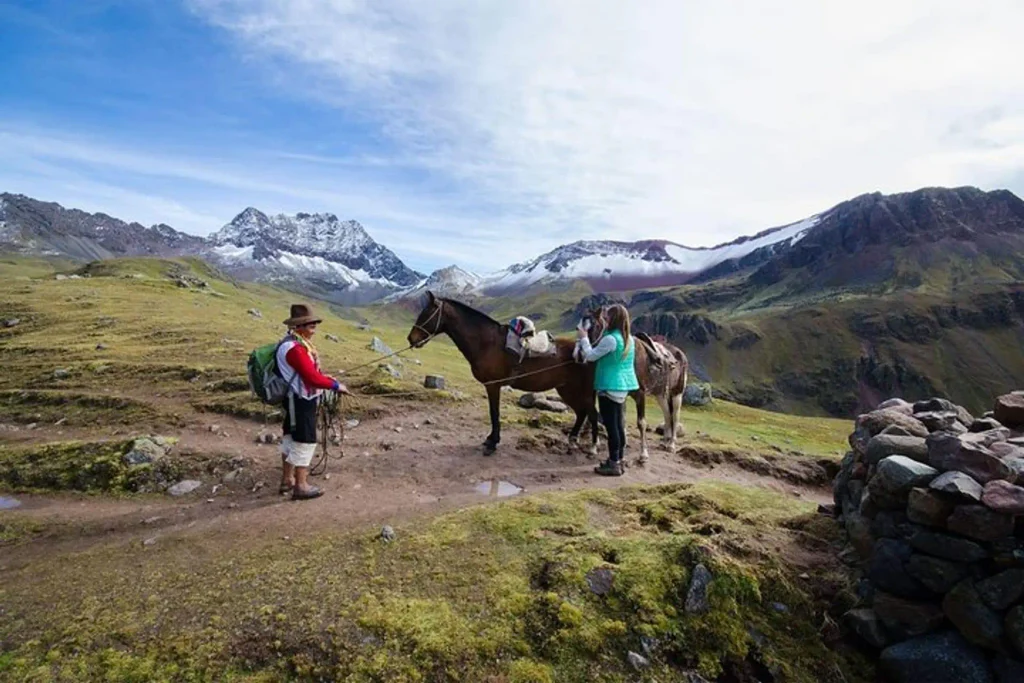
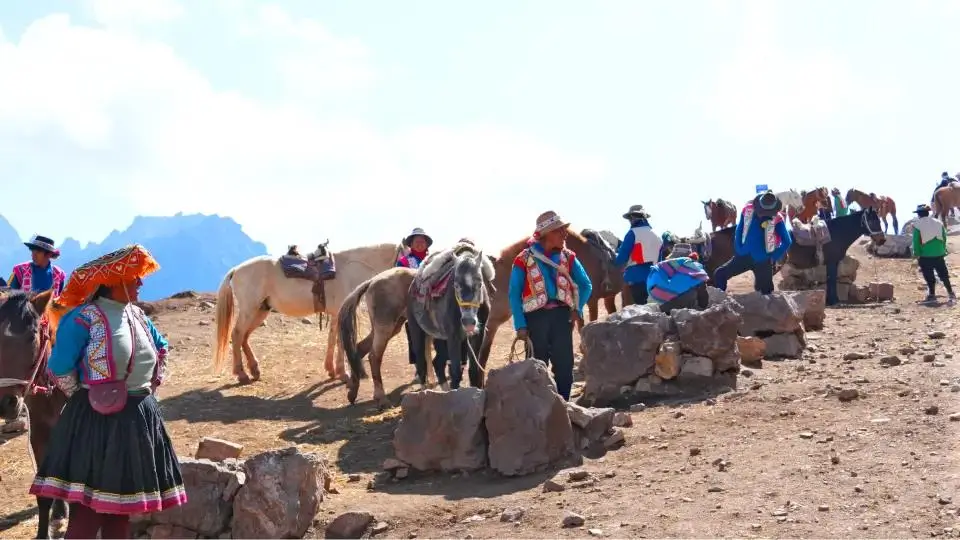
Horses are commonly used on the route, both by choice and as a practical option for travellers who need help getting up or down. It’s worth being a thoughtful visitor around this: paying attention to how animals on the trail are being treated, and choosing not to overload or mistreat a horse if you do use one yourself. See Rainbow Mountain by horse for more on how the horse option works in practice.
How to be a better visitor here
Sticking to the marked trail rather than cutting across fragile ground helps limit further erosion. Carrying out anything you bring in, being respectful toward the local families who work the entrance points and horse stations, and treating the mountain as someone’s home rather than a backdrop all go a long way. This is also a place woven into Andean spiritual tradition — a little context on that helps frame the visit differently; see Andean cosmovision explained for more.
What we do differently
As a Cusco-based operator running our own tours rather than reselling through third parties, we’re directly accountable for how our groups behave on routes like this — respecting the community’s management of the land, paying the fees that go toward its upkeep, and treating the mountain and the people who live there with the consideration they’re due. It’s a straightforward standard, but one worth being explicit about given how quickly this place has been transformed by tourism.
Once you understand the community context, our 1-day Rainbow Mountain tour is how most of our travellers experience it responsibly. If you’re building a longer trip and want a deeper connection to Andean tradition alongside the hike, our 14-Day Peru Mystic Tour includes ceremonies and cultural experiences that go further into this context than a single day trip can.
FAQs
Who does the Rainbow Mountain entrance fee go to?
The fee is collected locally by the community that manages the land Vinicunca sits on, rather than a national park authority.
Is Rainbow Mountain suffering from overtourism?
Yes, visibly. The trail carries far more traffic than it was originally built for, and erosion is noticeable in places, particularly during the busiest dry-season months.
Should I ride a horse on the route?
It’s a personal choice. If you do, pay attention to how the animal is treated and avoid overloading it — animal welfare on the route varies and is worth being mindful of.
How can I visit Rainbow Mountain responsibly?
Stay on the marked trail, carry out what you bring in, pay the community entrance fee without trying to avoid it, and be respectful toward the local families working along the route.