
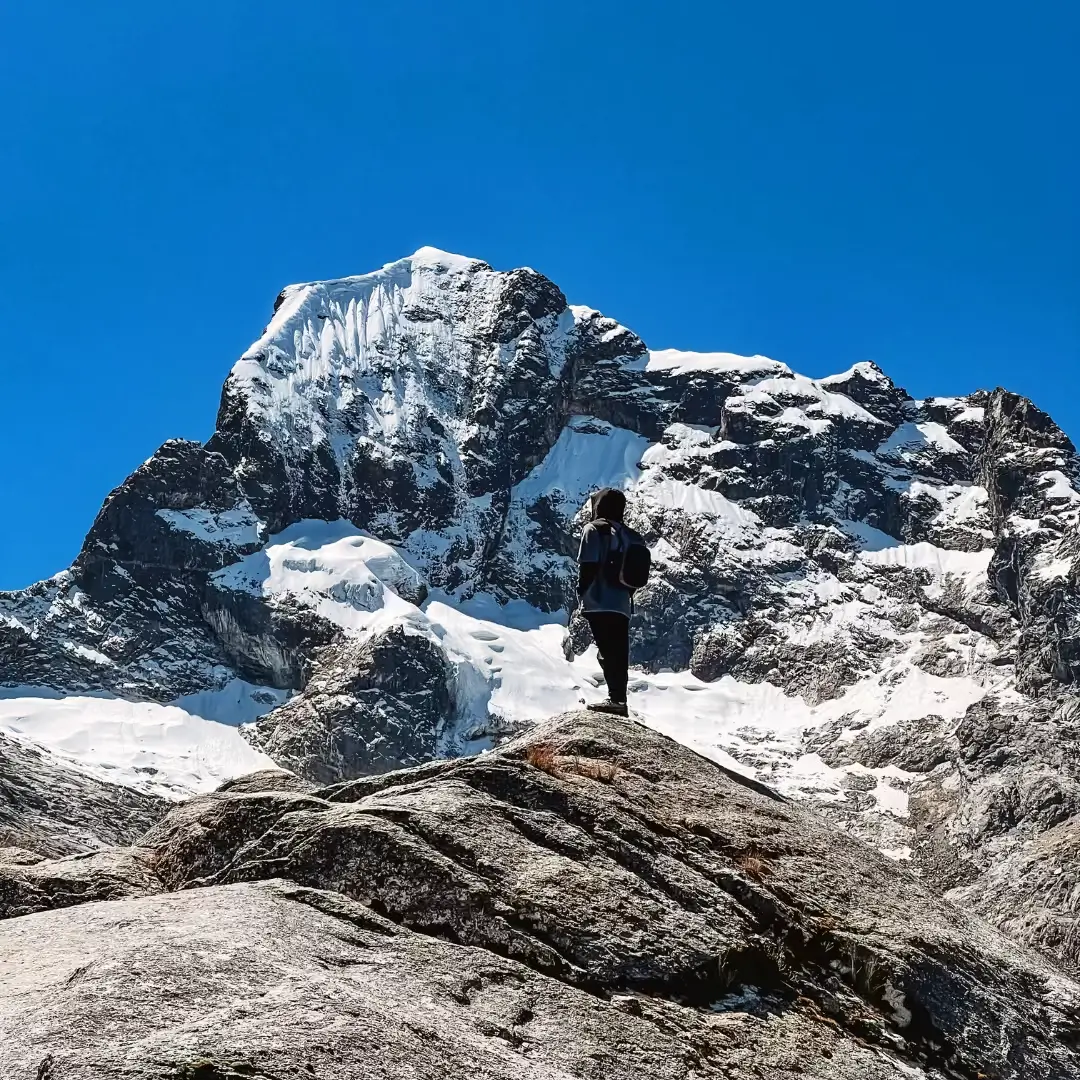
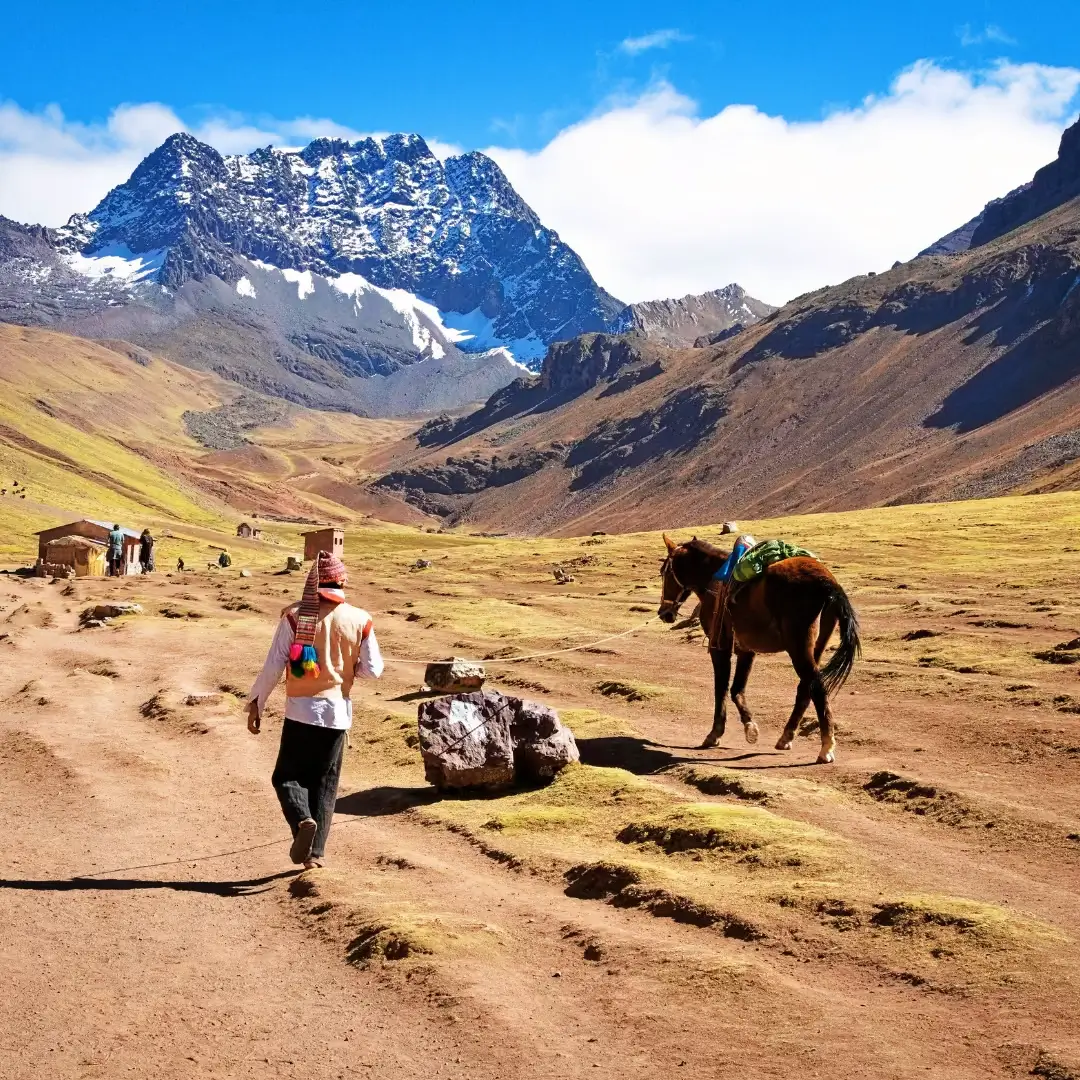
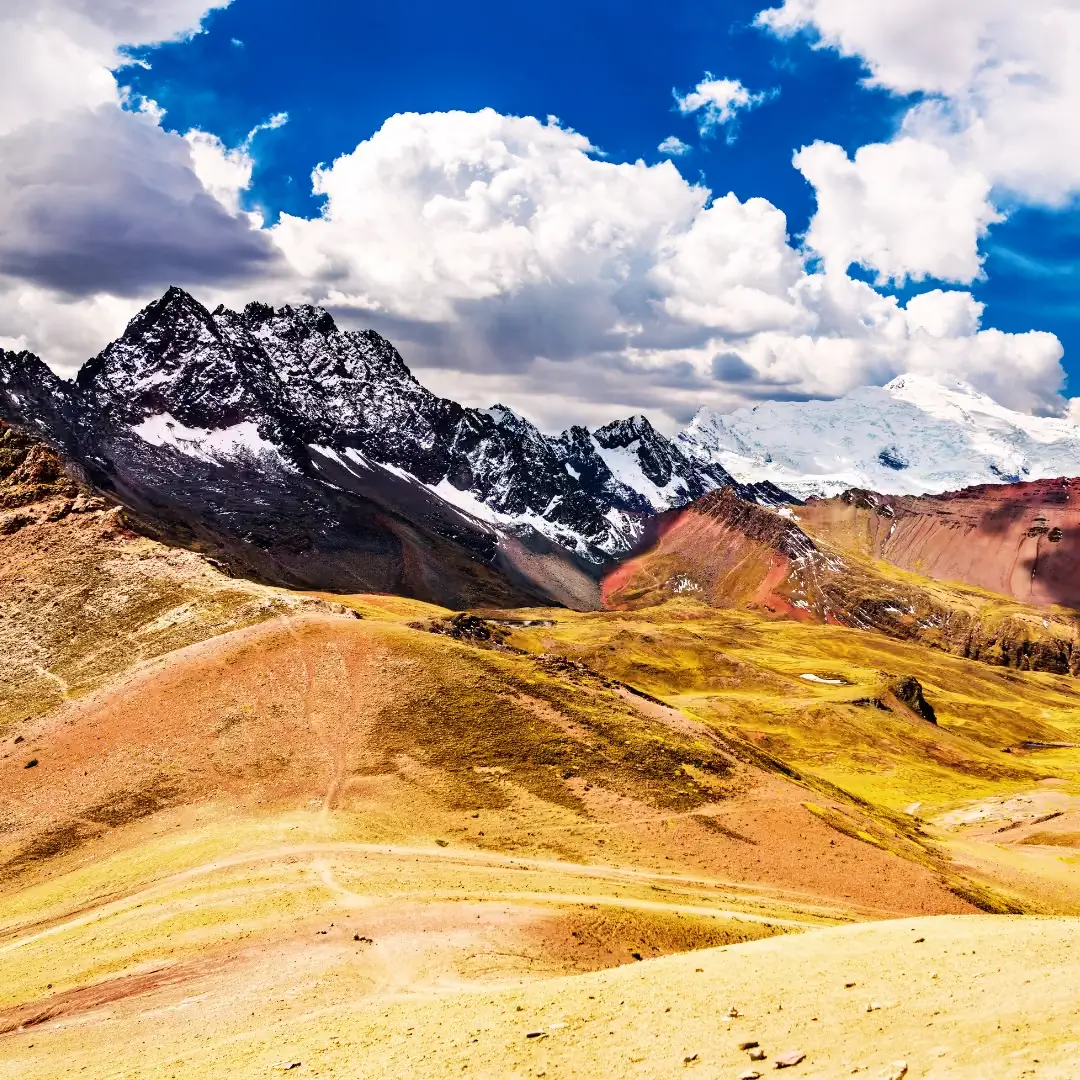
Journey through one of the Andes’ last true wildernesses on this 11-day expedition, guided by veteran mountain guide Alfredo Fisher through the remote Carabaya region and onward to the sacred peaks of Ausangate. Merging with the dramatic Cordillera Vilcanota, this route crosses golden pampas, turquoise glacial lakes, and windswept passes above 5,400 meters, all beneath towering 18,000-foot ice-capped summits rarely seen by outside travelers.
Longer and more immersive than the standard Carabaya route, this trek adds direct access to Ausangate’s ice fields, encounters with traditional Quechua herding communities, and a soothing finish at the Upis Hot Springs before returning to Cusco for a celebratory farewell dinner. Considered by veteran guides as one of the most complete high-altitude expeditions in Peru’s catalog, it’s built for trekkers seeking the ultimate test of endurance in genuinely untouched terrain.
Overview
Led by mountain guide Alfredo Fisher — who has explored the Carabaya region since the 1980s — this 11-day expedition goes further than the standard Carabaya circuit, extending the route all the way to the sacred Ausangate massif. It's positioned as the definitive, most complete version of the Carabaya experience, and travelers researching this trip typically want to understand exactly how it differs from shorter alternatives before committing.
Day-by-Day Expedition Summary
- Day 1: Cusco to Aymana Bosque de Piedra (Camp Altitude: 3,600m / 11,850ft) – Depart Cusco early, driving past mountain villages and archaeological sites to camp and explore the surreal rock forest of Aymana.
- Day 2: Aymana to Quellqaya (Camp Altitude: >4,200m / 13,760ft) – Trek west through expansive stone forests and high Andean plateaus to initiate acclimatization for the high-altitude days ahead.
- Day 3: Quellqaya to Abra Sayri (Camp Altitude: 4,700m / 15,420ft) – Climb over Sayri Pass (5,550m / 17,700ft) for panoramic views of glacial valleys before descending to camp near a local alpaca farm.
- Day 4: Abra Sayri to Wancani (Camp Altitude: 4,786m / 15,700ft) – Traverse grassy valleys and rolling hills with views of the vast Andean ice cap and grazing llama herds.
- Day 5: Wancani to Lake Ccasccara (Camp Altitude: 4,878m / 16,000ft) – Cross a 5,030m pass with 360-degree views of snow-capped peaks, descending to camp beside Lake Ccasccara, home to Andean flamingos and waterbirds.
- Day 6: Ccasccara to Murmurnani / Sibinacocha Lake (Camp Altitude: 4,786m / 15,700ft) – Cross Yayamari Pass (4,900m / 16,072ft) to reach the turquoise waters of Sibinacocha Lake and observe native bird species.
- Day 7: Murmurnani to Soraypampa Acero – Ascend the high Palomani Pass (5,400m / 17,716ft) for dramatic glacial vistas before descending into remote grazing lands.
- Day 8: Soraypampa Acero to Ausangate Cocha – Cross both Ccampa Pass and Acero Pass (both above 5,400m / 17,716ft), navigating rugged terrain past turquoise glacial lakes and vicuña herds.
- Day 9: Ausangate Cocha to Upis (Camp Altitude: 4,700m / 15,420ft) – Climb Arapa Pass (5,000m), descending past colorful lagoons and Lake Vinococha to camp beside Lake Pucacocha beneath Mount Ausangate.
- Day 10: Upis to Upis Bajo – Trek down the valley through alpaca pastures to the natural Upis Hot Springs for a relaxing soak and overnight camp under the stars.
- Day 11: Upis Bajo to Cusco – Final short hike to the pickup location near Pacchanta, followed by private transfer back to Cusco and a celebratory farewell dinner with a live folk dancing show.
Itinerary
Day 1: Cusco to Aymana Bosque de Piedra
We will leave Cuzco early in the morning at 6:00 a.m. and embark on our journey to Aymana Bosque de Piedra. Along the way, we will pass through several small archaeological sites, traditional Andean towns, and breathtaking landscapes, making stops to appreciate their beauty and history.
By 12:00 p.m., we will arrive at Bosque de Piedra (3,600m / 11,850ft), where we will set up camp and have time to explore this unique rock forest. The afternoon will be dedicated to short hikes and enjoying the surreal landscape. In the evening, we will gather for a warm meal under the stars before resting for the next day’s adventure.
Day 2: Bosque de Piedra – Quellqaya
After a nutritious breakfast, we will begin our trek westward, navigating through the spacious stone forests of Aymana. As we gain elevation, the landscapes will become even more dramatic, with towering rock formations and vast Andean plateaus.
From today until Day 9, we will remain above 4,200 meters (13,760 feet), making proper acclimatization essential. We will take short breaks along the way to appreciate the breathtaking scenery and adjust to the high-altitude conditions.
By 3:30 p.m., we will arrive at our campsite in Queqaya, where we will set up for the night. After a warm meal, we’ll enjoy the tranquility of the Andean wilderness before resting for the next day’s adventure.
Day 3: Quellaqaya – Abra Sayri
We will start the day early, enjoying the sunrise over the Andean peaks and a hearty breakfast before beginning our ascent. Our first highlight of the day is the climb to Quellaqaya, where we will be rewarded with breathtaking panoramic views of the surrounding valleys and peaks.
We will then traverse Sayri Pass (5,550m / 17,700ft), the highest point of our journey so far, offering spectacular views of the snow-capped mountains and glacial valleys. After taking in the incredible landscape, we will descend gradually to our campsite, located near an alpaca farm at 4,700m (15,420ft).
By 2:00 p.m., we will arrive at our campsite, allowing plenty of time to rest, explore the surroundings, and interact with local herders before enjoying a warm meal and a well-deserved rest.
Day 4: Abra Sayri – Wnacani
After breakfast, we will follow a scenic grassy valley, gradually ascending through small settlements and rolling hills. Along the way, we will enjoy incredible views of the vast Andean ice cap and the endless pampas stretching in all directions.
As we make our way through the highlands, we will pass countless herds of llamas and alpacas, a true symbol of the region’s rich culture and traditions. Our journey will lead us to Wancani (4,786m / 15,700ft), a beautiful marshy plateau surrounded by gentle hills, where we will set up camp for the night.
We will arrive at approximately 2:30 p.m., allowing time to rest, explore the serene landscape, and enjoy the tranquility of this remote Andean paradise.
Day 5: Wancani Ccasccara
We begin our day crossing high rolling hills, offering breathtaking 360-degree views of the surrounding ice-capped peaks. This stretch of the journey provides a unique opportunity to spot Andean wildlife, including vicuñas gracefully roaming the highlands and Andean flamingos wading through the lakes.
At midday, we will stop for lunch at a spectacular mountain pass (5,030m / 16,500ft), where we will be rewarded with some of the most expansive views of the entire trek.
After lunch, we will descend to Qasqara Lake (4,878m / 16,000ft), a pristine body of water teeming with hundreds of waterbirds. The lake is surrounded by majestic snow-capped peaks, creating an idyllic setting for our campsite on its shores. We will arrive at approximately 1:30 p.m., leaving time to explore, take in the peaceful atmosphere, and enjoy the stunning Andean scenery before nightfall.
Day 6: Ccasccara – Murmurnani Sibina Cocha
After a nourishing breakfast, we set off toward the Yayamari Pass (4,900m / 16,072ft), where we will be rewarded with breathtaking panoramic views of the surrounding mountains and valleys. From the pass, we descend towards the stunning Sibinacocha Lake, an expansive high-altitude lake known for its turquoise waters and incredible biodiversity.
As we approach the lake, we may spot buff-necked ibis, Andean geese, and gulls, along with other fascinating bird species native to the region. The lake is surrounded by towering glaciated peaks, creating a dramatic and awe-inspiring landscape.
We will reach our campsite at the upper inlet of Sibinacocha Lake (4,786m / 15,700ft) around 2:00 p.m., allowing us time to explore the serene shores, soak in the beauty of the Andean wilderness, and enjoy a peaceful evening under the stars.
Day 7: Murmurani – Soraypampa Acero
After an early breakfast, we begin our gradual ascent towards the Palomani Pass (5,400m / 17,716ft), the highest point of our trek. The trail offers stunning panoramic views of the surrounding Andean peaks, glaciers, and vast highland plateaus.
Along the way, we will pass through remote grazing lands, where we will see herds of alpacas and, with some luck, the elusive vicuña, one of the wild relatives of the llama, known for its fine wool and graceful presence..
Upon reaching Palomani Pass, we will pause to take in the majestic scenery before beginning our descent toward our next campsite, where we will enjoy a warm meal and rest under the star-filled Andean sky.
Day 8: Soraypampa Acero – Ausangate Cocha.
After a nutritious breakfast, we continue our high-altitude adventure, crossing two significant mountain passes: Ccampa Pass and Acero Pass, both towering above 5,400m (17,716ft). These breathtaking passes offer panoramic views of the Andean ice fields, with dramatic glaciers and snow-capped peaks stretching into the horizon.
As we navigate the rugged terrain, we will witness the untouched beauty of this remote Andean wilderness, with towering peaks, turquoise glacial lakes, and vast open pampas where herds of vicuñas and alpacas roam freely.
Upon reaching our campsite for the night, we will settle in, enjoy a warm meal, and take in the serene mountain atmosphere, preparing for the next leg of our unforgettable journey.
Day 9: Ausangate Cocha – Upis
After breakfast, we ascend to Arapa Pass (5,000m), enjoying stunning views of Ausangate and surrounding peaks. We descend past colorful lagoons to Lake Vinococha, where we stop for lunch. A short afternoon hike takes us to Lake Pucacocha (4,700m), our campsite for the night, offering a spectacular close-up view of Mount Ausangate.
Day 10: Upis – Upis Bajo
We descend through the valley, passing herds of llamas and alpacas, until we reach the Upis Hot Springs. After lunch, we can relax in the soothing thermal waters and enjoy the peaceful surroundings. We camp here for the night, with time to unwind in the hot springs under the stars.
Day 11: Upis Bajo – Cusco
Our vehicle will pick us up near Pacchanta, marking the end of our trekking adventure. We’ll return to Cusco, where we’ll celebrate with a farewell dinner at a local restaurant, enjoying a live folk dancing show—a perfect way to wrap up this unforgettable journey.
Includes
- Pre-trek briefing.
- Collection from your hotel on the morning of trek departure.
- Transport from Puno (or Cuzco) to the trailhead at the beginning of the trek in private vehicle.
- English/Quechua/Spanish speaking professional guide (you will have an assistant guide for groups over 6 people).
- Tents – 2 people in a 4 person tent which allows for greater comfort, and also storage of backpacks.
- Basic foam mattress. If you require greater comfort during the trek we can rent you an inflatable mattress (e.g. Thermarest).
- Cook and Cooking equipment (Assistants are provided for larger groups)
- Toilet tent.
- Meals as indicated in the itinerary (optional vegetarian food). Our professional cooks prepare meals that incorporate elements of the western diet and also traditional diet.
- Peruvian delicacies. (Please communicate with your guide/cook during the trek if you have a preference for certain types of dishes). Salads, if served, are washed in boiled water.
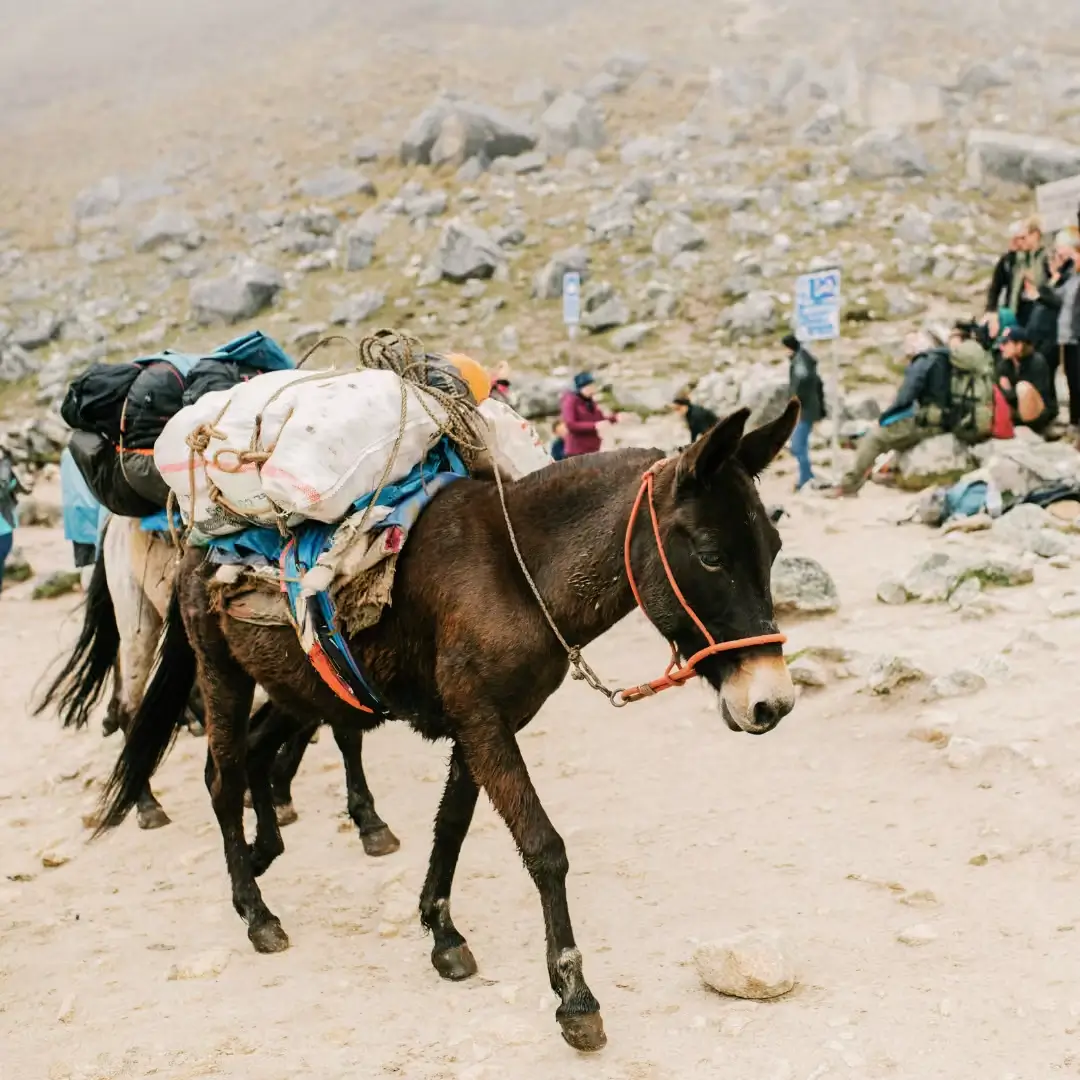
- Horses (for equipment and personal items) including horsemen. They carry camping equipment, food and kitchen utensils. We provide duffel bags at your briefing for your personal items (up to 7 kg/15 lbs. per person).
- 1 emergency horse which can be ridden if you are feeling ill or if you are a little slower. Let us know if you would like to hire a personal riding horse.
- Dining tent with camp tables and chairs and kitchen tent for the cook to prepare meals.
- Tents for our staff.
- First aid kit including emergency oxygen bottle.
What’s Not included
- Sleeping bags. If you haven’t got a sleeping bag or you don’t want the hassle of bringing one all the way to Peru with you, then we have sleeping bags for hire.
- If you want to take more substantial items or backpacks, you will need to hire an additional mule. Also you an hire a personal riding horse.
- Gratuities for the staff.
Packing List
Clothing
- Lightweight and moisture-wicking clothing for hiking
- Long-sleeve shirts and pants for sun and insect protection
- Warm layers for the cool evenings (fleece or down jacket)
- Waterproof jacket and pants (for rainy weather)
- Hat or cap for sun protection
- Warm hat, gloves, and scarf for cold nights at higher altitudes
- Comfortable hiking boots (broken-in and waterproof)
- Comfortable camp shoes (sandals or lightweight shoes)
- Wool or synthetic socks (bring several pairs)
Essential Gear
- Daypack (25-30L) for carrying your personal items
- Large duffel bag for porters to carry (preferably waterproof)
- Sleeping bag (fiber-filled, as provided)
- Sleeping pad (if not provided, confirm with the tour organizer)
- Headlamp or flashlight with extra batteries
- Waterproof bags to protect electronics and clothing
- Reusable water bottle (at least 2L capacity)
- Personal hygiene items (toothbrush, toothpaste, etc.)
- Sunscreen (high SPF) and lip balm with sun protection
- Insect repellent (DEET-based recommended)
Personal Items
- Passport and copies (for entry into Machu Picchu)
- Travel insurance documents
- Credit card or cash (for personal expenses)
- Camera or phone (with extra memory cards and batteries)
- Personal medication and a small first-aid kit (band-aids, antiseptic, etc.)
Optional Items
- Snacks (energy bars, trail mix)
- Lightweight trekking poles (optional but recommended for the Inca Trail)
- Binoculars for bird watching
- Notebook or journal
- Small lock for your duffel bag
Important Notes
- Make sure all your gear is lightweight and waterproof, as weather can change quickly.
- Ensure you have proper hiking boots that are well-broken-in before the trek to avoid blisters.
- Pack light, as porters will carry your equipment, but there are weight restrictions for what can be carried.
Location the 11 Day Carabaya mountain trekking Peru
Travel Information
Located southeast of Puno, bordering Cusco and Madre de Dios, Carabaya is one of Peru’s most remote and fascinating provinces. Known as “The Peruvian Switzerland” for its towering snow-capped peaks, glacial lagoons, and otherworldly landscapes, this region is a paradise for explorers, geologists, and lovers of authentic Andean culture. For travelers seeking authenticity and extreme adventure, Carabaya offers:
High Altitude Trekking (5,000 + meters above sea level) Carabaya-Apolobamba Trek: A 4 – to 9-day trek crossing from Peru, passing through snow-capped mountains, isolated communities, and sacred lakes.
Ascents to Virgin Peaks: Many mountains here have never been climbed, a challenge for expert mountaineers.
Private Departures Only
Unlike many group treks, this expedition has no fixed departure dates and is arranged exclusively as a private trip upon request, allowing for flexible scheduling but requiring advance coordination with the operator.
Guided by an Expedition Specialist
The trek is led by Alfredo Fisher, a veteran mountain guide with decades of experience in the Carabaya region, offering deeper route knowledge and safety expertise than a standard trekking guide.
Sustained High-Altitude Exposure
From Day 2 through Day 9, the route remains almost entirely above 4,200 meters, making this one of the most demanding sustained-altitude treks available in Peru and requiring serious prior acclimatization.
Best Season to Trek
The dry season (May–September) provides the clearest visibility across the ice-capped ranges and driest trail conditions; the rainy season (November–March) should be avoided due to snowfall risk on the high passes.
Wildlife and Birdlife Along the Route
The trek passes multiple high-altitude lakes, including Qasqara and Sibinacocha, home to Andean geese, flamingos, and buff-necked ibis, making this route particularly appealing for birdwatchers in addition to trekkers.
Cultural Encounters with Quechua Herders
Several campsites, including Wancani and the alpaca farm near Abra Sayri, offer direct interaction with traditional Quechua herding families, providing genuine cultural exchange rarely found on more commercial routes.
Recovery at Upis Hot Springs
Day 10 includes a relaxing stop at the Upis Hot Springs before the final trekking day, offering a well-earned recovery period after the trek's most physically demanding passes.
Celebratory Finish in Cusco
Unlike many treks that end simply with a transfer, this expedition concludes with a farewell dinner and live folk dance show in Cusco, marking the completion of the journey with a cultural celebration.
Fully Supported Camping Logistics
As with the shorter Carabaya trek, this expedition includes horses for equipment transport, a dedicated cook, dining and kitchen tents, and an emergency horse, ensuring support throughout the extended 11-day itinerary.
What's Not Included
Sleeping bags (available for hire), gratuities for guides and support staff, and additional mule hire for larger personal loads are not included in the base tour price.
Frecuendly asked questions
The 11-day trek extends the route further, maintaining high altitude for 8+ consecutive days, reaching a higher maximum point at Palomani Pass (5,400m), and finishing near Ausangate with a stop at Upis Hot Springs — making it a longer, more complete expedition compared to the shorter, more flexible 9-day route.
Alfredo Fisher is a veteran mountain guide with decades of experience exploring the Carabaya region since the 1980s, bringing specialized route knowledge and safety expertise that is particularly valuable given the trek’s sustained high-altitude exposure.
This expedition operates exclusively through private departures arranged upon request; there are no fixed group dates, so travelers should contact the operator in advance to coordinate scheduling and availability.
A significant portion — from Day 2 through Day 9, the route remains almost continuously above 4,200m, with several passes exceeding 5,000m and a highest point of 5,400m at Palomani Pass, making prior high-altitude acclimatization essential.
Trekkers commonly encounter vicuñas, alpacas, and llamas throughout the highlands, along with birdlife such as Andean geese, flamingos, and buff-necked ibis around the high-altitude lakes of Qasqara and Sibinacocha.
Yes, the route passes through areas inhabited by traditional Quechua herding families, particularly around Wancani and the alpaca farms near Abra Sayri, offering genuine cultural exchange in a region with minimal outside tourism.
After crossing the trek’s highest passes, Day 10 includes recovery time at the Upis Hot Springs, and Day 11 concludes with a vehicle transfer to Cusco, where the journey is celebrated with a farewell dinner and live folk dance show.
Yes, this can be a natural progression for trekkers seeking a longer, more demanding expedition with a different route and endpoint, though both treks share similar terrain in the shared Carabaya sections.
The dry season, from May to September, is strongly recommended for clear visibility and stable trail conditions; the rainy season (November–March) increases the risk of snowfall on the high passes and should be avoided.
This is considered one of the most demanding multi-day treks in Peru’s catalog, combining sustained high-altitude exposure across 8+ days with multiple passes above 5,000m, making it best suited for experienced trekkers with prior high-altitude trekking history.