
Venture beyond the crowds on one of Peru’s most rewarding multi-day treks, connecting the remote Inca citadel of Choquequirao with the iconic sanctuary of Machu Picchu. This 15-day journey combines cultural immersion in Cusco and the Sacred Valley with a demanding yet deeply satisfying trek through the Apurímac Canyon, high mountain passes, and lush cloud forest.
Designed for travelers seeking an authentic, less-visited alternative to the classic Inca Trail, this expedition rewards effort with solitude, dramatic Andean scenery, and access to archaeological sites most visitors never see. Along the way, acclimatize properly in Cusco, explore ancient ruins and vibrant markets, and camp beneath the stars before arriving at Machu Picchu having earned every step of the way.
Overview
The Choquequirao to Machu Picchu trek is a comprehensive 15-day expedition through the heart of the Peruvian Andes, blending history, culture, and physically demanding wilderness trekking. Starting in Cusco, travelers spend several days acclimatizing and exploring the Sacred Valley before setting off on a multi-day trek that crosses the dramatic Apurímac Canyon, visits the remote ruins of Choquequirao, and traverses high alpine passes before descending into cloud forest en route to Machu Picchu. It is one of the most complete ways to experience both the well-known and hidden sides of Inca heritage in a single journey.
Tour Itinerary Summary
Day 1 — Arrival in Cusco
- Arrival at Cusco airport and transfer to hotel
- Time to rest and begin altitude acclimatization
- Evening group briefing on the itinerary
- Opportunity to meet fellow travelers
Day 2 — Cusco City Tour
- Visit to Cusco Cathedral and Coricancha (Temple of the Sun)
- Exploration of Sacsayhuaman fortress
- Stops at Qenqo, Puca Pucara, and Tambomachay
- Return to hotel in Cusco for rest
Day 3 — Sacred Valley Exploration
- Panoramic views from the Chinchero Plateau
- Visit to Chinchero's market and Inca terraces
- Exploration of the Maras salt flats
- Tour of the circular agricultural terraces of Moray
- Lunch and transfer to Sacred Valley hotel
Day 4 — Ollantaytambo Exploration
- Guided tour of Ollantaytambo Fortress
- Walk through the historic village of Ollantaytambo
- Free time to explore local markets and cafés
- Preparation for the upcoming trek
Day 5 — Start of Trek to Chiquisca
- Scenic drive to the trailhead at Capuliyoc
- Brief stop at the Sayhuite carved rock
- Descent into the Apurímac Canyon
- Overnight camp at Chiquisca
Day 6 — Trek to Choquequirao
- Crossing of the Apurímac River at Playa Rosalina
- Ascent to Marampata for lunch with mountain views
- Arrival at Choquequirao campsite
- Possible sightings of condors along the trail
Day 7 — Full Day at Choquequirao
- In-depth exploration of the Choquequirao ruins
- Visit to agricultural terraces and ceremonial plazas
- Viewing of the famous Llama Terraces
- Second night camping near the ruins
Day 8 — Trek to Pinchi Unuyoc
- Descent through Inca terraces and dense vegetation
- Arrival at the remote campsite of Pinchi Unuyoc
- Opportunity to refresh in a nearby stream
- Overnight camp
Day 9 — Trek to Maizal
- Descent to the Rio Blanco
- Ascent through cloud forest terrain
- Arrival at Maizal campsite
- Overnight rest at altitude
Day 10 — Trek to Yanama
- Climb to San Juan Pass with panoramic views
- Descent into the Yanama Valley
- Views of Panta and Pumasillo mountains
- Overnight camp in Yanama
Day 11 — Trek to Totora
- Ascent to Yanama Pass, one of the trek's highest points
- Panoramic views of Veronica, Salkantay, and Humantay
- Long descent into the valley
- Overnight camp at Totora
Day 12 — Trek to Lucmabamba
- Descent through cloud forest ecosystems
- Passing coffee and passion fruit plantations
- Stop at the Wayracpunku archaeological site
- Transfer to campsite at Lucmabamba
Day 13 — Trek to Llactapata and Train to Aguas Calientes
- Ascent to Llactapata for rare rear views of Machu Picchu
- Descent to the Urubamba River
- Train transfer to Aguas Calientes
- Overnight in hotel with time to relax
Day 14 — Machu Picchu Exploration
- Guided tour of Machu Picchu citadel
- Free time to explore independently
- Lunch near the site entrance
- Train and road transfer back to Cusco
Day 15 — Departure
- Transfer to Cusco airport
- End of trekking adventure
Itinerary
Day 1: Arrive in Cusco
Upon arrival at Cuzco airport (3,400m / 11,150ft), you will be greeted by your guide and transferred to your hotel. After a short initial briefing, you’ll have a few hours to rest—an essential step for proper altitude acclimatization.
In the evening, we’ll gather for a detailed group briefing, where we’ll go over the itinerary and prepare for the upcoming trekking adventure. This will also be a great opportunity to meet your fellow travelers and ask any last-minute questions.
Meals: Not included.
Day 2: Full day City Tour
Today, we dive into the rich history of Cuzco, a city where every alleyway and street corner reveals a new surprise, whether in the form of superbly constructed Inca walls or the extravagant colonial churches and palaces. Once the capital of the vast Inca Empire, Cuzco has undergone significant transformations since the Spanish conquest in 1533.
Our city tour begins with a visit to the Cuzco Cathedral, an architectural masterpiece that houses invaluable colonial artwork and religious relics. We then continue to the Coricancha (Temple of the Sun), the most important religious site of the Incas, later converted into the Convent of Santo Domingo by the Spanish.
Leaving the city center, we take a short drive to explore four of the most impressive Inca archaeological sites in the region:
- Sacsayhuaman: An enormous fortress with massive monolithic walls, offering breathtaking views over Cuzco.
- Qenqo: A sacred site featuring fascinating carved rock formations used for ceremonial purposes.
- Puca Pucara: A military outpost with well-preserved stone structures.
- Tambomachay: Known as the “Inca Baths,” this site features intricately designed water channels and fountains.
After our explorations, we return to our hotel in Cuzco to rest and prepare for the days ahead.
Meals: B
Day 3: Sacred Valley of the Incas.
Today, we leave Cuzco and head towards the breathtaking Chinchero Plateau, where we are rewarded with spectacular panoramic views of three different mountain ranges. Our first stop is the charming town of Chinchero, known for its well-preserved Inca terraces, colonial church, and vibrant artisan market, where locals demonstrate traditional weaving techniques passed down through generations.
Next, we continue to the famous Maras salt flats, an extraordinary collection of thousands of salt evaporation ponds that have been used since pre-Inca times. Here, we learn about the salt extraction process and admire the stunning contrast of the white salt terraces against the Andean landscape.
We then explore the fascinating circular terraces of Moray, an ancient Inca agricultural laboratory believed to have been used to experiment with crop cultivation at different altitudes. The ingenuity of these terraces highlights the advanced agricultural knowledge of the Incas.
After an insightful morning, we descend into the Sacred Valley to enjoy a delicious lunch at an excellent restaurant, where we will savor dishes made with locally grown produce.
Following lunch, we transfer to our hotel in the Sacred Valley, where you’ll have the rest of the afternoon free to relax and enjoy the tranquility of this beautiful Andean region.
Meals: B, L
Day 4: Second day in the Sacred Valley of the Incas
Today, we continue exploring the breathtaking Sacred Valley, following the course of the Urubamba River, one of the main tributaries of the Amazon. Our destination is the remarkable Inca town of Ollantaytambo, an important archaeological and historical site that retains much of its original Inca urban planning.
We begin by exploring the massive Ollantaytambo Fortress, an impressive Inca complex featuring vast terraces, finely carved stone temples, and strategic viewpoints that offer panoramic views of the valley. This site played a significant role in Inca resistance against Spanish conquistadors and remains one of the best-preserved Inca ruins in Peru.
After our guided tour, we take time to wander through the charming village of Ollantaytambo, a fascinating blend of Inca and colonial architecture, where cobbled streets, water channels, and traditional stone houses create an immersive historical experience.
The rest of the day is free for you to enjoy Ollantaytambo at your own pace. You may choose to relax at a local café, explore local artisan markets, or take a scenic walk to admire the surrounding Andean landscapes.
In the evening, we prepare for the exciting trek ahead, ensuring everything is ready for our departure the following day.
Meals: B, L
Day 5: Drive to Trailhead at Capuliyoc to start trek
Today, you will be collected from your hotel in the Sacred Valley for a scenic drive of approximately 5 hours to the trailhead. Along the way, we make a brief stop at the fascinating Sayhuite carved rock, an archaeological site believed to have served as a hydraulic model or ceremonial center during the Inca period.
We then continue our journey to Capuliyoc, the starting point of our trek. From here, we embark on a breathtaking descent into the Apurímac Canyon, surrounded by spectacular Andean scenery. After a well-earned lunch, we resume our hike, making our way towards our first campsite at Chiquisca.
We settle into camp for the night, enjoying a nourishing dinner prepared by our trekking team.
Walking time/distance: approx. 4 hours / 8 km / 5 miles.
Meals: B, L, D
Day 6: Trek to Playa Rosalinda and continue to Choquequirao
Today, we begin our trek with a steep descent into the stunning Apurímac River Canyon. The trail starts off gently but soon becomes steeper and hotter as we make our way down to Playa Rosalina (1,550 m / 5,085 ft.), where we cross the mighty Apurímac River.
From here, we start our challenging ascent towards Marampata (2,930 m / 9,613 ft.), where we stop to enjoy a well-earned lunch with breathtaking views of the surrounding mountains.
After lunch, we continue towards our final destination of the day—Choquequirao (2,860 m / 9,383 ft.), the impressive and remote Inca site often referred to as the “sister city” of Machu Picchu. Along the way, if we are lucky, we may spot Andean condors soaring above the canyon or even the elusive spectacled bear, a rare inhabitant of this region.
We set up camp near the ruins of Choquequirao, ready to explore this extraordinary site the following day.
Walking time/distance: approx. 7 hours / 15 km / 9.3 miles.
Meals: B, L, D
Day 7: Full day exploring Choquequirao
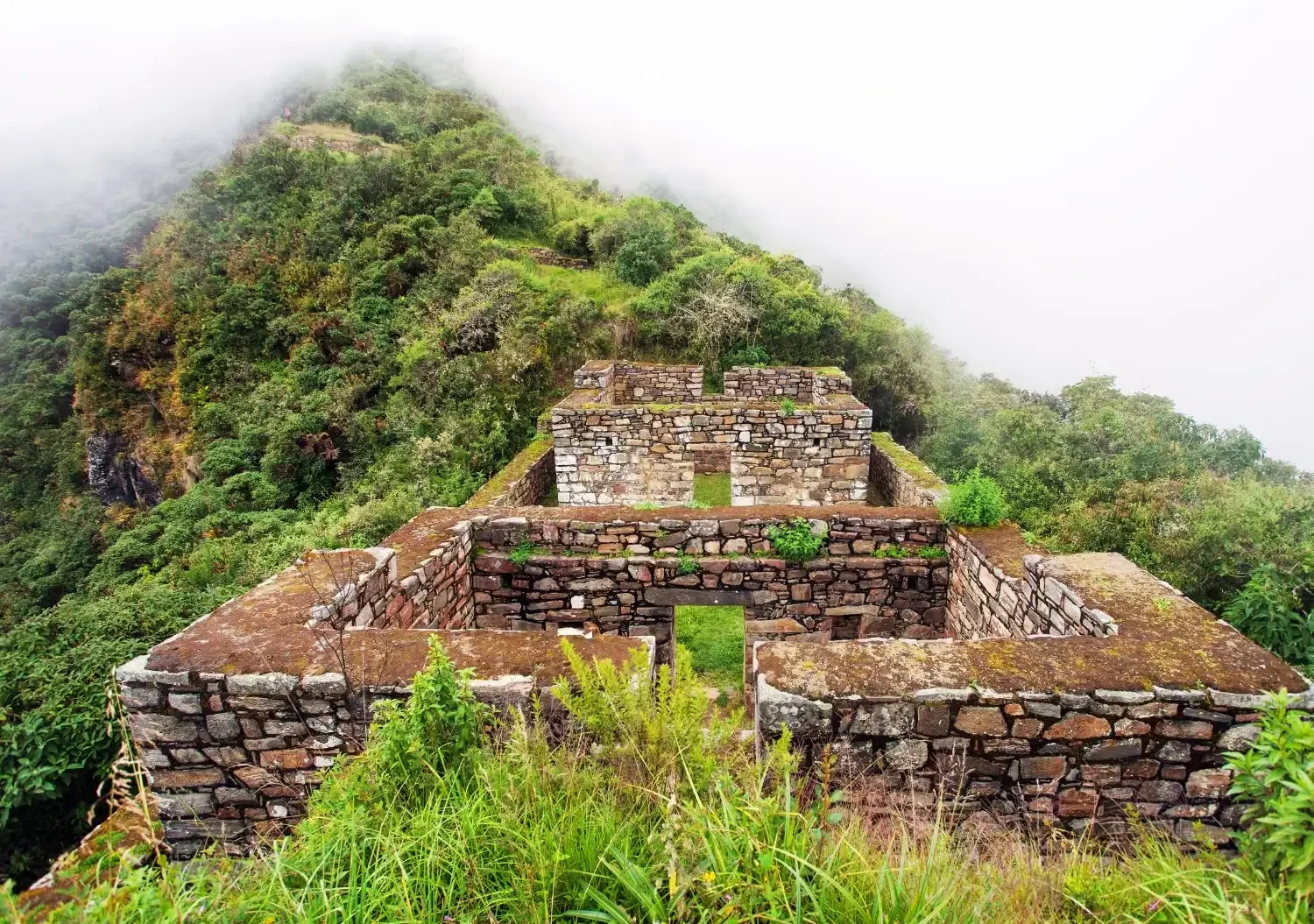
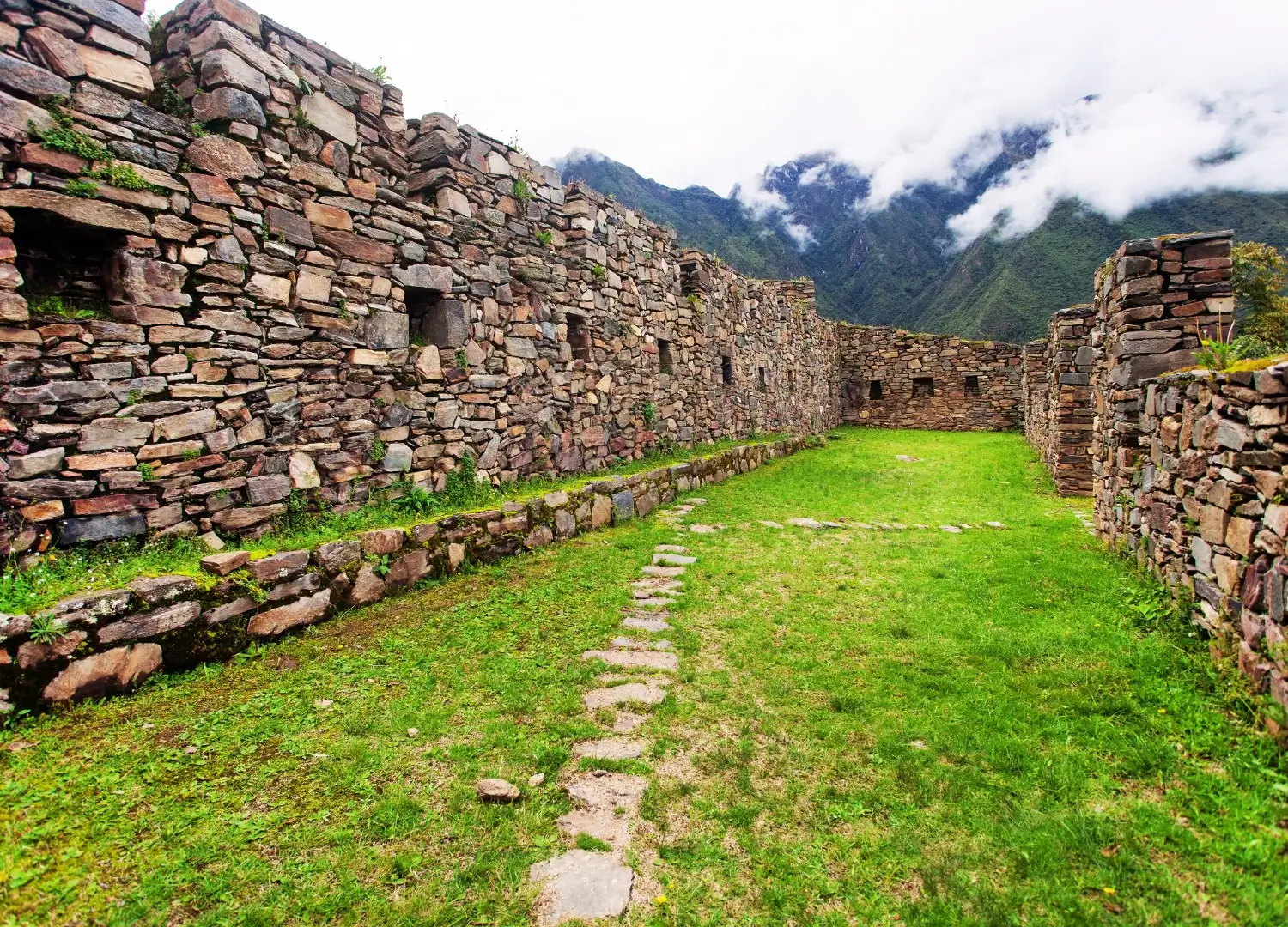
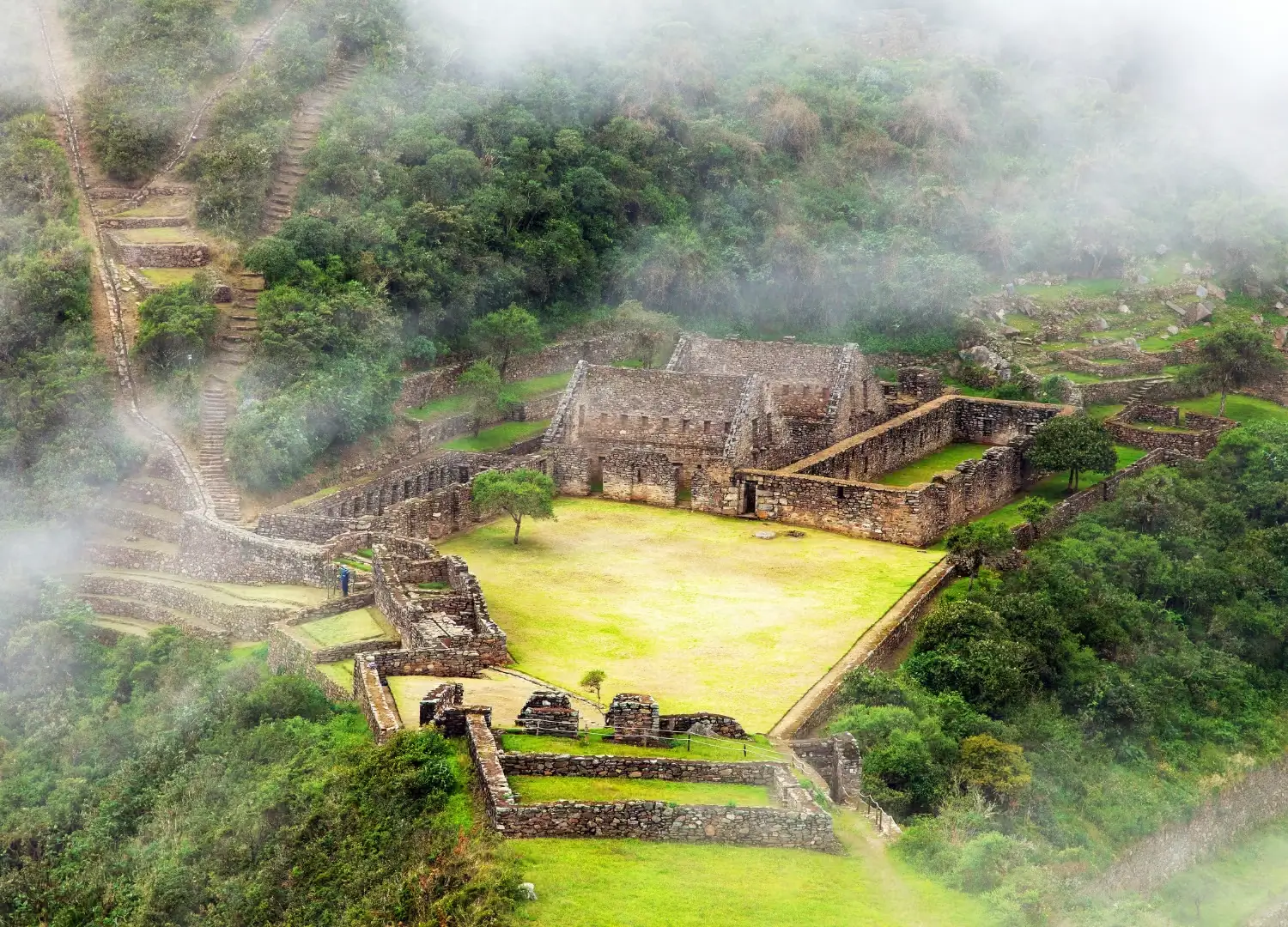
This morning, after breakfast, we set out to explore the magnificent ruins of Choquequirao, an archaeological site that is actually larger than Machu Picchu. Built during the mid to late 15th century, Choquequirao shares many similarities with Machu Picchu, yet remains far less visited, making it a truly special and immersive experience.
This enigmatic site was lost for centuries, as the dense high jungle rapidly covered its structures. It was later rediscovered by Hiram Bingham in the early 20th century, before he went on to reveal Machu Picchu to the world. As we explore, we will visit the different sectors of the ruins, including impressive agricultural terraces, ceremonial plazas, and the famous “Llama Terraces” adorned with stone carvings.
After a full day of discovery, we return to our campsite at Choquequirao for a second night under the stars.
Walking time/distance: approx. 7 hours / 6 km / 3.7 miles.
Meals: B, L, D
Day 8: Trek Choquequirao to Pinchi Unuyoc
Today, we descend through a landscape of beautiful Inca terraces and lush, thick vegetation, gradually making our way to Pinchi Unuyoc (2,100 m / 6,890 ft.), where we will set up camp for the night.
This remote campsite is known for its warm and dusty environment, but we will have the chance to refresh ourselves in a beautiful nearby stream before settling in for the evening. The peaceful surroundings and soothing sounds of flowing water make this a perfect spot to rest after a rewarding day of trekking.
Walking time/distance: approx. 5 hours / 8 km.
Meals: B, L, D
Day 9: Trek Pinchi Unuyoc to Maizal
We begin the day with a 2-hour descent to the Rio Blanco, followed by a challenging 4-hour ascent through some stunning cloud forest, eventually reaching Maizal (3,085 m / 10,121 ft.) where we’ll stop for lunch.
The trek through the forest is filled with lush vegetation and the opportunity to observe unique flora and fauna as we make our way to Maizal, a picturesque spot set high in the mountains.
Walking time/distance: approx. 6 hours / 8 km / 5 miles.
Meals: B, L, D
Day 10: Trek Maizal to Yanama
This morning, we begin with a 4-hour climb to the San Juan Pass (4,150 m / 13,615 ft.), where we’ll be rewarded with stunning views of the surrounding mountains. At the pass, we’ll take a well-deserved break and enjoy a delicious lunch while soaking in the panoramic scenery. The San Juan Pass is an important landmark on our journey, offering not only incredible vistas but also an opportunity to appreciate the vastness and beauty of the Andean landscape.
After our rest, we will descend into the Yanama Valley, a lush, green valley surrounded by towering peaks. As we make our way down, we’ll be treated to impressive views of the Panta and Pumasillo snow-capped mountains, which dominate the horizon. The descent will allow us to witness the gradual change in vegetation as we move from high-altitude terrain to the more temperate environment of the valley.
This section of the trek offers a perfect combination of challenging climbs and rewarding vistas, making it one of the most memorable parts of our adventure.
Walking time/distance: approx. 6 hours / 11 km / 6.8 miles.
Meals: B, L, D
Day 11: Trek Yanama to Totora
Today, we embark on a challenging yet rewarding climb from our campsite to the top of the Yanama Pass (4,665 m / 15,305 ft.). This is one of the highest points on our trek, and from here, we’ll be treated to breathtaking panoramic views of the surrounding peaks, including the majestic Veronica, Salkantay, and Humantay mountains to the south. These towering snow-capped giants create an awe-inspiring backdrop as we pause to take in the scenery and appreciate the sheer scale of the Andes.
After soaking in the incredible views, we begin our descent towards the valley, heading for Totora (3,425 m / 11,236 ft.), a scenic village where we will set up camp for the night. The descent is long and steady, with a gradual change in vegetation as we move away from the high-altitude landscapes and into the lush, verdant valleys below. Along the way, we’ll experience the diverse beauty of the Andes, from towering peaks to dense forests, making this a memorable day of exploration.
Our camp tonight will be in a tranquil spot, offering a chance to rest and recharge after a strenuous day. It’s a perfect opportunity to reflect on the stunning landscapes we’ve encountered and prepare for the next stage of our journey.
Walking time/distance: approx. 10 hours / 19 km.
Meals: B, L, D
Day 12: Trek Totora to Lucmabamba
Today, we continue our descent through the stunning cloud forest, a lush and vibrant ecosystem that will captivate you with its diverse flora. As we trek, we’ll pass through dense vegetation filled with beautiful begonias, orchids, and a variety of crops like coffee and passion fruit. The air is cooler and more humid here, providing a stark contrast to the higher altitudes we’ve recently experienced. The sounds of nature—birdsong, rustling leaves, and the occasional breeze—accompany us on this section of the journey, making it a truly immersive experience.
We will continue our walk until we reach Wayracpunku, an important archaeological site where we’ll take a brief break before transferring by private transport for about an hour to our campsite at Lucmabamba (1,800 m / 5,905 ft.). This peaceful, lower-altitude campsite provides the perfect place to rest and relax, surrounded by the tranquility of the forest.
Tonight, we camp in the serene surroundings of Lucmabamba, ready to unwind and reflect on the beauty of the cloud forest and the adventure so far.
Walking time/distance: approx. 5 hours / 23 km / 14.2 miles
Meals: B, L, D
Day 13: Trek Lucmabamba to Patallacta and train to Aguas Calientes
Today, we begin our ascent from Lucmabamba to Llactapata (2,655 m / 8,710 ft.), a key archaeological site that offers one of the most unique and rarely seen views of Machu Picchu from the back. This is an incredible moment, as few visitors have the opportunity to witness this perspective of the ‘Lost City’ of the Incas.
After a well-earned lunch at Llactapata, we begin our descent to the mighty Urubamba River (1,900 m / 6,230 ft.), the main tributary of the Amazon River. The descent takes us through lush terrain and offers breathtaking views of the river below. Once at the river, we board the afternoon train that will take us to Aguas Calientes, the gateway to Machu Picchu. Upon arrival, we check in to our hotel and have the evening to relax and enjoy the town’s peaceful atmosphere.
After the long day of trekking, you’ll have time to unwind, enjoy a hot shower, and prepare for the excitement of visiting Machu Picchu tomorrow.
Walking time/distance: approx. 6 hours / 13 km
Meals: B, L, D
Day 14: Machu Picchu. Time to explore these remarkable and truly enigmatic ruins
After a professionally led tour of the incredible citadel of Machu Picchu, we will have some free time (up to 2 hours) to explore the rest of this breathtaking archaeological site with our guide. Take this opportunity to discover the many fascinating corners of the ancient city, learn more about its history, and enjoy the panoramic views.
Next, we will enjoy a delicious lunch at the Sanctuary Lodge, conveniently located near the entrance to Machu Picchu.
In the afternoon or early evening, we will depart from Machu Picchu and board the train back to Ollantaytambo. From there, we will transfer to our vehicle for the drive back to Cuzco, where we will check into our hotel for the night.
Note: Depending on train schedules, we may arrive in Cuzco very late at night.
Meals: B
Day 15: In Cusco, trip concludes
Today, you will be transferred to the airport for your flight, marking the end of your unforgettable adventure in Peru. We hope you’ve enjoyed your journey and take with you lasting memories from this incredible experience.
Meals: B
Includes
- Pre-tour briefing
- Entrance Fees for City Tour in Cusco and Sacred Valley Tour
- Meals: as mentioned in the itinerary
- Airport transfers if arriving or departing on the first or last day
- Professional Tour guide
- First Aid kit and Oxigen tank
- Comfortable and central hotels, primarily Casa Andina Classic hotels
- Private transportation
- Use of a gear pack including sleeping bag and sleeping mat
- Camping equipment
- Porters and horses to carry personal gear
- Sightseeing and site entrance fees as listed (including Machu Picchu entrance fee)
What’s Not included
- International flights and domestic taxes.
- Travel Insurance
- Huaynapicchu entrance tickets
- Gratuities.
Packing List
Clothing
- Lightweight and moisture-wicking clothing
- Long sleeve shirts and pants (for sun and insect protection)
- Waterproof jacket and pants
- Fleece or warm layers for chilly mornings and nights
- Comfortable hiking boots (waterproof recommended)
- Camp shoes/sandals
- Warm hat, gloves, and scarf (for colder nights)
- Hat or cap for sun protection
- Swimwear (for hot springs or water activities)
Essential Gear
- Daypack (for daily hikes)
- Sleeping bag (provided, but if you prefer your own, bring a 3-season bag)
- Sleeping mat (provided)
- Water bottle or hydration system (at least 2-3 liters capacity)
- Headlamp or flashlight with extra batteries
- Camera and spare memory cards/batteries
- Travel lock for bags
- Binoculars (optional for bird watching)
Personal Items
- Sunscreen and lip balm with SPF
- Insect repellent
- Personal hygiene items (toothbrush, toothpaste, biodegradable soap, etc.)
- Small towel
- Wet wipes or hand sanitizer
- Personal medications and first-aid kit (blister care, pain relievers, etc.)
- Toilet paper (just in case) and tissues
- Plastic or zip-lock bags for trash and dirty clothes
- Travel documents (passport, travel insurance, any necessary permits)
Optional Items
- Walking sticks or trekking poles
- Snacks for the trek (energy bars, nuts, etc.)
- Notebook or journal
- Small travel pillow
- Water purification tablets or filters (optional)
Location the 15 Day Choquequirao Adventure
Travel Information
- Departure: After completing the tour, you will be transferred back to Cusco Airport for your departure flight. The tour concludes upon arrival at the airport.
- Arrival: You will arrive at Cusco Airport (CUZ) where you will be met by your guide for the transfer to your hotel. Please ensure you arrive at least one day prior to the start of the tour to allow for proper acclimatization to the altitude.
- Altitude: The tour takes place at high altitudes, with the highest point of the trek reaching over 4,600 meters (15,000 feet). It is important to arrive in Cusco a day or two before the trek to allow for proper acclimatization and reduce the risk of altitude sickness. Hydration, a moderate pace, and listening to your guide’s advice are essential during the trek.
- Accommodation: The majority of the trip will be spent in comfortable, centrally located hotels in Cusco and the Sacred Valley, including Casa Andina Classic hotels. While trekking, camping will be provided with group equipment, porters, and meals cooked by the trekking team.
- Transportation: Private transportation will be provided throughout the tour, including transfers between destinations and trailheads. During the trek, porters will carry your personal gear, allowing you to focus on enjoying the journey. Train rides to and from Machu Picchu will also be included as part of the tour itinerary.
- Meals: Meals are included as per the itinerary, starting with breakfast on Day 2. Meals during the trek will be provided by the trekking team and will include a mix of local and traditional dishes.
- Clothing and Gear: It is important to bring appropriate clothing for the varying temperatures and weather conditions. Layered clothing, waterproof gear, sturdy trekking shoes, and a hat for sun protection are highly recommended. A detailed packing list will be provided prior to the tour.
- Visa and Passport Requirements: Please ensure that your passport is valid for at least six months from your arrival date in Peru. For most nationalities, a visa is not required for stays of up to 90 days. However, you should confirm your visa requirements with your local embassy.
What to Bring
Pack layered clothing suitable for temperature swings between high-altitude cold and warmer valley conditions. Essentials include a sturdy pair of broken-in hiking boots, a rain jacket, sun protection, a headlamp, and a reusable water bottle. A warm sleeping bag rated for cold nights is strongly recommended, along with trekking poles for the steep ascents and descents. Personal items such as medications, insect repellent, and a basic first-aid kit should also be included. Duffel bags are typically provided for porter or mule transport, so a smaller daypack for personal items carried during the day is advisable.
Included
Most departures include professional bilingual guiding, camping equipment, all trekking meals, an experienced cooking and support crew, transportation between trekking points, entrance fees to archaeological sites, and train tickets between Aguas Calientes and Ollantaytambo. Accommodation in Cusco and the Sacred Valley is generally included prior to and after the trek, along with domestic transfers.
Not Included
Typically excluded are international flights, travel insurance, the first night's dinner in Cusco, tips for guides and support staff, alcoholic beverages, and personal expenses such as souvenirs. Optional activities not specified in the itinerary are also usually excluded.
Physical Difficulty
This trek is rated strenuous and is best suited to travelers with prior multi-day hiking experience. Daily walking times range from four to ten hours, often on steep, uneven terrain and at high altitude. Good cardiovascular fitness and mental preparation for sustained physical exertion over multiple consecutive days are essential for enjoying this adventure fully.
Altitude Information
The trek covers a dramatic altitude range, descending to around 1,550 meters at the Apurímac River and climbing above 4,660 meters at its highest mountain pass. Proper acclimatization in Cusco before starting the trek is critical to reducing the risk of altitude-related discomfort. Staying hydrated, moving at a steady pace, and informing your guide of any symptoms are strongly advised throughout the journey.
Weather
The Andes experience distinct wet and dry seasons. Days are generally sunny with cool temperatures, while nights, especially at higher elevations, can drop below freezing. Cloud forest sections tend to be more humid, with the possibility of light rain even during the dry season. Weather can change quickly, so being prepared for multiple conditions in a single day is important.
Transportation
Travelers are transported by private vehicle between Cusco, the Sacred Valley, and the trailhead at Capuliyoc. During the final stage of the trek, a train connects Aguas Calientes with Ollantaytambo, from where a vehicle completes the return journey to Cusco.
Food
Meals throughout the trek are prepared by an experienced cooking team and typically include a mix of traditional Peruvian dishes and international options, with attention to dietary restrictions when notified in advance. Breakfasts are hearty to fuel the day's trekking, while lunches and dinners emphasize fresh, nutritious ingredients suited to physical activity at altitude.
Accommodation
Accommodation combines comfortable hotels in Cusco and the Sacred Valley with camping during the multi-day trekking sections. Campsites are selected for their scenic settings and practical amenities, with tents, sleeping mats, and communal dining areas provided by the support crew.
Best Time to Visit
The dry season, running from May through September, offers the most reliable trekking conditions, with clearer skies and less rainfall. The shoulder months of April and October can also be favorable, though travelers should be prepared for occasional rain. The wet season, from December to March, brings a higher likelihood of muddy trails and reduced visibility on mountain passes.
Travel Tips
Arrive in Cusco at least two to three days before the trek begins to acclimatize properly. Stay hydrated, avoid alcohol in the initial days, and consider light activity rather than complete rest to aid adjustment to altitude. Physical training in the weeks leading up to the trek, particularly cardiovascular conditioning and hiking practice, will significantly improve the overall experience.
Important Notes
This is a physically demanding itinerary that traverses remote areas with limited access to medical facilities or emergency services. Travelers should carry personal travel insurance that covers high-altitude trekking and consult a physician before departure if they have pre-existing health conditions. Group sizes, trail conditions, and daily schedules may vary depending on weather and logistical factors.
Frecuendly asked questions
This trek is considered one of the more physically demanding routes in the Cusco region, involving multiple consecutive days of hiking at altitude, including steep ascents and descents through canyon terrain and mountain passes exceeding 4,600 meters. Daily walking times range from four to ten hours, often on uneven trails. Trekkers should have prior multi-day hiking experience and a solid level of cardiovascular fitness. Proper acclimatization in Cusco beforehand is essential, as is mental preparation for sustained physical effort over nearly two weeks of trekking combined with cultural touring days.
The complete itinerary typically spans 15 days, including time in Cusco and the Sacred Valley for acclimatization and cultural exploration, followed by roughly nine days of trekking between Choquequirao and Machu Picchu. This extended format allows for a gradual altitude adjustment, in-depth exploration of both archaeological complexes, and rest days built into the itinerary, resulting in a more comfortable pace compared to shorter, more condensed trekking routes in the region.
Choquequirao and Machu Picchu offer distinct experiences rather than one being objectively superior. Choquequirao is significantly less visited, allowing for a quieter, more solitary exploration of ruins that are, in physical scale, larger than Machu Picchu. Machu Picchu, meanwhile, is more accessible and better preserved in certain areas, with iconic views recognized worldwide. Combining both sites on a single trek offers travelers a fuller picture of Inca architecture, engineering, and history than visiting either site alone.
The dry season, from May to September, is widely considered the best time for this trek, offering more predictable weather, clearer mountain views, and drier trail conditions. The shoulder seasons of April and October can also work well, though occasional rain is possible. The wet season, from December through March, increases the likelihood of muddy trails, reduced visibility, and more challenging trekking conditions, particularly on the higher mountain passes.
Entrance to the Choquequirao archaeological site requires a ticket, which is typically arranged in advance by the tour operator as part of the trekking package. Unlike the classic Inca Trail, this route does not currently require a limited-capacity trekking permit, making it more flexible for last-minute planning. However, entrance tickets to Machu Picchu do require advance booking due to daily visitor limits, so early planning is still recommended.
The trek covers a substantial altitude range, descending to approximately 1,550 meters at the Apurímac River crossing and climbing to over 4,660 meters at its highest mountain pass. This significant elevation variation exposes trekkers to multiple climate zones within a single journey, from cold, thin mountain air to warm, humid canyon and cloud forest environments, making proper acclimatization and layered clothing essential throughout.
Essential items include broken-in hiking boots, layered clothing for fluctuating temperatures, a warm sleeping bag, rain protection, sun protection, and a headlamp. Trekking poles are highly recommended for steep sections. A daypack for carrying water, snacks, and personal items during walking hours is important, while a duffel bag for gear typically transported by porters or mules is usually provided by the tour operator as part of the package.
This particular trek is generally not recommended for first-time trekkers due to its length, altitude, and physical demands. Travelers with little to no hiking experience may find the consecutive days of strenuous walking, combined with high-altitude conditions, particularly challenging. Those interested in a first Andean trekking experience may want to consider shorter, less demanding routes before attempting a multi-day expedition of this scale and difficulty.
The Apurímac Canyon and surrounding cloud forest are home to a variety of wildlife, including the Andean condor, one of the largest flying birds in the world, occasionally seen soaring above the canyon. The elusive spectacled bear, South America’s only native bear species, is also known to inhabit this remote region, though sightings are rare. The cloud forest sections further along the route support diverse birdlife and unique high-altitude flora.
Compared to the classic Inca Trail and the popular Salkantay trek, this route is considerably longer and less crowded, offering a more remote and immersive experience. While the Inca Trail requires advance permits due to strict daily visitor limits, this trek generally offers more flexible booking. It also uniquely combines two major archaeological complexes, Choquequirao and Machu Picchu, within a single overland journey, appealing to trekkers seeking depth and solitude over convenience.