
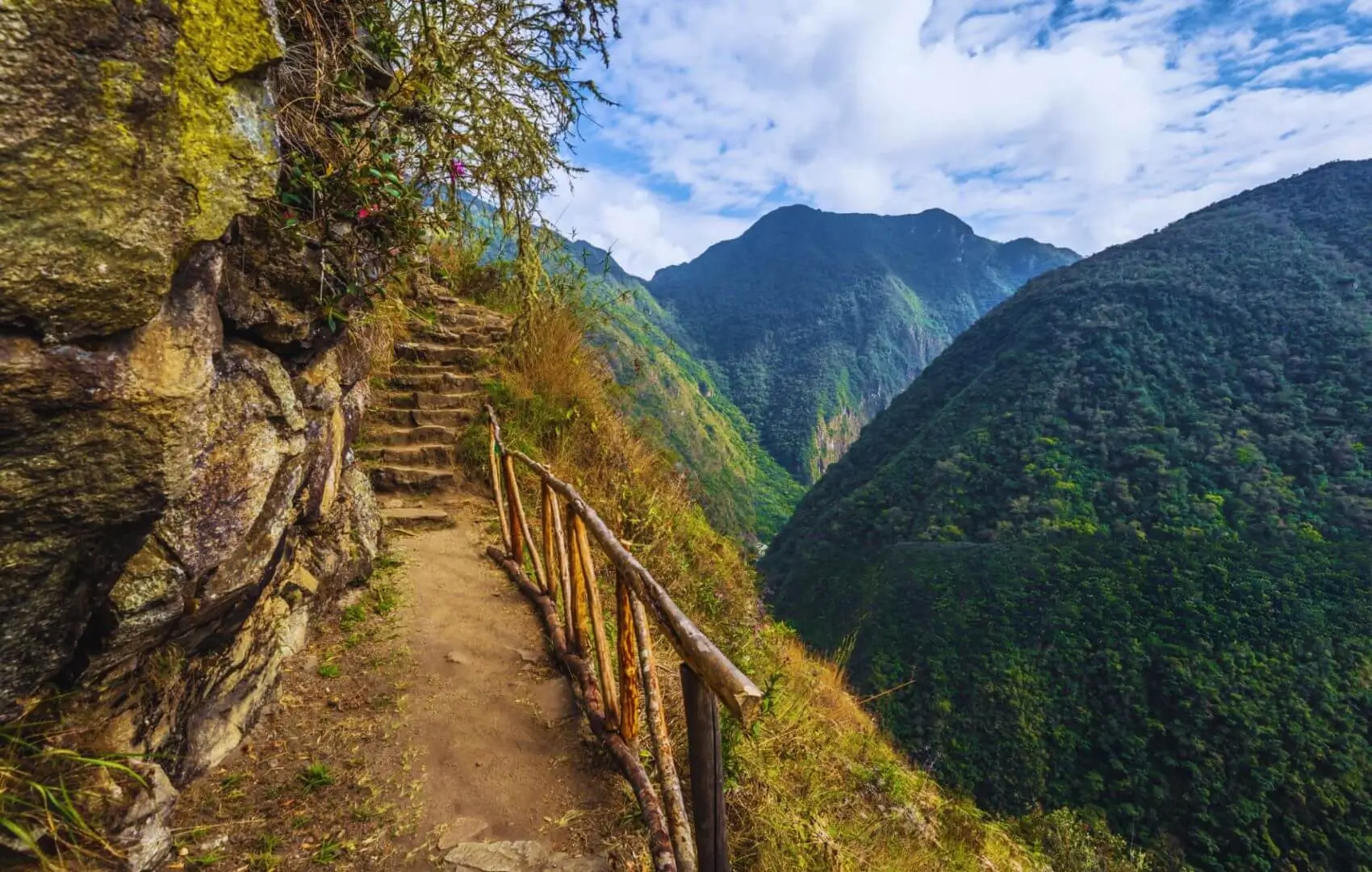
This 7-day Inca Trail trek takes you from the cobblestone streets of Cusco through the heart of the Sacred Valley — past Chinchero, Maras and Moray — before joining the ancient royal highway to Machu Picchu. Over seven days you’ll cross three mountain passes, camp under Andean skies and arrive at the Sun Gate for your first unforgettable view of the Lost City. Small groups, certified bilingual guides and all permits included.
What to Expect on the 7-Day Inca Trail Trek
The 7-day Inca Trail trek is the most complete version of the classic route — designed for travelers who want more than just the trail. While the standard 4-day version rushes through, this itinerary gives you two full days in the Sacred Valley before you even set foot on the ancient highway, letting you acclimatize properly, visit Chinchero, Maras and Ollantaytambo, and arrive at the trailhead rested and ready.
Over four days of trekking you'll cross three high-altitude passes, camp in remote Andean valleys and walk the best-preserved stretches of Inca stonework on the planet — finishing with the iconic sunrise view of Machu Picchu from Inti Punku (Sun Gate). Every permit, meal, porter and certified bilingual guide is included from day one.
Day-by-Day Summary
Day 1: Arrival in Cusco & City Tour
- Explore the historic city of Cusco.
- Visit Cusco Cathedral and Qorikancha (Temple of the Sun).
- Discover the impressive Inca ruins of Sacsayhuamán.
- Explore Q’enqo, Puka Pukara, and Tambomachay.
- Overnight in Cusco.
Day 2: Sacred Valley Discovery
- Visit the traditional Andean village of Chinchero.
- Explore the Maras Salt Mines.
- Discover the circular terraces of Moray.
- Enjoy a traditional lunch in the Sacred Valley.
- Tour the Inca fortress of Ollantaytambo.
- Overnight in the Sacred Valley.
Day 3: Sacred Valley Exploration & Trek Preparation
- Continue exploring the Sacred Valley.
- Visit Ollantaytambo and nearby archaeological sites.
- Enjoy scenic walks through the valley.
- Learn about the region’s Inca and colonial history.
- Prepare for the Inca Trail adventure.
- Overnight in the Sacred Valley.
Day 4: Inca Trail – Day 1
- Begin the Classic Inca Trail trek.
- Follow the Urubamba River through stunning landscapes.
- Visit the archaeological site of Patallacta.
- Hike through the Cusichaca Valley.
- Camp near Huayllabamba.
- Overnight at campsite.
Day 5: Inca Trail – Dead Woman’s Pass
- Ascend to Warmihuañusca Pass (Dead Woman’s Pass).
- Reach the highest point of the trek.
- Enjoy spectacular views of the Andes.
- Descend into the Pacaymayo Valley.
- Camp in Pacaymayo.
- Overnight at campsite.
Day 6: Inca Trail – Archaeological Route
- Cross the second and third mountain passes.
- Visit Runkuraqay and Sayacmarca.
- Explore Phuyupatamarca, the “City in the Clouds.”
- Walk through beautifully preserved Inca pathways.
- Arrive at Wiñay Wayna campsite.
- Overnight at campsite.
Day 7: Machu Picchu & Return to Cusco
- Hike to the Sun Gate (Inti Punku).
- Enjoy your first panoramic view of Machu Picchu.
- Guided tour of the Inca citadel.
- Free time to explore and take photos.
- Train journey back to Ollantaytambo.
- Transfer to Cusco.
- End of the adventure.
Itinerary
Day 1: Arrival and Cusco City Tour.
First, visit Cuzco’s Cathedral, an architectural masterpiece that dominates the Plaza de Armas. Inside, you’ll learn about the unique Cuzco school of art and admire an extensive collection of colonial paintings, religious artifacts, and historical relics.
Next, explore Koricancha, one of the most important Inca temples. Once adorned in gold, this sacred site was dedicated to Inti, the Sun God. Here, you’ll witness the fascinating blend of Incan and colonial architecture, as the Spanish built the Church of Santo Domingo atop the temple’s foundations.
The tour continues with visits to the Four Ruins, a group of significant archaeological sites surrounding Cuzco:
- Sacsayhuaman, an immense Incan complex renowned for its impressive stonework.
- Q’enqo, a mysterious site with carved rock formations and underground chambers.
- Puka Pukara, a small fortress believed to have served as a military checkpoint.
- Tambomachay, known as the “Baths of the Inca,” featuring intricate aqueducts and water channels.
After completing the tour, we will head to the hotel to rest and prepare for the next day’s adventures.
This day offers an incredible introduction to the wonders of Cuzco, setting the stage for the adventures to come.
Day 2: Depart Cusco and drive to the Sacred Valley
We leave Cuzco and head to the Chinchero Plateau to visit Chinchero, an important town during the Inca era. Its most impressive remnant is the massive stone wall in the main plaza, featuring ten trapezoidal niches. From here, we will enjoy spectacular views of the Sacred Valley of the Incas, with the majestic Urubamba Mountain Range and the snow-capped Salkantay dominating the western horizon. It is said that Chinchero is the mythical birthplace of the rainbow.
Next, we visit the stunning Maras Salt Mines, a salt production center dating back to pre-Inca times. With over 3,000 salt pools carved into the mountainside, this site offers a unique and unforgettable landscape.
We then continue to Moray, where we will discover its mysterious concentric terraces. According to some scholars, this site was an important agricultural research center used by the Incas to adapt crops to different altitudes and microclimates.
After exploring these fascinating sites, we will enjoy a lunch made with locally grown ingredients, allowing us to savor authentic Andean cuisine.
In the afternoon, we head to the Ollantaytambo archaeological site, an impressive Inca fortress with colossal stone terraces and a rich history.
Finally, we check into our hotel to relax and take in the beauty of this legendary valley.
Meals Included: B, L
Day 3: Exploring the Heart of the Sacred Valley
Another exciting day awaits us in this beautiful region. The valley follows the course of the legendary Urubamba River, one of the main tributaries of the mighty Amazon River. During our journey through the valley, we will explore some of the most fascinating citadels, fortresses, and temple ruins, including the remarkable site at Ollantaytambo. This ancient village is a captivating blend of Inca and Colonial architecture, offering a unique glimpse into both eras.
If the weather permits and time allows, we can take advantage of the stunning surroundings with some short, scenic walks through the valley. These walks are not only a chance to enjoy the breathtaking landscapes but also a great way to begin preparing for the upcoming trek.
The evening will be dedicated to getting ready for the trek ahead. You’ll have time to relax at our hotel, check your gear, and receive helpful tips and advice from our guide on what to expect in the days to come.
Meals Included: B, L
Day 4: The Start of the Inca Trail Trek
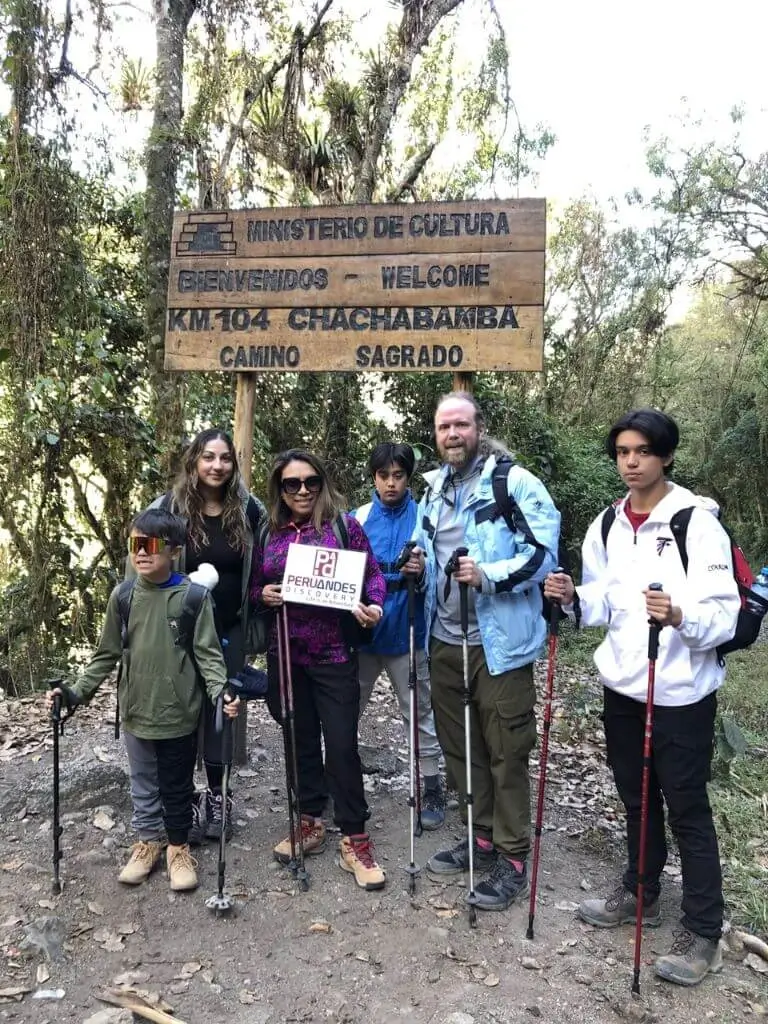
Start your adventure early with a pick-up from your hotel in the Sacred Valley, followed by a scenic drive to Chilca or Piscacucho, where we will begin our first day of trekking. Upon arrival, you will meet our experienced trekking guide, along with the dedicated team of cooks, porters, and camp staff, who will accompany us on this historic journey along the “Royal Highway of the Incas,” built over 500 years ago.
The trek on Day 1 will involve approximately five to six hours of walking. We begin by following the winding course of the famous Urubamba River, taking in stunning views as we make our way through this lush landscape. We will then stop to explore the fascinating archaeological site of Patallacta (2750m / 9,020ft), an ancient Inca city constructed on a series of terraces below the trail.
Continuing along the narrow valley of the Cusichaca River, we will make our way to one of two peaceful camping sites near the village of Huayllabamba. This allows us to bypass the crowded campsites typically used by most trekkers, offering a more tranquil and immersive experience in the heart of the Andes.
Important: Please be aware that, due to recent regulations by Peruvian authorities regarding the Inca Trail, there may be adjustments to the trek itinerary and campsites.
Meals: B, L, D.
Day 5: Ascending to the First Pass of the Inca Trail
At dawn, we continue our journey, ascending through the narrow valley along the left bank of the river, whose waters originate from one of the towering, glacier-covered peaks: the majestic Salkantay. The day begins with a steep climb towards the first pass, the famous Warmihuañusca (4,200 m / 13,700 ft), known for its spectacular views.
Once we reach the pass, we take a well-deserved break to absorb the breathtaking panoramic views of the snow-capped peaks surrounding us. After this moment of awe, we begin the descent into the Pacaymayo Valley, where we will camp and spend our second night along this incredible journey on the Inca Trail.
Meals: B, L, D.
Day 06: Trek over second and third pass to Wiñay Wayna.
Today is the longest day of the trek. After breakfast at our campsite in the lush Pacaymayo Valley, we begin our ascent towards the small but impressively located archaeological site at Runkuraqay, and continue on to Cochapata, located just below the second pass at 3,900 m / 12,800 ft.
From here, we walk a short distance to the pass, and then descend past a mysterious small green lake to the large ruins of Sayacmarca, before heading on to the final pass at 3,800 m / 12,450 ft, which is more of a low ridge-line than a true pass. From this point, we are treated to a stunning view of the forested gorge of the Urubamba River, which lies more than 1,700 meters below us.
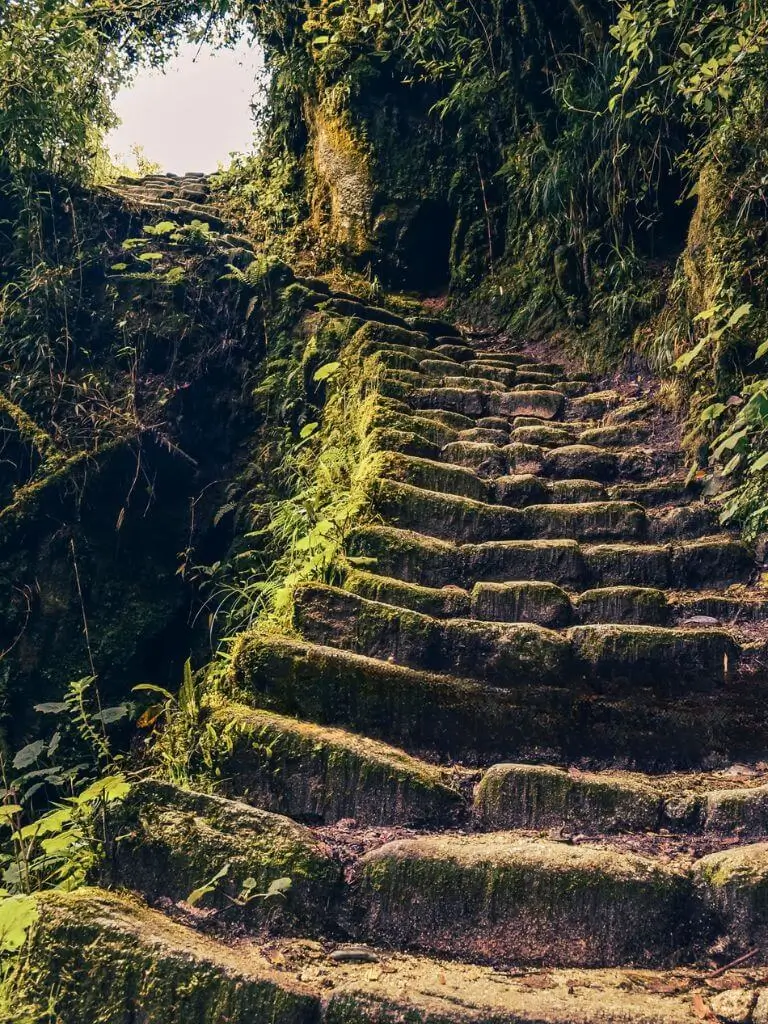
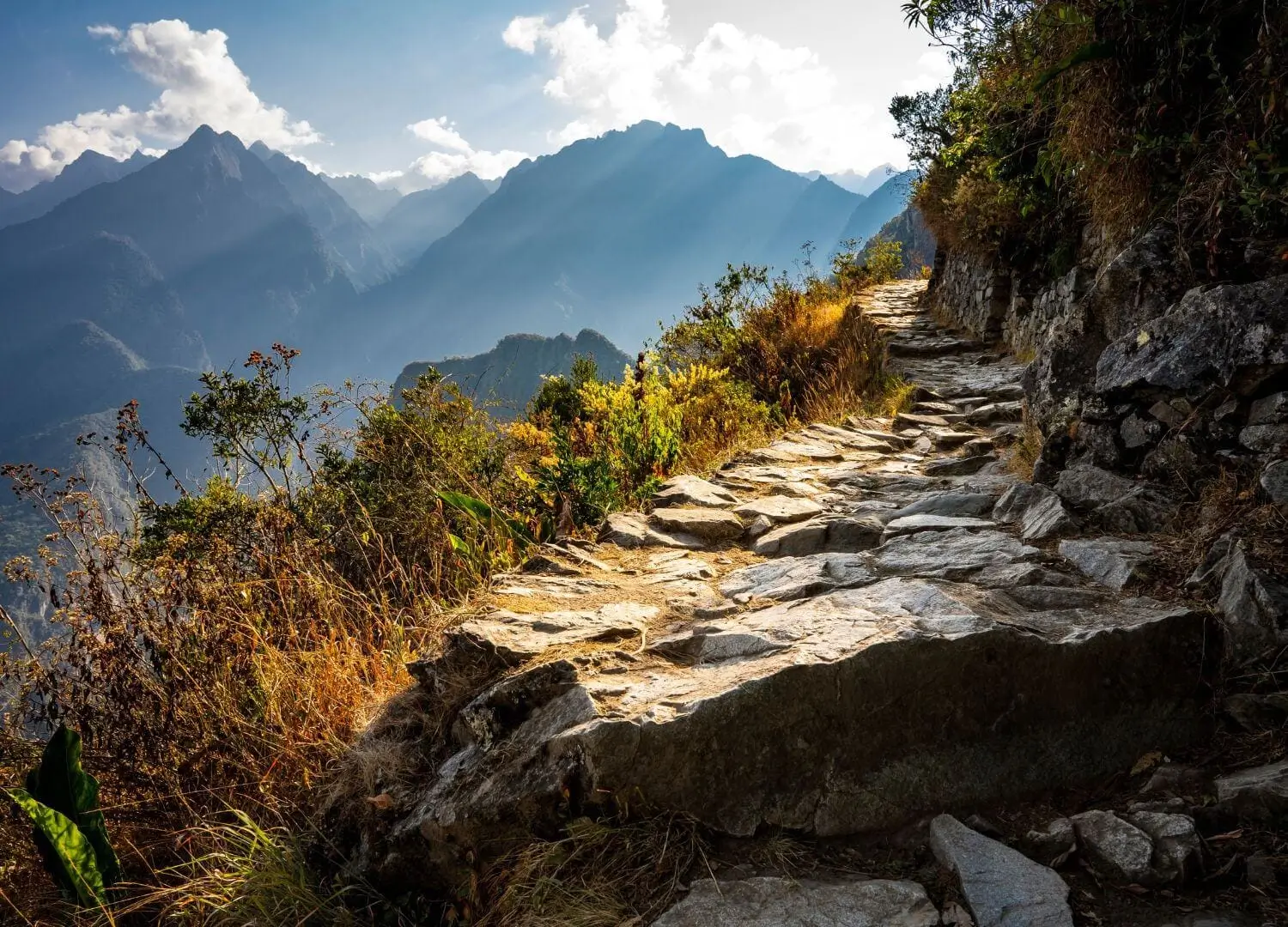
A short hike from here takes us over the Phuyupatamarca Pass at 3,700 m / 12,140 ft, aptly named the “City in the Clouds.” We then walk along an incredibly well-preserved section of the trail, with striking white granite slab walls and staircases set in the high jungle. We’ll arrive at our final campsite at Wiñay Wayna (2,679 m / 8,790 ft).
Meals: B, L, D.
Day 07: Trek to Machu Picchu, guided tour of Machu Picchu, return to Cusco
After an early breakfast, we begin our final stretch, walking the last few kilometers to reach the awe-inspiring Inti Punku (The Gateway of the Sun), which offers a breathtaking view of the ‘lost city’ of Machu Picchu (2,400 m / 7,900 ft). The first glimpse of the ruins is truly awe-striking—it’s a moment that will take your breath away! We’ll begin with a guided tour of this magnificent sanctuary, before giving you time to explore the site at your own pace (accompanied by the guide).
After the exploration, we’ll enjoy a well-deserved lunch at the Sanctuary Lodge, located at the foot of the ruins. Once we’ve recharged, we will take a bus to Aguas Calientes, where we will catch the train back to Ollantaytambo. From there, we’ll transfer to a vehicle for the drive back to Cuzco. Depending on train schedules, our arrival in Cuzco may be quite late in the evening.
Important: To protect the integrity of Machu Picchu amidst its immense popularity, Peruvian authorities have implemented entry restrictions. As of July 1st, 2017, there are two time slots in which visitors are allowed to enter the site, with a maximum duration of four hours, and visitors must follow one of three predefined routes. Moreover, all visitors must be accompanied by a guide at all times. These measures have been put in place to improve the visitor experience and to manage the growing number of tourists. Rest assured, PAD is dedicated to making sure you have an unforgettable experience, even within these guidelines.
Meals: B, L.
Includes
- Transportation from Cuzco to the start of the Inca Trail (either Chilca or Piscacucho).
- Permits and entrance fees for the Inca Trail and Machu Picchu.
- Professional, bilingual guide for the duration of the trek.
- Meals: All meals during the trek (from Day 1 dinner to Day 7 lunch), including breakfast, lunch, and dinner. Vegetarian and special dietary requests can be accommodated with advance notice.
- Porters to carry your duffel bag (up to 7 kg per person), which includes your sleeping bag, air mattress, and other personal items.
- Camping equipment, including tents, mats, and cooking gear.
- Train ticket from Aguas Calientes to Ollantaytambo.
- Accommodation in the campsites along the trail (shared tents with other trekkers).
- Guided tour of Machu Picchu with time to explore on your own afterward.
- Emergency support from the guide, including first aid and assistance with altitude sickness.
What’s Not included
- Airfare to and from Cuzco.
- Travel insurance (highly recommended).
- Personal gear, such as hiking boots, sleeping bags, trekking poles, etc. (these can be rented in advance).
- Optional services, including hot showers at campsites or extra meals in Aguas Calientes.
- Tips for guides, porters, and cooks (optional but appreciated).
- Snacks (bring your own energy bars, fruits, etc.).
- Additional items like extra water bottles, souvenirs, or other personal purchases.
Packing List
- Clothing: Moisture-wicking clothes, thermal layers, rain jacket, hat, gloves, trekking pants, and extra socks.
- Footwear: Sturdy hiking boots, sandals or camp shoes, and gaiters.
- Gear & Equipment: Daypack, duffel bag (for porters), sleeping bag, trekking poles, headlamp, water bottle, and waterproof bags.
- Personal Items: Sunscreen, lip balm, hygiene items, hand sanitizer, toilet paper, insect repellent, and moisturizer.
- Documents: Passport, Inca Trail permit, travel insurance, credit cards or cash, and camera.
- Optional: Snacks, journal, binoculars, and earplugs.
Note: Pack light and ensure everything is waterproof to protect your gear from rain or humidity.
Location for: 7 Day Inca Trail Adventure
Travel Information
- Arrival: Fly into Alejandro Velasco Astete International Airport (CUZ), Cuzco. A transfer to your hotel will be provided.
- Altitude: Cuzco is at 3,400 meters (11,150 feet). Spend at least 2 days acclimatizing in Cuzco or the Sacred Valley before starting the trek.
- Transport: Transfers to and from the trailhead are included. The final leg is by train from Aguas Calientes to Ollantaytambo, followed by a drive to Cuzco.
- Climate: Expect daytime temperatures between 15°C and 20°C (59°F – 68°F). Nights can drop to 0°C (32°F) or lower, especially at higher altitudes.
- Departure: On the last day, after visiting Machu Picchu, return by train to Ollantaytambo and transfer back to Cuzco.
How to Get to the Inca Trail Starting Point
The 7-day Inca Trail trek begins in Cusco, the gateway to all Inca Trail departures. Most travelers fly into Alejandro Velasco Astete International Airport (CUZ), with direct connections from Lima (1h 20min), and international connections via Bogotá, Panama City or Miami.
On trek departure day, your guide and private transport will pick you up from your hotel in Cusco and drive approximately 82 km (2 hours) to the trailhead at Piscacucho (Km 82) or Chilca (Km 77), depending on permit assignment.
| Route | Distance from Cusco | Travel Time | Transport |
|---|---|---|---|
| Cusco → Piscacucho (Km 82) | 82 km | ~2 hours | Private van (included) |
| Cusco → Chilca (Km 77) | 77 km | ~1h 45min | Private van (included) |
| Aguas Calientes → Ollantaytambo | 60 km by train | ~1h 30min | Train (included) |
| Ollantaytambo → Cusco | 72 km | ~1h 45min | Private van (included) |
Best Time to Do the 7-Day Inca Trail Trek
The Inca Trail is open 10 months of the year — it closes every February for maintenance. Outside of that, the experience varies significantly by season.
| Season | Months | Conditions | Recommendation |
|---|---|---|---|
| Dry Season | April – October | Clear skies, cold nights, busy trail | ✅ Best time |
| Peak Season | June – August | Optimal weather, permits sell out fast | ✅ Book 6 months ahead |
| Shoulder | April – May / Sept – Oct | Fewer crowds, occasional light rain | ✅ Great alternative |
| Wet Season | November – January | Daily rain, muddy trail, lush scenery | ⚠️ For experienced trekkers |
| Closed | February | Trail closed for maintenance | ❌ Not available |
Pro tip: If you're planning for June–August, secure your Inca Trail permit at least 5–6 months in advance. The government limits the trail to 500 people per day (including guides and porters), and permits for peak months sell out within hours of opening.
Altitude & Acclimatization on the Inca Trail
Altitude is the number one challenge on this trek — not fitness. Understanding how to prepare will make the difference between struggling and enjoying every step.
- Cusco: 3,400 m / 11,150 ft (your acclimatization base)
- Warmiwañusca Pass (Dead Woman's Pass): 4,200 m / 13,780 ft (highest point of the trek)
- Phuyupatamarca: 3,700 m / 12,140 ft
- Machu Picchu: 2,430 m / 7,970 ft
Acclimatization tips:
- Arrive in Cusco at least 2 days before the trek starts — this itinerary builds that in on Days 1–3
- Drink 3–4 liters of water per day from arrival
- Avoid alcohol your first 48 hours in Cusco
- Consider Diamox (acetazolamide) — consult your doctor before travel
- Walk slowly ("despacio" as locals say), especially on Day 5 ascending to the pass
- Coca tea is widely available in Cusco and genuinely helps mild symptoms
What to Expect Climate-Wise on the Trail
Temperatures on the 7-day Inca Trail vary dramatically between day and night, and between altitude zones:
| Trail Section | Altitude | Day Temp | Night Temp |
|---|---|---|---|
| Cusco / Sacred Valley | 2,800–3,400 m | 18–22°C / 64–72°F | 5–10°C / 41–50°F |
| Huayllabamba Camp | 3,000 m | 15–18°C / 59–64°F | 3–8°C / 37–46°F |
| Warmiwañusca Pass | 4,200 m | 8–12°C / 46–54°F | -2–2°C / 28–36°F |
| Wiñay Wayna Camp | 2,679 m | 16–20°C / 61–68°F | 8–12°C / 46–54°F |
| Machu Picchu | 2,430 m | 18–24°C / 64–75°F | 12–16°C / 54–61°F |
Pack for all four seasons in one day — mornings are cold, midday can be warm and sunny, afternoons bring clouds, and nights drop fast.
Frecuendly asked questions
The 7-day Inca Trail is actually more accessible than the classic 4-day version for most trekkers — not because the trail is easier, but because you have more time. The extra days in the Sacred Valley (Days 2–3) allow proper acclimatization, so by the time you start trekking on Day 4 your body has already adjusted to the altitude.
The physical demand of the trail itself is identical: you cross the same three passes, cover roughly 45 km and reach the same high point at Warmiwañusca (4,200 m). The difference is arriving rested vs. arriving rushed.
Fitness level required: You should be able to hike 6–8 hours with a light daypack on consecutive days. No technical climbing experience needed.
Inca Trail permits sell out fast — especially for the dry season (June–August). The Peruvian government limits access to 500 people per day total (trekkers + guides + porters combined), which means effective trekker slots are closer to 200 per day per departure.
- June – August: Book 5–6 months in advance minimum
- April, May, September, October: Book 3–4 months ahead
- November – January: Book 4–6 weeks is usually sufficient
Permits are non-transferable and require your full passport details at the time of booking — no exceptions.
Yes — and here’s why: the Sacred Valley days (Days 2–3) aren’t the only reason to choose this itinerary. The real value is in the pacing of the trek itself. With 7 days you spend an extra night on the trail, which means less rushing through the most spectacular sections, more time at archaeological sites like Sayacmarca and Wiñay Wayna, and arriving at Machu Picchu genuinely energized rather than exhausted.
If you’ve already seen Chinchero and Moray, speak with us — we can customize Days 2–3 with alternative Sacred Valley sites or a rest day in Ollantaytambo.
Rain is part of the Inca Trail experience, especially outside peak dry season. Here’s what to know:
- All campsites have covered dining tents — meals are never affected by weather
- Your porters carry waterproof rain covers for all luggage and tents
- The trail does not close due to rain (only in February for maintenance)
- The trail gets slippery on descents — trekking poles are strongly recommended in wet conditions
- Some of the most dramatic scenery — cloud forest sections near Wiñay Wayna — actually looks best in misty conditions
Pack a quality waterproof rain jacket and rain cover for your daypack. These are non-negotiable regardless of season.
Yes, and this itinerary is actually one of the best choices for first-time high-altitude trekkers precisely because of its built-in acclimatization days. The structure — 2 days in Cusco, 1 day in the Sacred Valley (lower altitude), then the trek — follows exactly what altitude medicine specialists recommend.
That said, every person responds differently to altitude. Mild symptoms like headache, fatigue or shortness of breath on Day 1 in Cusco are completely normal. Severe symptoms (vomiting, loss of coordination, severe headache) are rare but require descent. Our guides carry supplemental oxygen and are trained in altitude emergency response on every departure.
Better than you’d expect from a camping trip. Our trail kitchen team prepares three full hot meals per day starting from Day 4 dinner through Day 7 lunch, plus morning hot drinks (coffee, tea, coca tea) delivered to your tent before you get up.
Typical meals include:
- Breakfasts: Oatmeal, eggs, pancakes, fresh fruit, bread, hot drinks
- Lunches: Soup, rice or quinoa dishes, protein, vegetables
- Dinners: Three-course meals — soup, main, dessert
- Dietary needs: Vegetarian, vegan and gluten-free options available with advance notice
All water used for cooking is treated and purified. Bring a water bottle or hydration bladder (2L minimum) for trail water — purification tablets or a filter are recommended for stream refills.
This is one of the most important questions you can ask before booking any Inca Trail operator. At Peru Andes Discovery we follow and exceed the Porter Protection Law (Ley N° 27607) established by the Peruvian government:
- Maximum porter load: 25 kg total / 20 kg cargo + 5 kg personal gear — we enforce this strictly
- Porters receive proper meals, shelter and sleeping equipment provided by PAD
- Fair wages above the industry minimum, paid on time
- Porters are covered by accident insurance for the duration of each trek
- We work with the same porter teams consistently — many have been with PAD for over 10 years