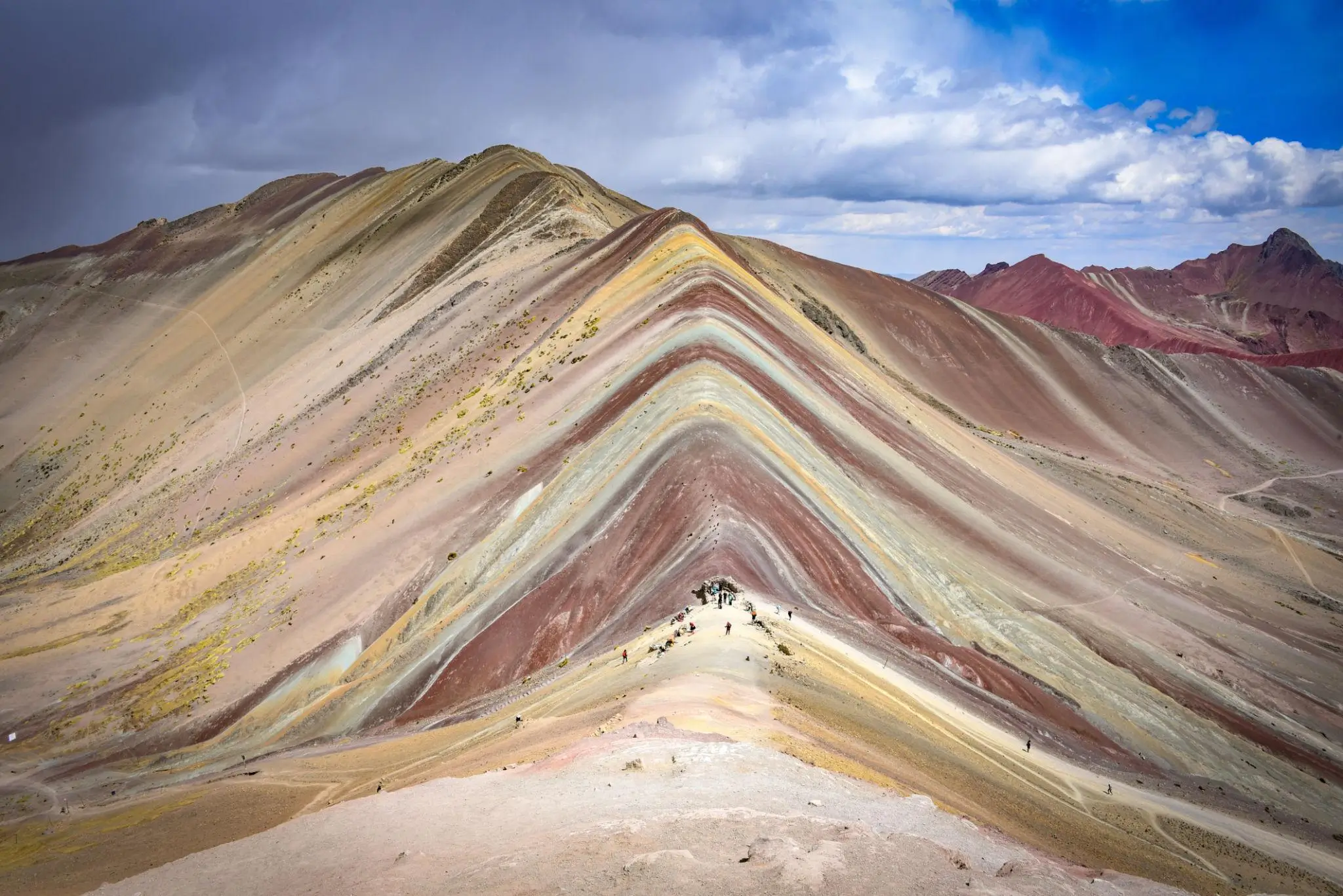
Rainbow Mountain is a genuinely remote high-altitude route, and it’s worth understanding what that means before you go: help is not immediate, phone signal is unreliable, and the terrain itself adds its own risks beyond altitude alone. None of this should put you off the hike, but going in informed, insured, and with a reputable operator makes a real difference if something does go wrong. For the full picture of the day, see our complete Rainbow Mountain guide.
How remote the route actually is
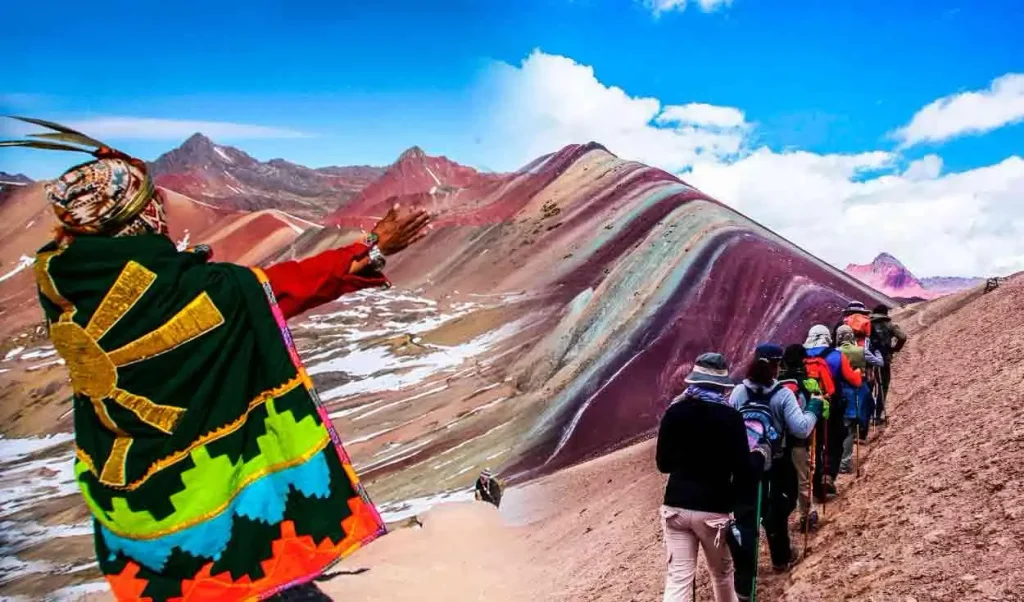
The trail to Vinicunca sits far from any town, hospital, or quick vehicle access. Once you’re on the trail itself, you’re relying on your guide, your own preparation, and whatever support your operator has arranged — not a nearby facility you can simply walk to. This isn’t meant to alarm you; thousands of travellers complete this hike safely every season. It’s simply the reality of a remote mountain route at 5,036 m, and it’s worth planning around rather than assuming help is close at hand.
What can go wrong: altitude, cold, falls
The most common issue on this route is altitude-related, covered in depth in Rainbow Mountain altitude — ranging from mild discomfort to something more serious that requires descending. Cold is the second factor: temperatures at the trailhead and summit are low, especially before the sun is fully up, and being underdressed compounds how hard the day feels. Falls and slips are less common but possible, particularly on uneven or icy sections of the trail, so sturdy footwear and careful footing matter throughout.
How long help realistically takes
Given the remoteness of the route, reaching help — whether that’s a guide bringing you down, transport back to Cusco, or onward medical care — takes time. There’s no quick fix if something serious happens partway up the trail. This is exactly why prevention matters more here than on most day trips: proper acclimatization beforehand, pacing yourself on the day, and being honest with your guide about how you’re feeling all reduce the chances of needing help in the first place.
The horse as an evacuation option
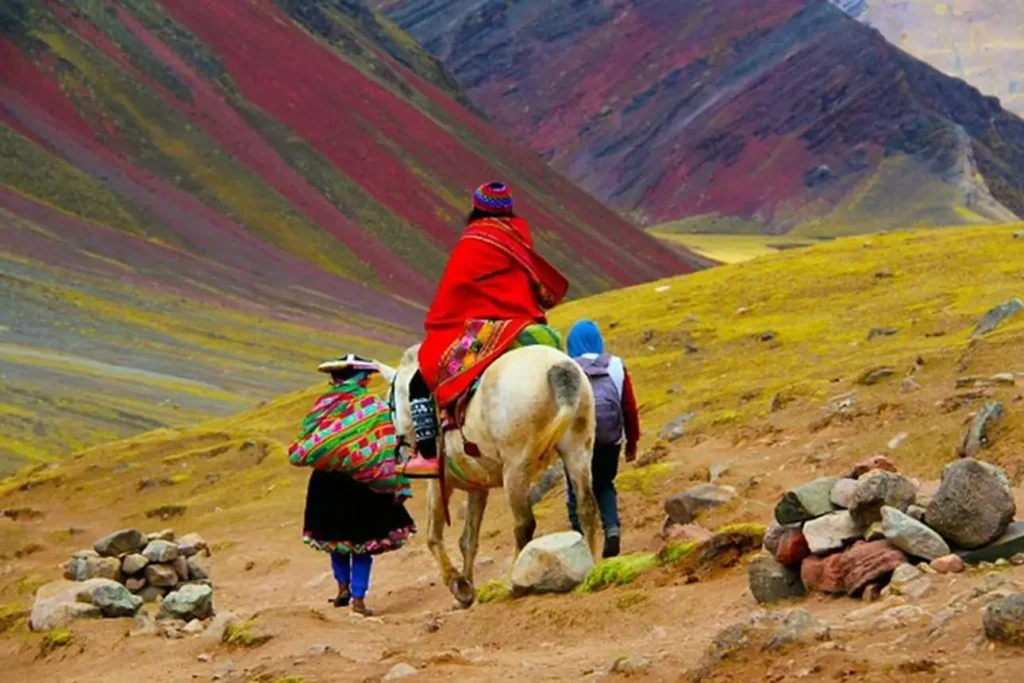
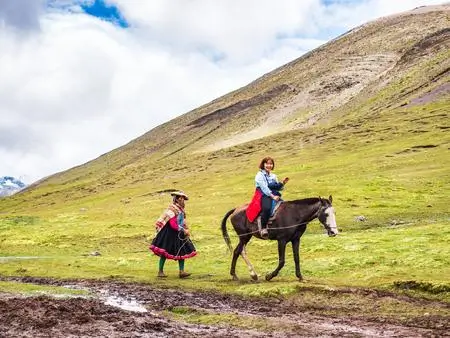
On this route, a horse is often the practical way to get someone down who can no longer walk safely on their own, whether due to altitude symptoms, fatigue, or an injury. It isn’t a fast solution, but it’s typically faster and safer than trying to walk someone down who is struggling. If you’re curious about riding a horse for part or all of the ascent rather than only as an emergency option, see Rainbow Mountain by horse for how that works.
Phone signal on the route
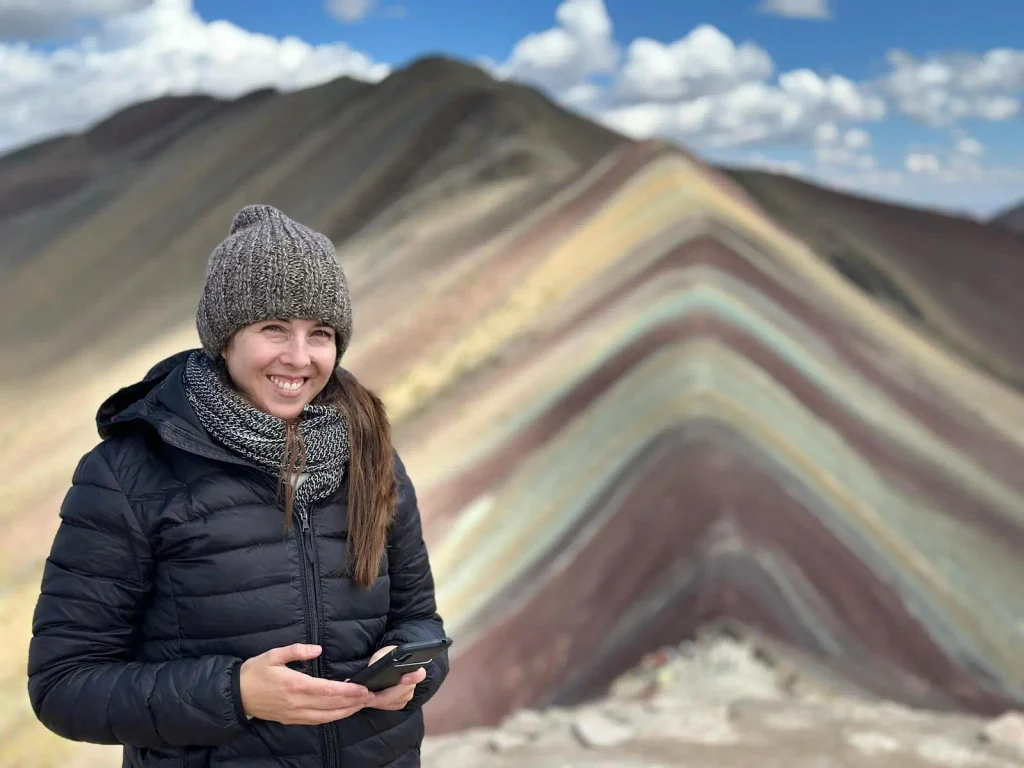
Mobile signal along the trail is unreliable and can disappear entirely in parts of the route. Don’t count on being able to call for help from wherever you happen to be — this is another reason a guide who knows the route and carries their own means of communication matters more here than the assumption that your own phone will work when you need it.
Why insurance matters for this day trip
Given the remoteness and altitude involved, travel insurance that covers high-altitude activities and medical evacuation is genuinely relevant for a day trip like this, not just for longer treks. It’s easy to think of Rainbow Mountain as “just a day tour” and underestimate how much a proper policy matters here. See travel insurance for a Peru tour for what to look for and why it’s worth having in place before you go, regardless of how fit or experienced you feel.
| Risk factor | Why it matters on this route |
|---|---|
| Altitude (5,036 m) | Most common cause of trouble on the hike |
| Cold, especially pre-dawn | Compounds fatigue and discomfort |
| Remote terrain | Help takes time to reach you |
| Unreliable phone signal | Can’t always call for assistance directly |
Travelling in a group vs alone
Whether you’re on a group departure or a private tour, having others around — travellers and a guide — means someone will notice if you’re struggling, even if you don’t recognise it in yourself. This is one of the real practical benefits of joining an organised tour rather than attempting the route independently: a guide who knows the terrain, watches for symptoms in the group, and can act quickly if something changes.
A reputable operator should be able to speak clearly about how they’d respond if a traveller needed help on the route — what support is available, how they’d get someone down, and how they’d coordinate further care if needed. Asking these questions before booking is reasonable, and a good operator won’t be evasive about the answers. For more on what to ask specifically around oxygen and medical readiness, see oxygen and medical support.
Once you’ve thought through the preparation this route deserves, our 1-day Rainbow Mountain tour is how most of our travellers take it on — with a guide alongside them for the full day.
FAQs
Is Rainbow Mountain safe to hike?
For most healthy, well-prepared travellers, yes — thousands complete it safely each season. The route is remote and high-altitude, though, so proper preparation, insurance, and a reputable guide all matter more than on an easier day trip.
What happens if I can’t continue partway up?
A horse is typically the practical option for getting someone down who can’t continue on foot. Guides are experienced in making this call, and turning back is common and nothing to feel embarrassed about.
Will my phone work if I need help on the trail?
Not reliably. Signal is patchy to non-existent along parts of the route, which is another reason travelling with an experienced guide matters here.
Do I need special insurance for a day trip like this?
Given the altitude and remoteness involved, insurance that covers high-altitude activity and medical evacuation is genuinely worth having, even for what’s technically a single-day tour.