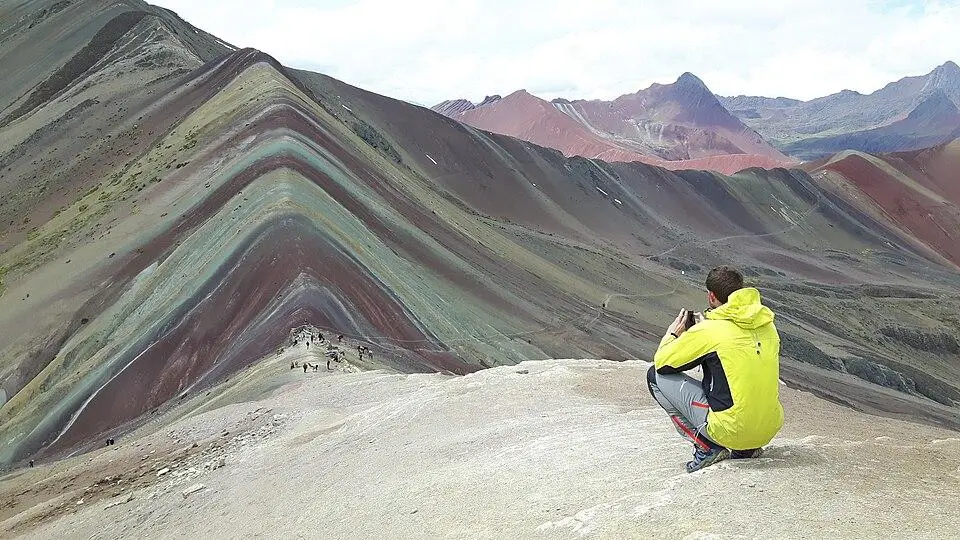
At 5,036 m, Vinicunca — Rainbow Mountain — sits far higher than anywhere else most travellers go on a Peru trip, including Cusco at 3,399 m and Machu Picchu at 2,430 m. At this altitude, the air holds roughly half the oxygen it does at sea level, and most people feel it: heavier breathing, a slower pace, and a heart rate that climbs on the smallest incline. None of this is unusual, but it catches people off guard when they haven’t been told what to expect in advance. For the full picture of the day, start with our complete Rainbow Mountain guide.
5,036 m in context: higher than anywhere else on a normal Peru trip
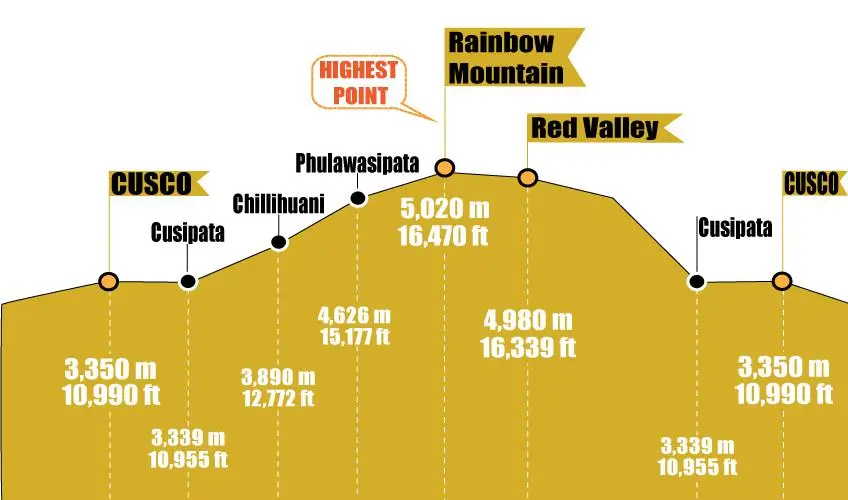
Most Peru itineraries top out around Cusco’s 3,399 m, with occasional dips lower at Machu Picchu or the Sacred Valley. Vinicunca breaks that pattern entirely. At 5,036 m, it sits well above any city, town, or archaeological site most travellers will visit on the same trip — roughly 1,600 m higher than Cusco itself.
That gap matters. Acclimatizing to Cusco does not fully prepare your body for Vinicunca; it just gives you a head start. Treat the day at Rainbow Mountain as a separate physical challenge from the rest of your itinerary, not an extension of it.
| Location | Altitude |
|---|---|
| Cusco | 3,399 m |
| Sacred Valley | approx. 2,800 m |
| Machu Picchu | 2,430 m |
| Vinicunca (Rainbow Mountain) | 5,036 m |
How much oxygen there actually is up there
Atmospheric pressure drops as altitude increases, and with it, the amount of oxygen available in each breath. By 5,036 m, your body is working with substantially less oxygen per breath than it has at sea level, and less again than at Cusco’s 3,399 m. This isn’t something you can train around in the days before your trip — it’s simply the physics of being higher up, and your body’s ability to adapt to it varies from person to person and even from one trip to the next.
What you will feel, section by section
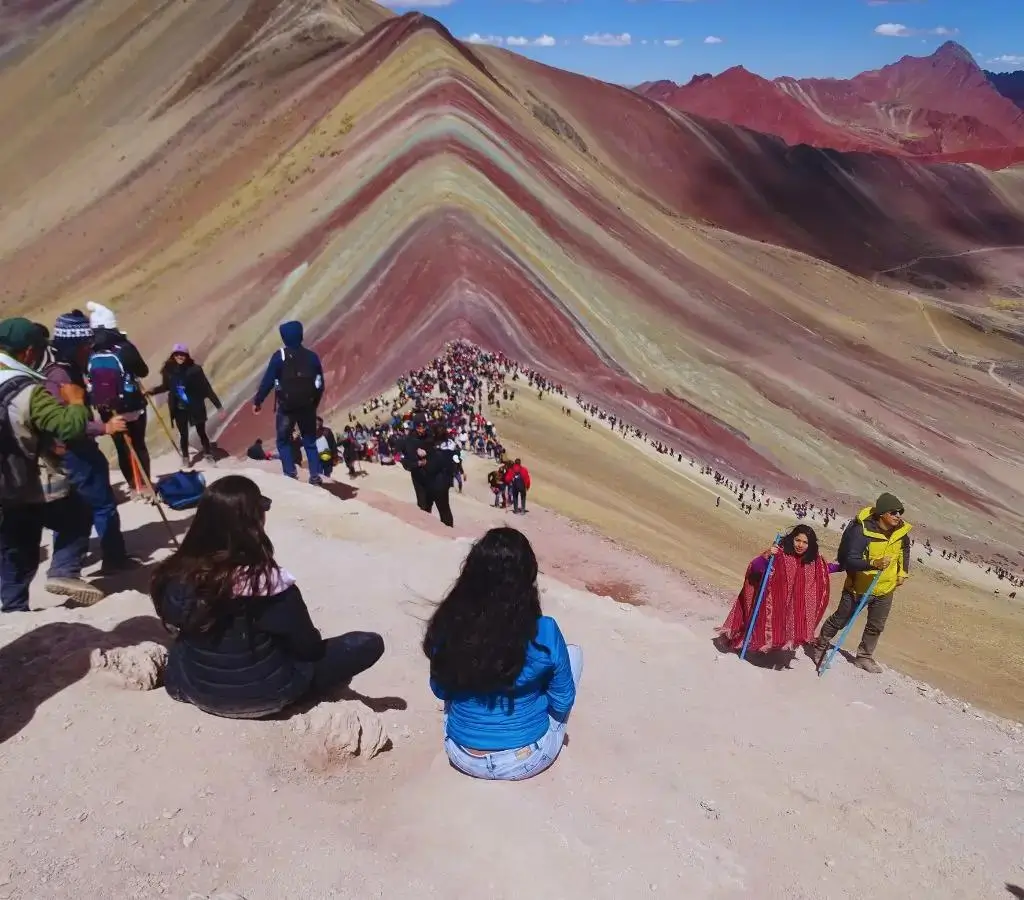
Most travellers describe the hike in stages. Lower down, near the trailhead, breathing is heavier than expected but manageable. As the trail climbs, especially on the steeper final stretch before the viewpoint, pace slows dramatically — many people find themselves stopping every few dozen steps to catch their breath, even those who consider themselves fit. Near the top, at close to 5,036 m, even standing still and talking can leave you short of breath.
This is normal. The trail itself is not technical — it is walking, not climbing — but the altitude turns a straightforward walk into something that demands patience and a slow, steady pace throughout.
Symptoms that are normal and symptoms that are not
Some degree of breathlessness, a faster heartbeat, and feeling more tired than the distance alone would suggest are expected at this altitude. A mild headache or slight nausea can also occur and often passes with rest, slower pacing, or descending a little.
What is not normal, and should not be pushed through, includes: severe headache that doesn’t ease, confusion or difficulty thinking clearly, loss of coordination, vomiting, or shortness of breath that doesn’t improve with rest. These are signs that your body is not coping well with the altitude, and the right response is to descend rather than continue. This is general information, not medical guidance — if you have any pre-existing health conditions or concerns about how you’ll handle the altitude, talk to a doctor before your trip, and take symptoms on the day seriously rather than pushing through them.
Why fitness does not protect you
One of the most common misunderstandings about high altitude is that being physically fit means you’ll handle it better. It doesn’t work that way. How your body responds to reduced oxygen at 5,036 m has little to do with how many kilometres you can run at sea level — marathon runners can struggle at altitude while less active travellers sail through, and the reverse happens just as often.
What actually helps is proper acclimatization beforehand, a slow pace on the day, and paying attention to how you feel rather than how fit you consider yourself. If you want to put the odds in your favour, acclimatization before Rainbow Mountain covers how to structure your days in Cusco leading up to the hike, and your first 48 hours in Cusco covers the basics of settling in at 3,399 m before you go any higher.
What helps and what does not
A slow, steady pace matters more than almost anything else — rushing uphill at 5,036 m is the single fastest way to feel terrible. Staying hydrated, dressing in layers so you’re not overheating or too cold, and eating something light before you start also help your body cope better with the exertion.
What doesn’t help: trying to push through symptoms to “tough it out,” skipping the acclimatization days in Cusco beforehand, or assuming that because you felt fine in Cusco you’ll feel fine here too. Coca tea and coca leaves are widely used locally and many travellers find them settling, though they are not a substitute for descending if symptoms get serious. Beyond that, this article won’t recommend specific medications — that’s a conversation for a doctor, ideally before you leave home.
When to turn back
If symptoms move from mild discomfort into something more serious — the kind described above under “not normal” — the right call is to stop and descend, not to push on to the viewpoint. No photo at the top is worth ignoring a body that’s telling you it isn’t coping. Guides on the route are used to this and will support a decision to turn back; it happens regularly and isn’t something to feel embarrassed about.
If you’re deciding whether Rainbow Mountain is the right fit for your trip at all, comparing it against a gentler alternative is worth doing before you book — see Vinicunca vs Palccoyo for how the two compare on altitude and effort. And if you want the mechanics of the trail itself, from trailhead to viewpoint, the Vinicunca trail step by step walks through what to expect at each stage.
Once you’ve acclimatized properly and know what the day involves, our 1-day Rainbow Mountain tour is the way most of our travellers experience it — with a guide who knows the route and the pace it demands.
FAQs
Is 5,036 m dangerous?
For most healthy travellers who acclimatize properly and pace themselves, the altitude is uncomfortable rather than dangerous. Serious altitude illness is possible, though, which is why paying attention to symptoms and being willing to turn back matters. Speak with a doctor beforehand if you have any health concerns.
How does Vinicunca’s altitude compare to Cusco?
Vinicunca sits at 5,036 m, around 1,600 m higher than Cusco at 3,399 m. Time spent acclimatizing in Cusco helps, but it doesn’t fully prepare you for the additional altitude at Rainbow Mountain.
Will being fit make the hike easier?
Not necessarily. Physical fitness at sea level doesn’t reliably predict how your body will respond to reduced oxygen at this altitude. Acclimatization and pacing matter more than fitness level.
What should I do if I start feeling unwell on the trail?
Slow down, rest, and monitor how you feel. If symptoms are severe or not improving — a bad headache, confusion, vomiting — the right response is to descend rather than continue to the top.