

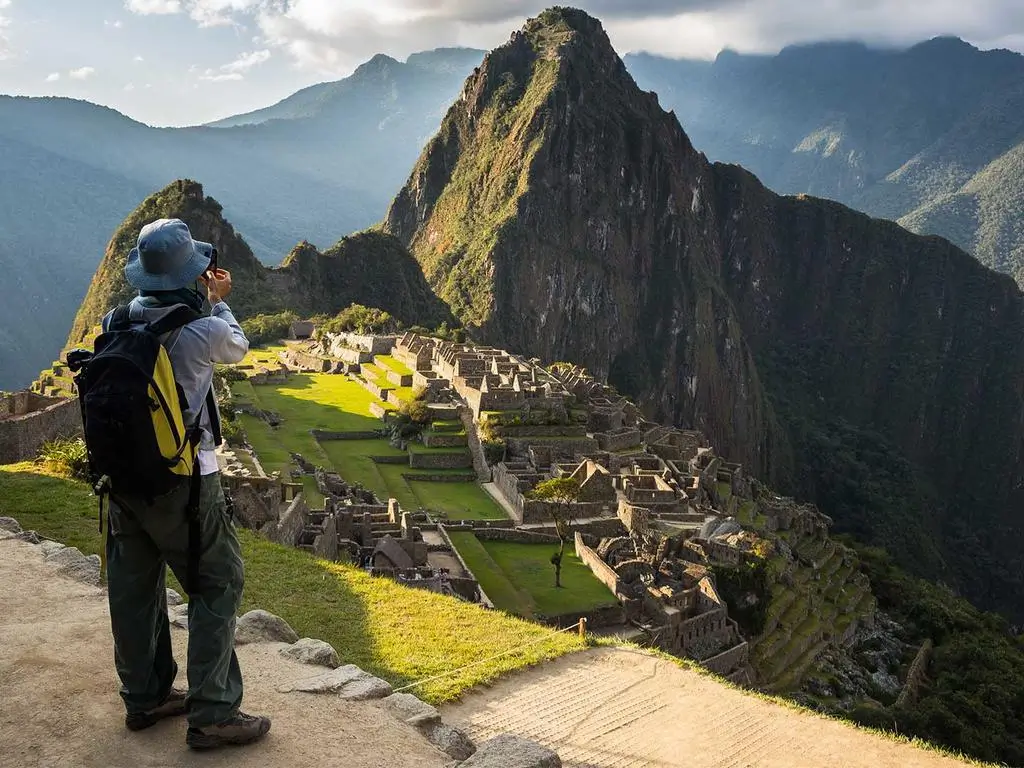
The classic wide-angle shot of Machu Picchu, with the terraces spread below Huayna Picchu, comes from the upper viewpoint near the Guardhouse — and which circuit you buy determines whether you get access to it. Circuits run one-way, so once you’ve walked past that viewpoint, you can’t turn back for another look. Tripods and drones are both restricted on-site, which surprises a lot of visitors planning their shots in advance. Below, we cover the light through the day, how fog affects your options, and what you can and can’t bring in.
The classic shot and which circuit gives it to you
The postcard view of Machu Picchu — the full terraced citadel with the mountain behind it — is taken from an upper vantage point that only some circuits pass through. Since the site runs on one-way circuits with no backtracking, choosing the right one before you enter matters more here than at almost any other stop on your trip. If you haven’t decided which route to take, which circuit to buy breaks down what each one covers, and Circuit 1 explained goes into detail on the route most photographers ask for specifically. For everything else the visit involves, our complete Machu Picchu guide covers it in full.
Light through the day
Machu Picchu opens at 6:00 AM and closes at 5:30 PM, and light changes meaningfully across that window. Early entry gives you softer, angled light and a better chance of the site being less crowded in your frame, while midday brings harsher, more direct sun with less flattering contrast on the stonework. If timing your visit around light and crowds is a priority, morning vs afternoon entry covers what each window actually looks like on the ground.
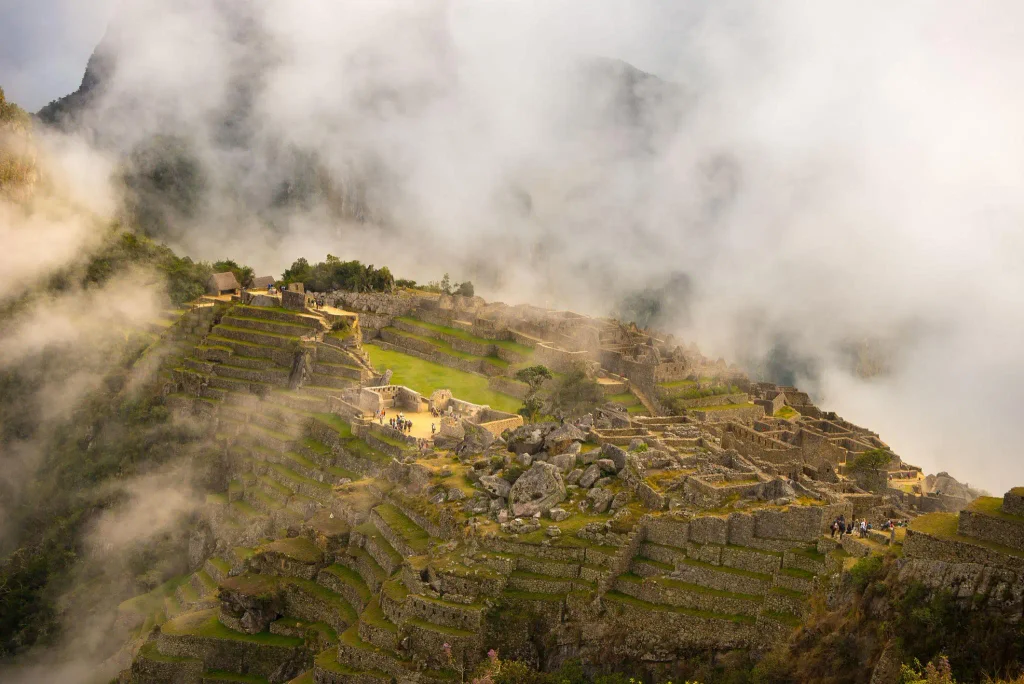
Fog: what it does and how to wait it out
Cloud and fog are common at this elevation, especially early in the morning, and can roll across the site quickly — sometimes obscuring the classic panorama entirely for a stretch, then clearing just as fast. If you arrive and find the view fogged in, it’s often worth continuing your circuit and coming back to a viewpoint later if your route allows, rather than waiting in place, since fog at Machu Picchu tends to move rather than sit.
Equipment rules: tripods and drones
Two restrictions catch photographers off guard because they’re not widely publicized before arrival: tripods are restricted on-site, and drones are not permitted. If your photography plans depend on either, you’ll need to adjust — handheld shots and, where allowed, monopods are the practical alternative. This is worth knowing before you pack, not something to discover at the entrance. For the fuller list of what’s and isn’t allowed inside, Machu Picchu rules and banned items covers it alongside the tripod and drone restrictions.
| Equipment | Allowed on-site |
|---|---|
| Handheld camera or phone | Yes |
| Tripod | Restricted |
| Monopod | Check current site rules |
| Drone | Not permitted |
Shooting without blocking the one-way route
Because circuits move in one direction with a steady flow of visitors, stopping for a long time at a narrow point to get a shot holds up everyone behind you. Step to the side where the path allows, work quickly at popular viewpoints, and accept that you likely won’t get a second pass at a spot you’ve already walked through. This is a bigger factor here than at most sites, precisely because you can’t loop back.
Details worth photographing beyond the panorama
The wide shot gets most of the attention, but the stonework itself is worth slowing down for — the fitted joints in the walls, the terracing patterns, and the structures along the route each tell a different part of the site’s story than the classic wide view. A good guide, included on our 6, 7 and 8-day itineraries, will often point out these details as you pass, which is worth factoring in if photography is a priority for your visit.
Phone vs camera at altitude
At 2,430 m, neither phones nor cameras face any altitude-specific limitations beyond normal battery drain in cooler morning temperatures — carry a spare battery or power bank if you’re planning a long session. Phones handle the wide panoramic shots well enough for most travellers, while a dedicated camera gives you more control over the detail shots and the tighter compositions the one-way route sometimes demands quickly.
If photography is central to why you’re visiting, our 2-day Machu Picchu tour from Cusco gives you a focused visit built around it, and the 8-day Cusco and Machu Picchu tour adds more time across the wider region for shots beyond the citadel itself.
Frequently asked questions
Are tripods allowed at Machu Picchu?
Tripods are restricted on-site. Plan for handheld shots, and check current rules if a monopod is part of your setup.
Can you fly a drone at Machu Picchu?
No, drones are not permitted at the site.
Can I go back to an earlier viewpoint for a better photo?
No. Circuits run one-way with no backtracking, so once you’ve passed a viewpoint, you can’t return to it during the same visit.
What’s the best time of day for photos at Machu Picchu?
Early morning generally offers softer light and fewer visitors in frame, though fog is also more common then. Midday brings harsher light but usually clearer skies.