

Machu Picchu opens at 6:00 a.m. and closes at 5:30 p.m., with entry sold in hourly time slots you must arrive for on time. Your backpack cannot exceed 40 x 35 x 20 cm (about 15.7 x 13.7 x 7.9 in), roughly the size of a small daypack, not a full hiking backpack. Banned items include drones, tripods and selfie sticks, walking poles without rubber tips, umbrellas, food beyond a light snack, alcohol, and single-use plastics. Since 2024, a licensed guide is mandatory for entry. Once you exit, you generally can’t re-enter on the same ticket. None of this is arbitrary, it’s enforced at the gate, and gate staff turn people away for exactly these reasons more often than most first-time visitors expect. This guide covers what actually gets checked, not just the posted signage. For everything else about planning your visit, see our complete Machu Picchu guide.
Opening hours and entry windows
The site operates daily from 6:00 a.m. to 5:30 p.m., with tickets sold for a specific one-hour entry window rather than a general day pass. Arriving at the wrong hour, even with a valid ticket for the same day, can mean being turned away at the gate, since your ticket is tied to that specific slot, not to the day as a whole.
Bring your original passport, the one used to book, since the name and number on your ticket must match. Photocopies and digital scans are not reliably accepted as substitutes at the checkpoint.
Tickets are non-transferable and generally non-refundable once purchased, so double-check the date, entry hour, and circuit before completing payment rather than assuming changes are simple afterward. If your travel dates shift, contact the platform or your operator as early as possible, since availability for a replacement slot depends entirely on what’s still open for your new date.
For guidance on choosing between an early or late slot based on crowds, light, and weather, see morning vs afternoon entry. And if you’re still deciding which circuit and route to book alongside your entry time, which circuit to buy walks through that decision.
Backpack size limits and left luggage
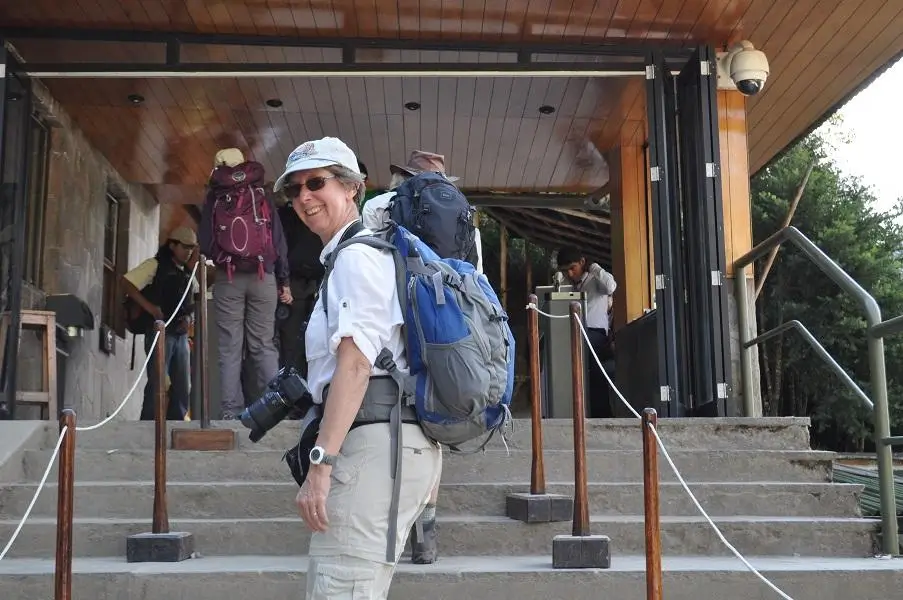
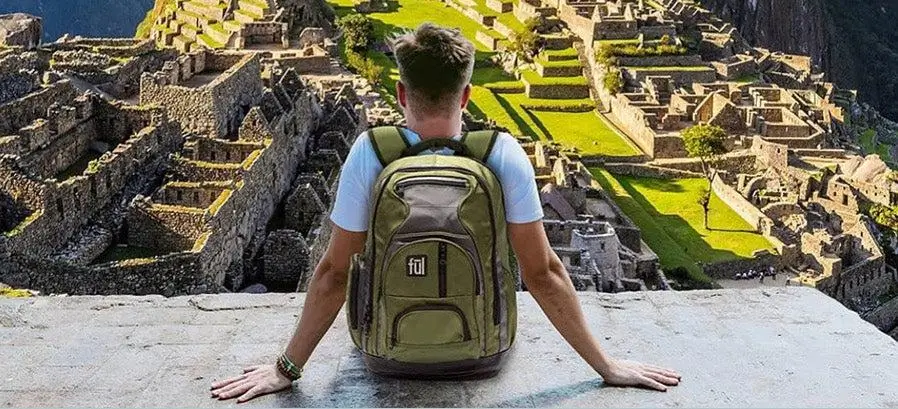
The backpack limit is 40 x 35 x 20 cm, a size built for a compact daypack: a rain layer, a water bottle, sunscreen, and a camera, not a multi-day trekking pack. Bags larger than this are not admitted, and gate staff measure bags that look borderline rather than taking your word for it.
If your bag is oversized, paid storage lockers are available near the entrance, but during peak morning hours, storage lines add real time you probably don’t want to spend before your slot. The simpler fix is to pack a smaller daypack specifically for the Machu Picchu leg of your trip and leave your main luggage at your hotel in Cusco, the Sacred Valley, or Aguas Calientes, most properties store bags without charge for guests.
In our experience running groups through the gate regularly, oversized daypacks are one of the two most common reasons we see visitors stopped at the checkpoint, alongside tripods and selfie sticks with a mounted base. Neither is a gray area for the staff on duty, both are checked visually and consistently.
The banned items list
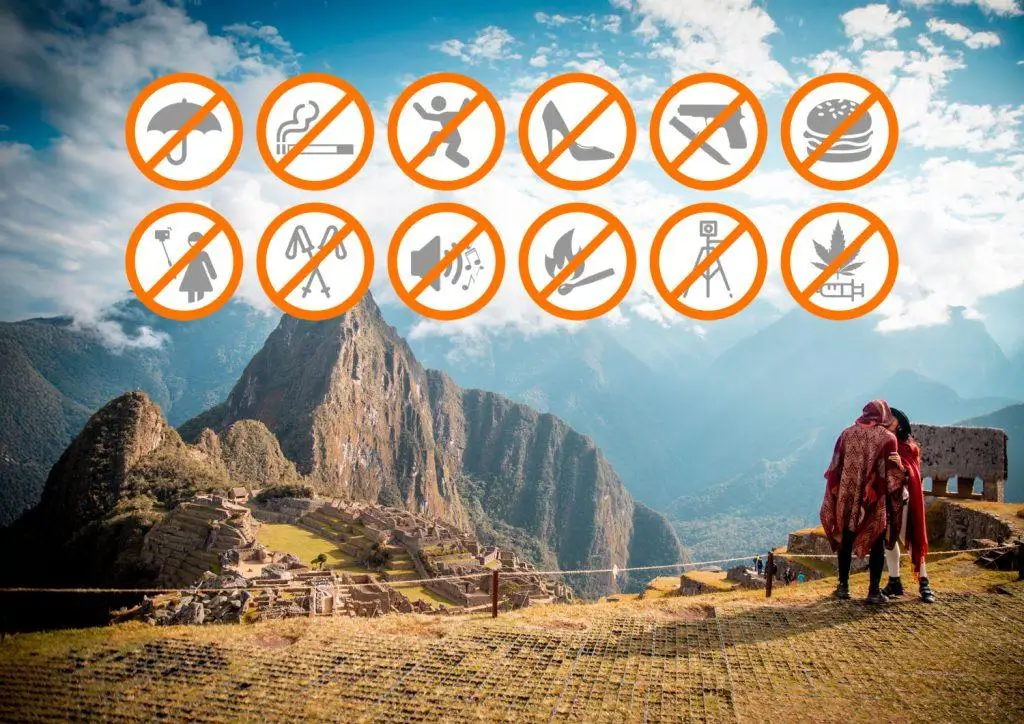
The banned items list covers safety, site preservation, and crowd flow, and enforcement is active rather than symbolic. Drones require prior written authorization from the Ministry of Culture and are confiscated on sight without it. Tripods, monopods, and selfie sticks with any kind of stand or mount are prohibited, since they slow foot traffic on narrow paths and risk contact with the stonework; a short, handheld selfie stick without a base is generally tolerated, but anything that extends and plants on the ground is treated as a tripod.
Walking sticks and poles are only allowed with rubber tips, intended for visitors with a genuine mobility need, metal-tipped trekking poles are turned away. Umbrellas and parasols aren’t permitted either, a rain jacket or poncho is the accepted alternative during wet season. Food beyond a light snack isn’t allowed inside, alcohol is banned outright, and single-use plastics, including disposable water bottles in some enforcement, are discouraged in favor of a reusable bottle. Aerosol sunscreen and insect repellent are also restricted, cream or lotion versions are the accepted substitute. Pets and animals aren’t permitted, with the sole exception of certified service animals, and strollers or prams are replaced by strap-on baby carriers.
Rules inside: routes, re-entry, drones, tripods
Once you’re inside, your ticket locks you to one specific circuit and route, and circuits at Machu Picchu run one-way. You cannot backtrack to a section you’ve already passed or cross over into a different circuit partway through your visit, even if you can see it from where you’re standing.
Re-entry on the same ticket generally isn’t permitted once you exit, so treat your visit as a single continuous entry rather than something you can step out of and return to later. There are narrow exceptions: Short Inca Trail hikers entering via Km 104 can return the following day on the same permit structure, and re-entry may be approved case by case for a genuine medical or operational emergency, at the discretion of park staff, not as a matter of course.
Climbing, sitting, or leaning on the stone structures is prohibited throughout the site, regardless of circuit, and staff actively intervene when they see it. Drone use and tripod use fall under the same active enforcement described above, this isn’t a rule that only applies at the entrance gate, guides and rangers continue to watch for it once you’re walking the site.
Food, water and toilets
Water is the one consumable you’re reliably allowed to bring in, a light snack is generally tolerated but a packed meal is not, and there’s no food service inside the citadel itself. Bring what you need before you enter, since there’s no opportunity to restock once you’re inside your circuit.
Toilets are located outside the main entrance, before the checkpoint, not inside the archaeological zone. Use them before you go through security, since there’s no facility to return to partway through your visit given the one-way, no-re-entry structure of the circuits.
What gets people turned away at the gate
Beyond the two most common issues we see, oversized bags and tripods or selfie sticks with a base, the other frequent rejection is a passport mismatch: a ticket booked under one spelling or passport number and a traveler presenting a different one, often due to a typo at booking or a recently renewed passport that doesn’t match what was entered months earlier. Double-check this detail as soon as you book, not the morning of your visit.
Arriving at the wrong entry hour is another recurring issue, particularly for independent travelers who assume their ticket is valid for the whole day rather than a specific one-hour window. Footwear draws occasional attention too: high heels and hard-soled dress shoes aren’t appropriate for the uneven stone paths and can be flagged at the discretion of staff, though this is enforced less consistently than bag size or banned items.
If you’re traveling with our 2-day Machu Picchu tour from Cusco or the 4-day Cusco and Machu Picchu tour, our guides check your bag, footwear, and documents before you ever reach the gate, so none of this becomes a surprise on-site.
What to actually carry
Pack light and pack specific: a reusable water bottle, sunscreen and a hat, a light rain layer regardless of season, a small camera or phone, your passport, and your printed or downloaded ticket. That’s enough for a 2.5-hour guided visit without pushing against the backpack size limit or the banned items list.
Leave behind anything on the prohibited list, along with anything bulky you don’t need for the few hours you’ll actually be inside. If you’re building out your broader trip itinerary and want to know what else to pack before you even reach Cusco, your first 48 hours in Cusco covers acclimatization and general packing considerations for the rest of your visit. And for the ticket-buying process itself, including how entry times and circuits interact, see how to buy Machu Picchu tickets.
| ALLOWED | NOT ALLOWED |
|---|---|
| Small daypack up to 40 x 35 x 20 cm | Large backpacks or trekking packs over 40 x 35 x 20 cm |
| Reusable water bottle | Food beyond a light snack, packed meals |
| Light snacks | Alcohol |
| Personal cameras, smartphones | Drones without Ministry authorization |
| Handheld selfie stick without a base | Tripods, monopods, selfie sticks with a mounted base |
| Rubber-tipped walking poles (medical need) | Metal-tipped walking sticks or trekking poles |
| Rain poncho or jacket | Umbrellas and parasols |
| Cream or lotion sunscreen and repellent | Aerosol sunscreen and spray repellents |
| Strap-on baby carriers | Strollers and prams |
| Certified service animals | Pets and other animals |
| Comfortable closed walking shoes | High heels and hard-soled dress shoes |
| Original passport matching your ticket | Photocopies or mismatched ID |
| Mirrorless or DSLR cameras with standard lenses | Professional lighting equipment, large stabilizer rigs |
| A single continuous visit on your assigned circuit | Re-entry on the same ticket after exiting (limited exceptions) |
| Reusable containers for your own trash | Single-use plastics left behind on site |
Frequently Asked Questions
What size backpack can I bring into Machu Picchu? Up to 40 x 35 x 20 cm (about 15.7 x 13.7 x 7.9 in), roughly the size of a compact daypack. Larger bags need to be left at paid storage lockers near the entrance or back at your hotel.
Can I bring a tripod for photography? No, not without prior written authorization from the Ministry of Culture, which isn’t typically issued to individual visitors. A handheld camera or smartphone, or a selfie stick without a base, is your practical option.
Can I leave and come back later the same day? Generally no. Once you exit, your ticket doesn’t allow re-entry, with narrow exceptions for Short Inca Trail hikers entering via Km 104 and case-by-case medical or operational emergencies.
Is food allowed inside Machu Picchu? Water is reliably permitted, and a light snack is generally tolerated, but a full packed meal isn’t allowed inside the citadel. There’s no food service on-site, so eat beforehand.