
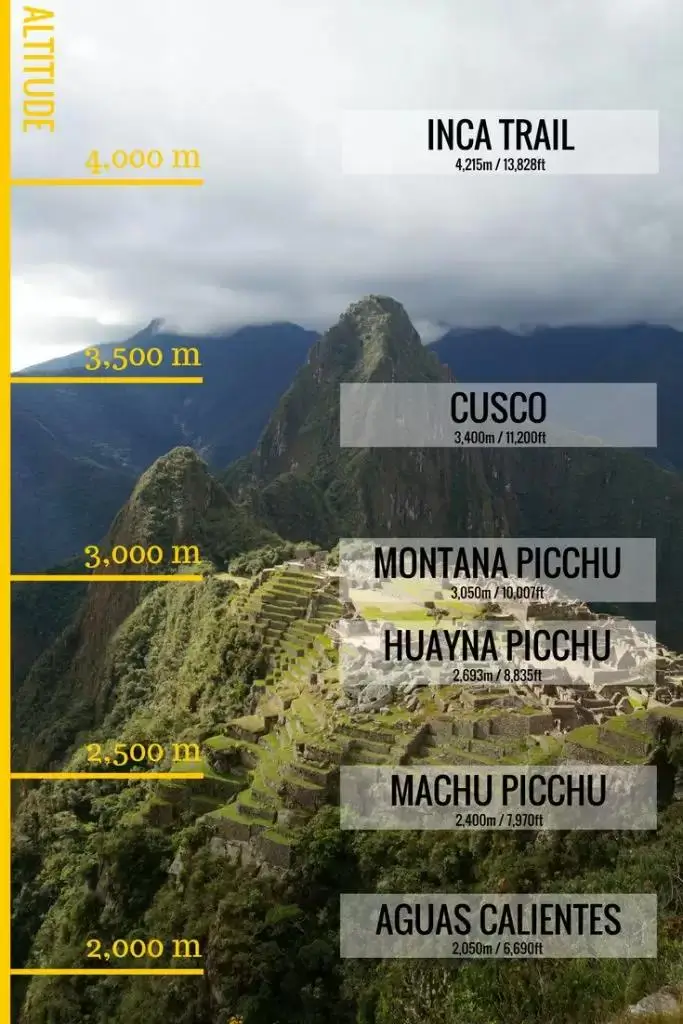
Machu Picchu sits at 2,430 m (7,972 ft) — lower than Cusco at 3,399 m (11,152 ft), not higher, which is the exact opposite of what most people assume before they visit. The citadel is often imagined as a high-altitude mountaintop site, but Cusco is actually the highest point on a typical itinerary, and Machu Picchu is where altitude eases off. Getting this sequence right changes how you plan your first days. Below, we break down the real numbers, where the Sacred Valley fits in between, and how to sequence your trip around them.
The numbers people get wrong
The most repeated mistake in Peru travel planning is assuming Machu Picchu is the high-altitude challenge of the trip. It isn’t. Cusco, where most itineraries start, sits highest at 3,399 m; Machu Picchu, the destination everyone’s picturing, sits nearly a thousand metres lower. If you’re planning around altitude at all, plan around Cusco, not the ruins. Our complete Machu Picchu guide covers the rest of what to expect on site once altitude isn’t the concern you thought it’d be.
Cusco at 3,399 m vs Machu Picchu at 2,430 m
The gap between the two is close to 1,000 metres — not a small difference at these elevations. Cusco at 3,399 m (11,152 ft) is where the thinner air is most noticeable: for most travellers, this is where symptoms like shortness of breath or a mild headache show up, if they show up at all. Machu Picchu at 2,430 m (7,972 ft) is meaningfully lower, closer to elevations most travellers are already used to.
| Location | Altitude | Where it falls in a typical trip |
|---|---|---|
| Cusco | 3,399 m (11,152 ft) | Usually the first stop and the highest point |
| Sacred Valley | approx. 2,800 m | A step down from Cusco, often visited next |
| Machu Picchu | 2,430 m (7,972 ft) | The lowest point on the route, visited last |
Why you may feel better at the citadel than in the city
Because Machu Picchu sits lower than Cusco, a lot of travellers genuinely feel better once they reach it than they did during their first day or two in the city. If Cusco’s altitude was making you tired or short of breath, that tends to ease as you descend toward the Sacred Valley and then Aguas Calientes. The 2.5-hour guided visit at Machu Picchu itself is often more comfortable, altitude-wise, than the days that came before it.
Where the Sacred Valley fits
The Sacred Valley sits at around 2,800 m — lower than Cusco but higher than Machu Picchu, making it a natural middle step on the way down. Itineraries that route through the Sacred Valley before Machu Picchu are effectively descending in stages, which is gentler than jumping straight from Cusco’s altitude to sea level and back. This is one of the reasons a Sacred Valley stop is built into most multi-day routes rather than treated as an optional extra.
Sequencing an itinerary by altitude
Given these numbers, the logical order is: arrive in Cusco, spend your highest-altitude days there first, move down through the Sacred Valley, then continue down further still to Machu Picchu. Our 14-Day Peru Mystic Tour follows exactly this kind of descending structure, adding a dedicated rest day in Cusco on day 5 before continuing. For a shorter version of the same logic, the 6-day Cusco and Machu Picchu tour sequences the same descent over fewer days.
What still gets you: stairs, sun and dehydration
Altitude eases as you descend, but that doesn’t mean Machu Picchu itself is effort-free. The site involves plenty of walking on uneven stone terraces, strong sun with little shade at points, and the kind of dehydration that sneaks up on you after a few hours outdoors. None of this is altitude-related, but it’s exactly the kind of thing that gets blamed on altitude when it’s really just heat and exertion. We’ve covered the altitude-sickness side of this in detail elsewhere — altitude and sickness at Machu Picchu goes deeper on symptoms and what to do about them, so we won’t repeat that here. Before your visit, it’s worth checking Machu Picchu rules and banned items too, since some sun protection and water-carrying gear has restrictions on-site.
Planning your first days accordingly
If altitude is a genuine concern for your trip, the planning priority is Cusco, not Machu Picchu — your first 48 hours in Cusco covers exactly how to pace those initial days at the highest point of your route. Once you’re past that stage and descending toward the Sacred Valley and Machu Picchu, the altitude side of the trip genuinely gets easier, not harder. If you’re comparing this against another high-altitude stop on a longer Peru itinerary, Rainbow Mountain altitude covers Vinicunca’s very different numbers — at 5,036 m, it’s a separate consideration entirely from the Cusco-to-Machu Picchu descent.
Frequently asked questions
Is Machu Picchu higher altitude than Cusco?
No. Machu Picchu sits at 2,430 m, while Cusco sits at 3,399 m — nearly 1,000 metres higher. Cusco is the highest point on most itineraries, not Machu Picchu.
Will I feel altitude sickness at Machu Picchu?
Machu Picchu’s lower elevation makes it generally more comfortable than Cusco. Most altitude-related effects, if they occur, tend to show up earlier in a trip, in Cusco.
Where does the Sacred Valley fit in terms of altitude?
At around 2,800 m, it sits between Cusco and Machu Picchu, making it a natural step down before reaching the lowest point of the route.
If altitude isn’t the main issue at Machu Picchu, what should I actually plan for?
Sun exposure, uneven walking terrain, and dehydration are the more relevant factors on-site, separate from altitude itself.