
Last updated: August 2026 — ticket rules, prices and daily caps change often. Confirm current figures before publishing or quoting to a client.
You can no longer walk freely around Machu Picchu. Since June 1, 2024, every ticket is sold for one specific circuit and route, chosen at the moment of purchase, with no switching once you’re inside. Standard tickets run per foreign adult, entry windows run roughly hourly through the day, and daily capacity is capped by the Ministry of Culture. We run tours through Machu Picchu every week, and this is the version of the ticket system we actually see at the gate right now, not the version that gets copy-pasted across travel blogs.
If you’ve already read our complete Machu Picchu guide, this article goes deeper into the one part that trips up the most travelers: picking the right circuit, the right time slot, and buying before your date sells out.
How the ticket system works now
Machu Picchu sits at 2,430 m and is part of a UNESCO mixed World Heritage Site — cultural and natural — which is part of why entry management has gotten stricter every year. The Ministry of Culture no longer sells a single generic “entrance ticket.” Instead, every ticket is tied to:
- A circuit (1, 2, or 3), which is the physical route you walk
- A route letter (A, B, C, or sometimes D), which is the specific variation of that circuit
- A time slot, the hour you’re allowed to enter
- Optional add-ons — Huayna Picchu, Machu Picchu Mountain, or the site museum
You choose all four at the moment of purchase, and none of them can be changed after you pay. Once you exit the citadel, you cannot re-enter on the same ticket. The official platform is tuboleto.cultura.pe, and tickets for a given year are typically released in November of the previous year — for 2026, sales opened on November 17, 2025.
We know that’s a lot of moving parts for a first-time visitor. That’s exactly why we cover which circuit to buy as its own guide — the short version is below.
The three circuits and their sub-routes
There are three main circuits, set by the Ministry of Culture to control visitor flow and protect the ruins. Depending on the season, their sub-routes add up to as many as ten distinct route combinations.
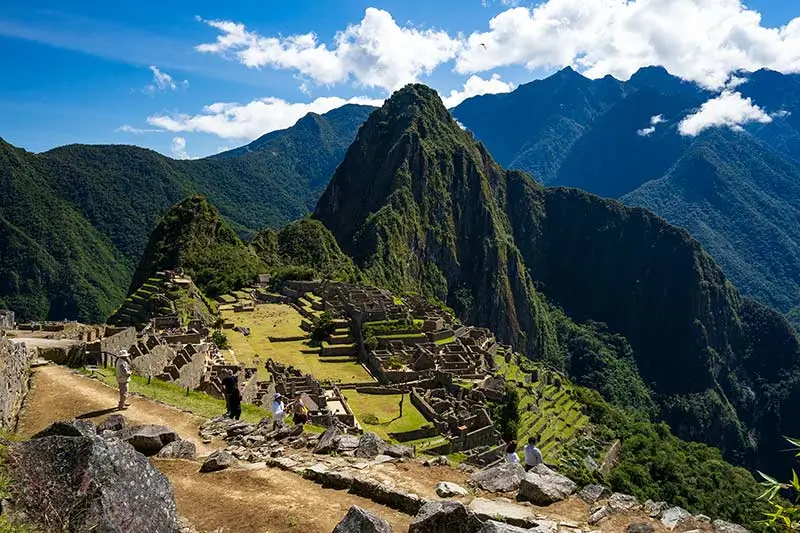
Circuit 1 is the panoramic route. It climbs to the upper terraces for the classic postcard view over the citadel before descending through the main structures. Two of its route variants matter most: 1-A includes Montaña Machu Picchu (the mountain climb, with limited slots and a higher price band), and 1-B goes to the Terraza Superior, the “Guardian’s House” area for the classic postcard view. If your entire trip is built around that one photo, this is the circuit to book.
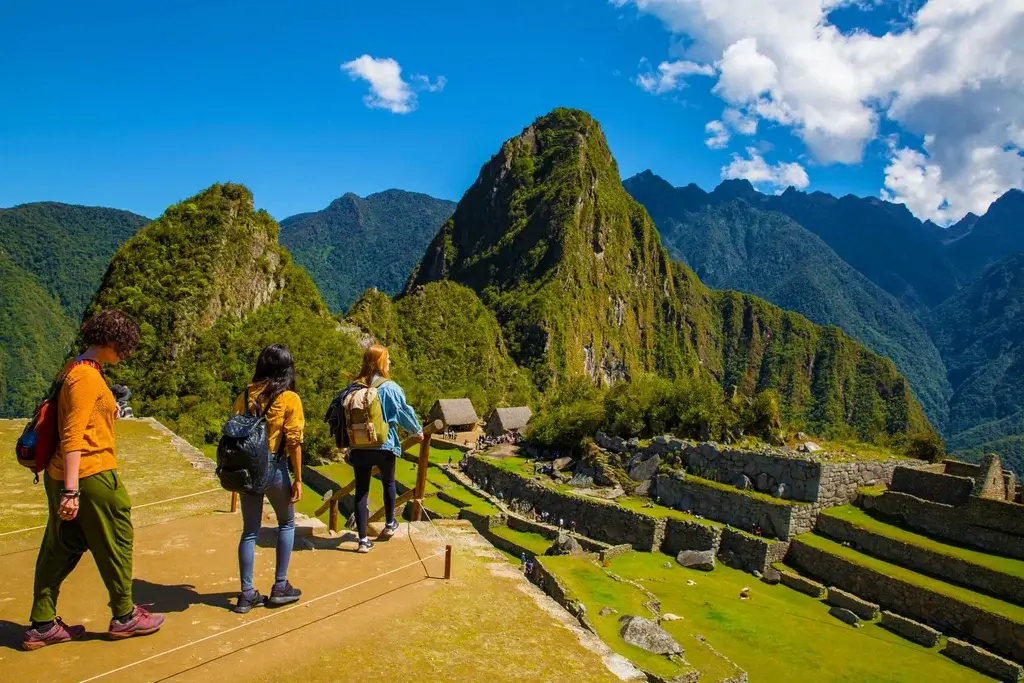
Circuit 2 is the classic route. It combines the panoramic viewpoint with a walk through the core archaeological zone — the Temple of the Sun, the Royal Tomb, the Sacred Plaza — and is the most complete single-circuit experience of the site. We cover the full route breakdown in Circuit 2 explained, including where it overlaps with Circuit 1 and where it diverges.
Circuit 3 is the lower, shorter route. It skips the upper terraces and the steep stairways, moves through the residential and agricultural sectors at a gentler pace, and takes less time overall. It’s the circuit we recommend for travelers with mobility limitations, older travelers, or anyone who wants a shorter visit without giving up the core citadel views.
Route letters within each circuit (A, B, C, D) control direction and which sub-sectors you pass through — some routes are one-way only and don’t allow backtracking.
Time slots: how they work and which to pick
Entry is timed, not open. Windows run roughly hourly from 6:00 AM through mid-afternoon, and the Ministry allows an informal 30-minute grace period beyond your printed time — past that, entry is normally denied. In practice, treat your printed time as the last moment you can walk through the gate, not a target to aim for.
For which slot to pick:
- 6:00–8:00 AM — coolest temperatures, best chance of a clear photo before afternoon cloud builds, but the highest concentration of visitors in the first two hours since most day-trippers from Cusco arrive on the early trains.
- 9:00–11:00 AM — usually the best light-to-crowd ratio. Fog from the valley has typically cleared, and the very first wave has moved through.
- 12:00 PM onward — thinner crowds, warmer weather, and in the dry season (May–September) often clearer skies than the morning. The trade-off is a longer, hotter walk if your circuit includes the upper terraces.
If you’re combining Machu Picchu with an early train, your realistic entry window depends on train schedules out of Ollantaytambo or Cusco, not just your ticket preference — something to check before you lock in a slot on our 2-day Machu Picchu tour from Cusco.
Daily caps and when tickets sell out
Capacity is set by ministerial resolution and changes by date. For 2026, high-season dates cap at 5,600 visitors a day — January 1, April 2–5, June 19 through November 2, and December 30–31 — while all other dates cap at 4,500 a day. Within that total, 1,000 tickets per day are reserved for in-person purchase, with the rest sold online.
That in-person allocation is not a backup plan — it’s small relative to daily demand and creates long queues in Aguas Calientes, so buying online as early as possible is the safer approach. During June–September, the whole daily cap regularly sells out — the Ministry of Culture’s own release pattern (tickets open roughly seven to eight months ahead) is what determines when a given date fills, not demand alone.
Publicly reported booking windows, as an external estimate to confirm before publishing: Huayna Picchu tends to sell out two to three months in advance, the classic circuit in high season sells out three to six weeks ahead, and low-season dates are often still available close to the visit. May through August are the months that require the earliest booking, since they combine the dry season with peak demand.
Our own observed sell-out timing by circuit and month, based on what we see when booking for clients, should replace the estimate above before this goes live.
| Ticket type | What’s included | Daily cap | How far ahead it sells out |
|---|---|---|---|
| Circuit 1 or 2 (standard) | Citadel access, no mountain hike | Shared within 4,500 / 5,600 daily total | 3–6 weeks ahead in high season (external estimate) |
| Circuit 1 or 2 + Huayna Picchu | Citadel + Huayna Picchu climb | Separate, smaller allocation | 2–3 months ahead (external estimate) |
| Circuit 1-A + Machu Picchu Mountain | Citadel + Montaña climb | Separate, smaller allocation | |
| Circuit 3 | Citadel, lower/shorter route | Shared within daily total | Usually latest to sell out |
| Machu Picchu Museum (Casa Concha, Cusco) | Off-site museum, not on-mountain | Not capped the same way | Rarely sells out |
Buying officially vs through an operator
You have two legitimate paths. The official one is tuboleto.cultura.pe, run directly by the Ministry of Culture — no markup, but the interface is Spanish-only, payment failures are a known issue during high-demand release windows, and there’s no customer support if something goes wrong with your reservation. The second path is booking through an authorized operator, which is what we do for every client on the 4-day Cusco and Machu Picchu tour and our other packages: we hold verified circuit and route allocations, we match your ticket to your train and hotel logistics automatically, and if the platform rejects a payment we resolve it on our end, not yours.
What you should never do is buy from an unverified reseller advertising “guaranteed” Machu Picchu tickets at a flat markup with no circuit or route specified. If a seller can’t tell you the exact circuit, route letter, and time slot before you pay, that’s the sign to walk away — those tickets either don’t exist yet or aren’t tied to a real reservation.
Add-on tickets: Huayna Picchu, the mountains, the museum
Three add-ons exist on top of the base citadel entry, and each is sold as a separate, capped allocation — meaning a sold-out Huayna Picchu doesn’t mean the citadel itself is sold out, and vice versa.
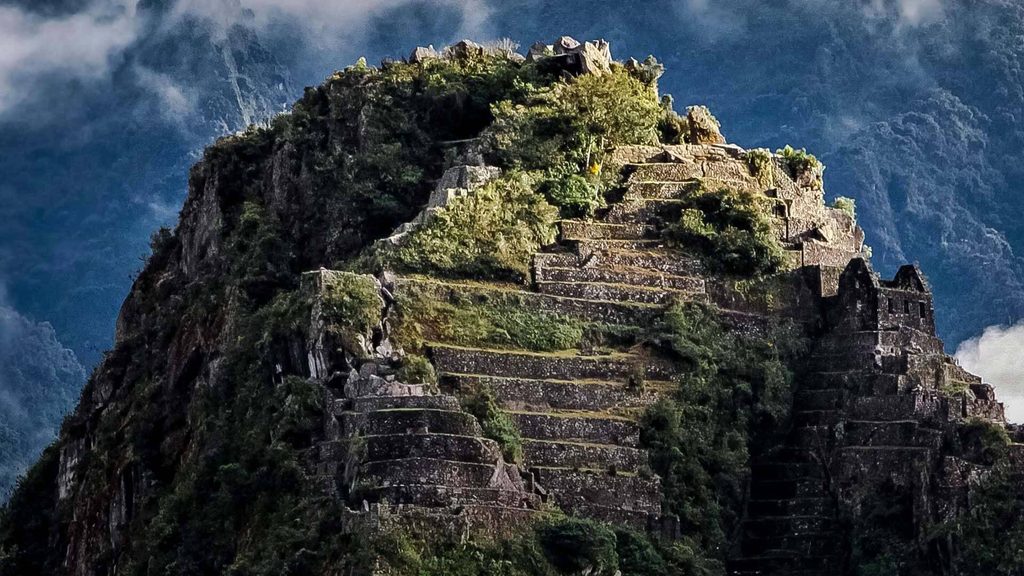
Huayna Picchu is the steep peak behind the classic postcard shot. It requires its own permit, sold only alongside specific circuit/route combinations, and it’s the single fastest add-on to sell out. If you want it, decide early — this is not something to leave for a week before your trip. We break down the climb itself, the cable sections, and realistic timing in the Huayna Picchu hike.
Machu Picchu Mountain (Montaña) is the taller, longer alternative — fewer people attempt it, the trail is longer but less exposed than Huayna Picchu, and the summit view looks down over the entire citadel and the Urubamba canyon rather than across it.
The site museum, Casa Concha, is off the mountain entirely, based in Aguas Calientes and Cusco, and covers artifacts recovered during the Hiram Bingham excavations. It’s a separate ticket, doesn’t share the daily citadel cap, and rarely sells out — a reasonable option if your Huayna Picchu or Montaña dates are gone.
Rules that get people turned away at the gate
Every one of these has caused a client to be denied entry or delayed at some point, which is why we brief every traveler on them before departure:
- Passport mismatch. Your ticket must show the exact passport number used at booking. A renewed passport, a typo, or using a different ID than the one on file is grounds for denial at the gate.
- Missing the grace window. The 30-minute grace period past your printed slot is not guaranteed by staff at every entry point — arriving late, especially in high season, is a real risk of being turned away.
- Backpacks over the size limit. Bags larger than the permitted carry-on dimensions must be checked at the entrance storage, not brought inside.
- No walking sticks without a rubber tip, no drones, no tripods without prior authorization, and no food beyond a small snack and water.
- No re-entry. Once you exit through the final checkpoint, that ticket is closed — even if you meant to step out briefly.
We keep a full breakdown, including the current banned-items list, in Machu Picchu rules and banned items — worth reading in full before you pack.
What to do if your date is sold out
First, check Circuit 3 and the standard Circuit 1 or 2 routes without add-ons — these tend to hold availability longer than Huayna Picchu or Montaña, since the citadel’s total daily cap is larger than either mountain’s separate allocation. Second, shift your date by a day or two either side if your itinerary allows it; single-day sellouts are common even when the surrounding week has space. Third, check back regularly rather than once — cancellations and small batch releases do happen, particularly for individual time slots rather than full days.
If none of that works, an authorized operator sometimes holds allocations that aren’t visible on the public platform, which is one reason to loop in an operator even if you were planning to book independently. And if your dates are genuinely fixed, it’s worth reading when to book your Peru tour before your next trip — most sold-out situations trace back to booking Machu Picchu tickets later than the rest of the trip, not earlier.
Frequently Asked Questions
How far in advance should I buy Machu Picchu tickets? For June–August travel, buy as soon as your dates are fixed — ideally as soon as tickets for that year are released. For Huayna Picchu specifically, aim for two to three months ahead. Shoulder season (April–May, September–October) is more forgiving but still benefits from booking six to eight weeks out.
Can I buy my Machu Picchu ticket and my train ticket separately? Yes, they’re sold by different entities — Machu Picchu tickets through the Ministry of Culture, train tickets through the rail operators. But your entry time slot needs to match a realistic train arrival, so we always sequence these together rather than booking either one blind.
What happens if I arrive late for my entry time? There’s an informal 30-minute grace period, but it isn’t guaranteed at every checkpoint, especially during high season. Being denied entry after that window is a real outcome, not just a rule on paper — build in buffer time on your travel day.
Is Circuit 2 better than Circuit 1? Neither is objectively better — they serve different priorities. Circuit 2 covers more of the core archaeological structures in one pass; Circuit 1 (especially route 1-B) is built around the classic elevated postcard view. If you can only choose one and want both the photo and the structures, Circuit 2 is usually the closer fit for first-time visitors.