

Carry Peruvian soles for daily spending, expect cards to work in cities but not in smaller towns or with local vendors, and budget roughly USD 5 to 10 per day for your guide when travelling in a group. US dollars are accepted in some tourist-facing places, but always at a worse exchange rate than paying in soles. None of this is complicated once you know the pattern: soles for anything small or local, a card for hotels and bigger purchases where it is accepted, and small notes kept on hand for the days your itinerary moves through towns rather than cities. For the full range of what a Peru itinerary can include, see our full guide to Peru tour packages.
Soles or dollars: which to carry
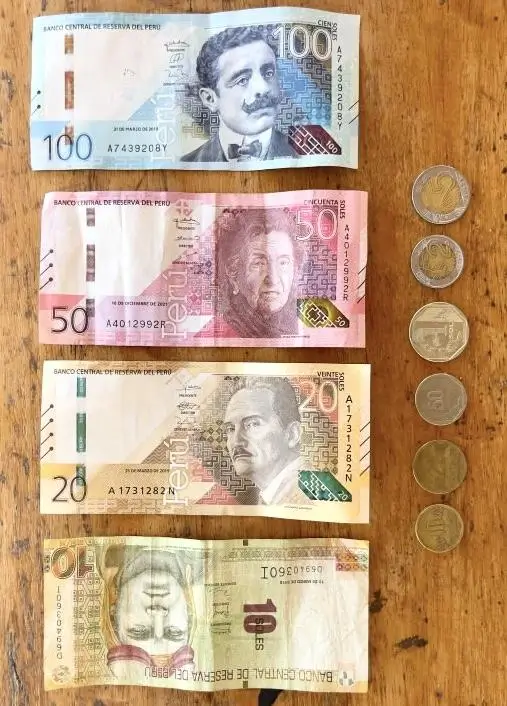
Peru’s currency is the Peruvian sol (PEN), and it is what nearly everything is priced in, from a market stall to a restaurant bill. US dollars are accepted at some hotels, tour operators, and larger shops aimed at tourists, but the exchange rate you get for a dollar payment is consistently worse than what you would get by paying in soles directly, or by exchanging your dollars first. Exchange rates move daily, so we won’t quote a specific figure here; check a current rate shortly before you travel and again once you land, rather than relying on a number you saw weeks earlier.
The practical rule is simple: default to soles whenever you have them, and treat dollars as a backup for situations where soles aren’t available rather than your primary currency for the trip. Withdrawing soles from an ATM once you land, or exchanging a modest amount of cash at a proper exchange counter rather than an informal street changer, is the more reliable way to get a fair rate than arriving with only dollars and hoping to spend them directly.
Cards: where they work and where they don’t
Cards work reliably in Lima, Cusco’s more established restaurants and hotels, and larger shops, but coverage drops off quickly once you leave those settings.
| Setting | Card acceptance |
|---|---|
| Hotels and established restaurants in Lima and Cusco | Generally reliable |
| Larger shops and tour operator offices | Usually accepted |
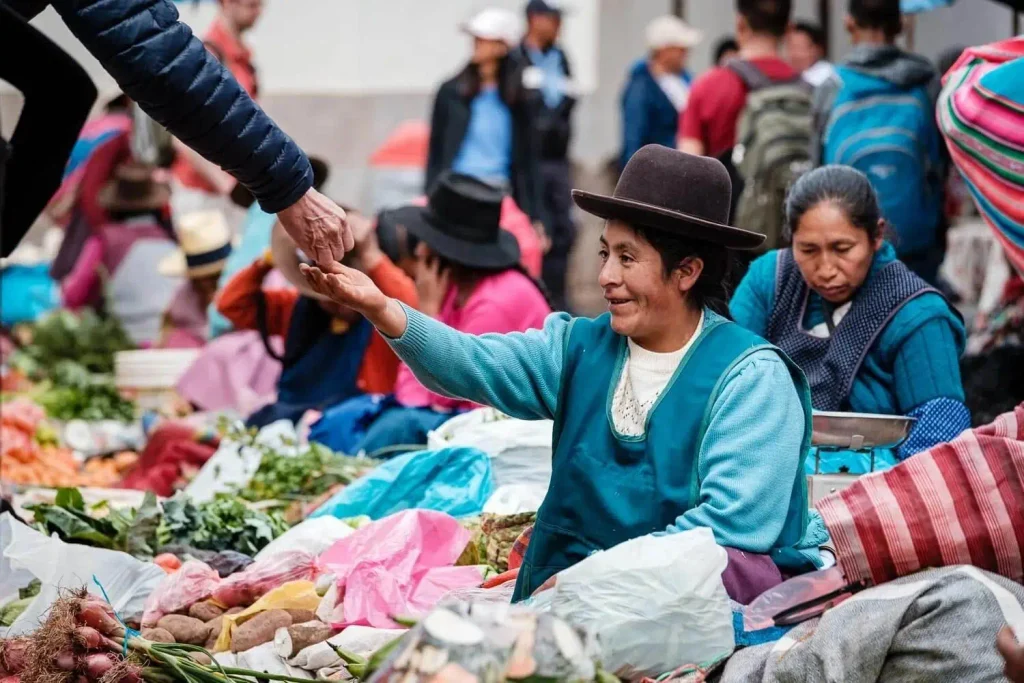
| Markets, street vendors, small local restaurants | Cash only |
| Towns along the Sacred Valley or en route to Rainbow Mountain | Limited to cash |
| Tipping guides, drivers, or porters | Cash only, always |
The gap between city and smaller-town card acceptance is the one that catches travellers out. If your itinerary includes a day in the Sacred Valley, a stop at a local market, or the drive out to Rainbow Mountain, plan on paying cash for anything you buy along the way, since a card machine simply may not be available.
Small notes: why they matter on tour days
Peru’s cash economy runs on smaller denominations more than large ones. Vendors in markets, small restaurants, and roadside stops often cannot break a large note, which turns what should be a quick purchase into a problem if all you are carrying is high-denomination bills.
Break larger notes into smaller ones at your hotel, a bank, or a proper exchange counter before a tour day rather than trying to do it on the road. This matters most on days with multiple small cash moments: a snack stop, a bathroom fee at a rest point, a small souvenir, a tip at the end of the day. Arriving at any of these with only large notes usually means the vendor cannot help you, not that they won’t.
A reasonable habit is to break notes down the evening before a full tour day rather than the morning of, since hotel reception desks and nearby exchange counters are more predictable to find with time to spare than while you are already en route.
Tipping guides, drivers and porters
Tipping is not included in the price of any tour and is left to your discretion, but there is a useful reference point: for a guide travelling with a group, a common range is USD 5 to 10 per day. That figure gives you a starting point to scale from rather than an exact number to hit; group size, trip length, and how satisfied you were with the service are all reasonable things to factor in.
Drivers and porters are typically tipped as well when they are part of your itinerary, generally at a smaller amount than the guide, reflecting their more limited direct interaction with you over the day. There is no fixed formula here beyond that; if you are unsure what is appropriate for your specific itinerary, ask your guide directly, since tipping norms vary somewhat by trip length and group size, and it is a completely normal question to ask before the last day rather than guessing.
Tips are always cash, and always in soles rather than dollars, for the same exchange-rate reason as everywhere else. Bring enough small notes for this specifically, since it is one of the situations you cannot solve with a card.
Tipping in restaurants and hotels
Restaurant and hotel tipping in Peru follows patterns closer to what many international travellers already expect: appreciated but not obligatory, and usually smaller than tour-guide tipping since it reflects a single transaction rather than a full day of service. Some restaurants, particularly in more tourist-oriented areas, add a service charge to the bill automatically; check for this before adding an additional tip on top of it.
Hotel tipping, for porters carrying bags or for housekeeping, works the same way: a small cash amount left discreetly is appropriate and appreciated, but it is not something anyone will expect or comment on if you skip it.
What a tour package already covers
Knowing what is already priced into your package removes a lot of the guesswork above. What a Peru package includes covers the full list, but the short version is that transport, accommodation, and guiding are already paid for; the cash you need day to day covers meals not included in the itinerary, souvenirs, optional extras, and tips.
Because tipping and incidental cash needs sit outside the package price, they are also outside the range covered in what a Peru trip costs, so budget for them separately rather than assuming your upfront payment covers everything you will spend on the ground. If Rainbow Mountain is part of your itinerary, Rainbow Mountain entrance fees is worth checking too, since entrance costs at specific sites are handled differently across our packages depending on the itinerary. For everyday food outside of what your package includes, what to eat in Cusco is a useful reference for planning that part of your cash budget.
If your trip includes the longer, more involved itinerary of our 14-Day Peru Mystic Tour, the same principles apply across more days and more stops, so carrying a reasonable stock of small soles notes matters even more given how many towns the route passes through. For a shorter trip like the 6-day Cusco and Machu Picchu tour, the same cash habits apply on a smaller scale, but the habits themselves don’t change.
Frequently Asked Questions
Should I bring US dollars or Peruvian soles? Bring soles for daily spending. Dollars are accepted in some tourist-facing places, but always at a worse exchange rate than paying in soles directly.
Do credit cards work in Peru? Cards work reliably in cities like Lima and Cusco, especially at hotels and established restaurants, but markets, small towns, and roadside stops are cash only.
How much should I tip my guide in Peru? A common reference is USD 5 to 10 per day per guide for a group tour, paid in cash, ideally in soles. Ask your guide directly if you are unsure what fits your specific trip.
Is tipping included in Peru Andes Discovery tour packages? No. Tipping is never included in the package price and is left to your discretion, alongside meals not specified in the itinerary and any optional extras.