

Alejandro Velasco Astete Airport is Cusco’s only airport, a short ride from the historic center, and the place where your altitude adjustment actually begins. Expect a straightforward domestic arrivals process, a transfer time measured in minutes rather than hours, and occasional morning weather delays that are a normal feature of flying into a mountain city, not a sign anything has gone wrong. This guide covers what to expect on landing, how to get to your hotel, and how to plan your departure so a delay does not put your flight home at risk. For the full range of what a Peru itinerary can include, see our full guide to Peru tour packages.
Alejandro Velasco Astete: what to expect on arrival
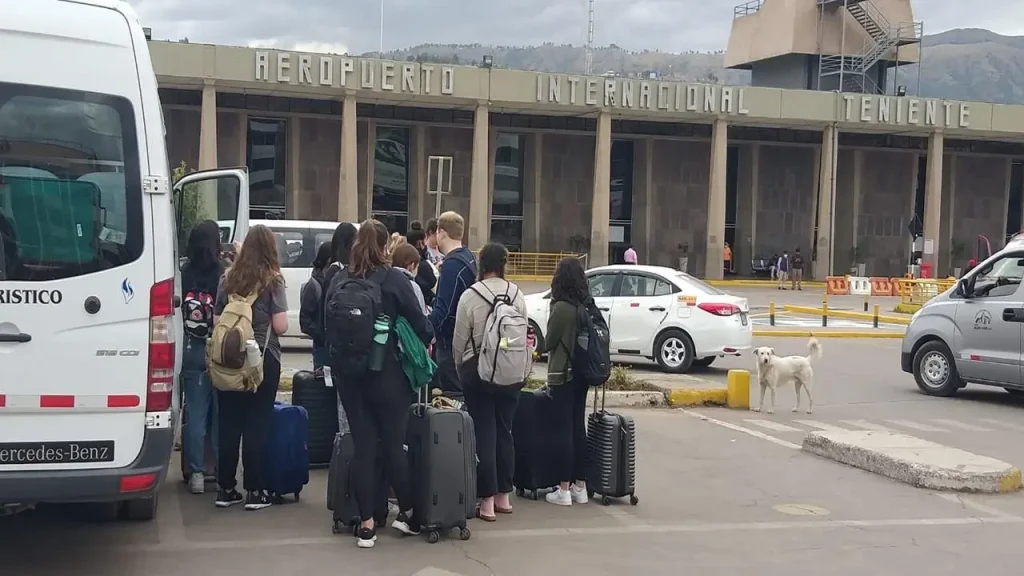
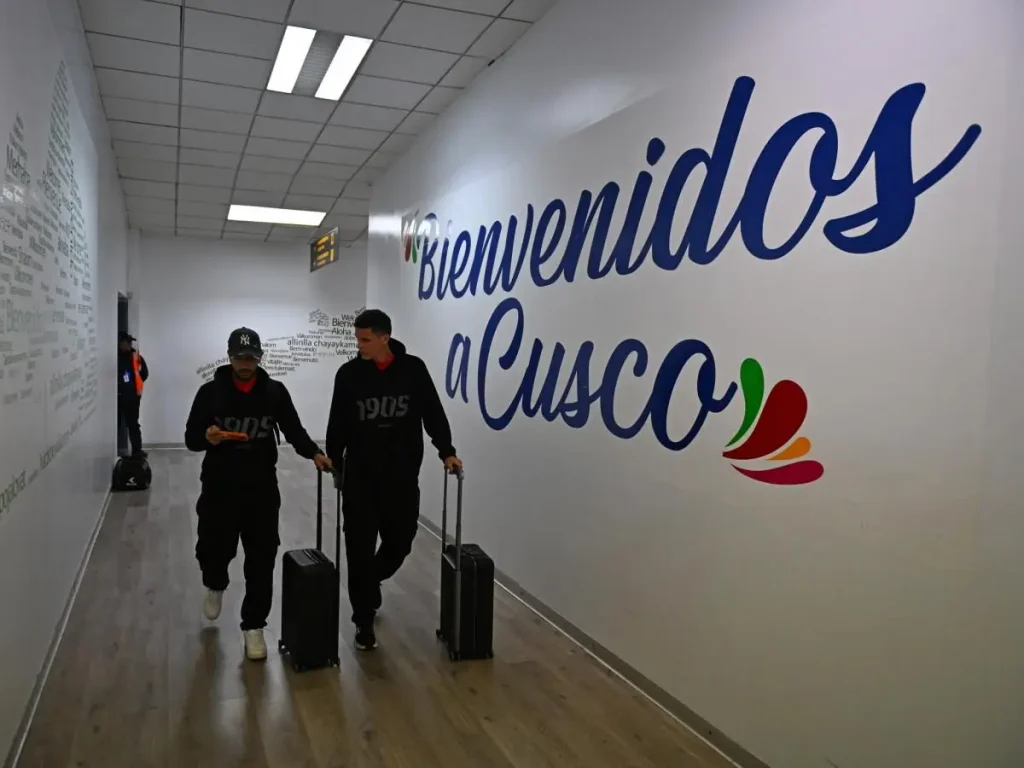
Cusco’s airport is small by international standards and handles mostly domestic traffic, so the arrivals process moves quickly compared to a major hub. There is one terminal, and the walk from the gate to the exit is short.
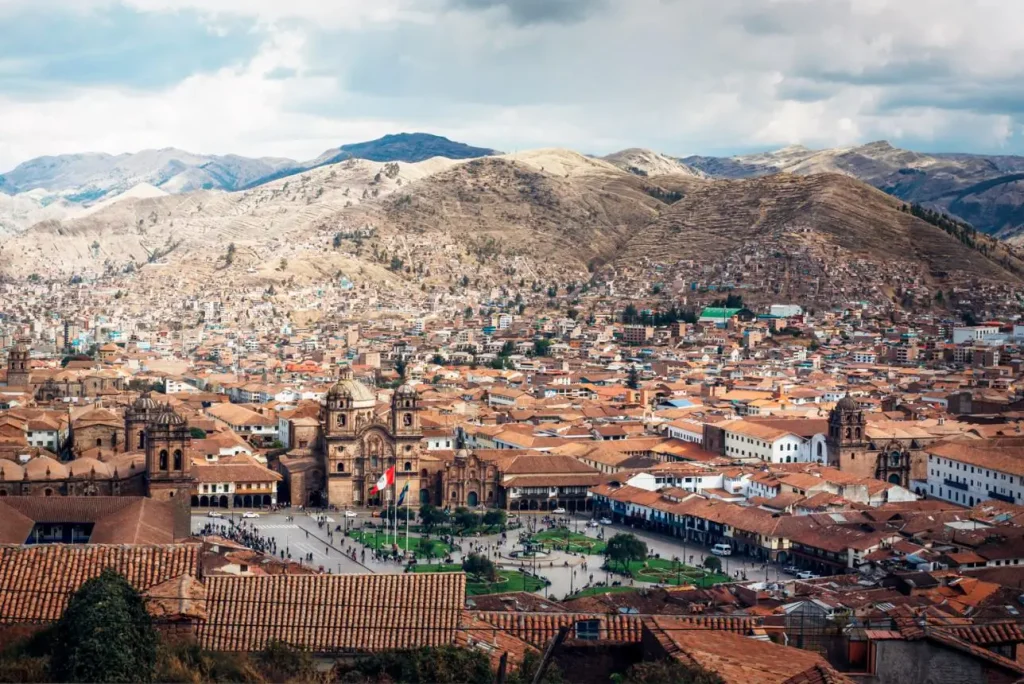
Cusco’s airport sits inside the city itself, close to the San Sebastián district, rather than out on the outskirts the way many capital-city airports do. That proximity is the main practical advantage: you are not losing an hour of your first day to a long transfer before you even reach your hotel.
Facilities are basic but sufficient: a handful of ATMs, a currency exchange counter, and a few small shops and cafes past security, none of which compare to a major international hub. Almost all traffic through the airport is domestic. Very few international routes fly directly into Cusco, so the large majority of travellers arrive on a connecting flight from Lima rather than flying in from abroad directly, which is worth knowing when you are planning your international arrival date around your Cusco connection.
Landing at 3,399 m: the first hour matters
Cusco sits at 3,399 meters (11,152 ft), and you feel that altitude the moment you step off the plane, not gradually over the following days. Walking with your bags to the exit or up a short flight of stairs can leave you more out of breath than it would at sea level, and that is expected, not a warning sign.
The first hour on the ground is about pace, not activity. Move slowly through the airport, skip the urge to rush to your transfer, and treat the ride to your hotel as the start of rest rather than the start of sightseeing. Your first 48 hours in Cusco covers what the rest of that first day and the one after should look like.
Getting from the airport to your hotel
| Option | What it involves |
|---|---|
| Included transfer | Private pickup arranged as part of your tour package, driver waiting with your name on arrival |
| Taxi from the airport | Available outside arrivals, agree the fare before getting in |
| Ride-hailing apps | Usable in Cusco, pickup point may be a short walk from the terminal exit |
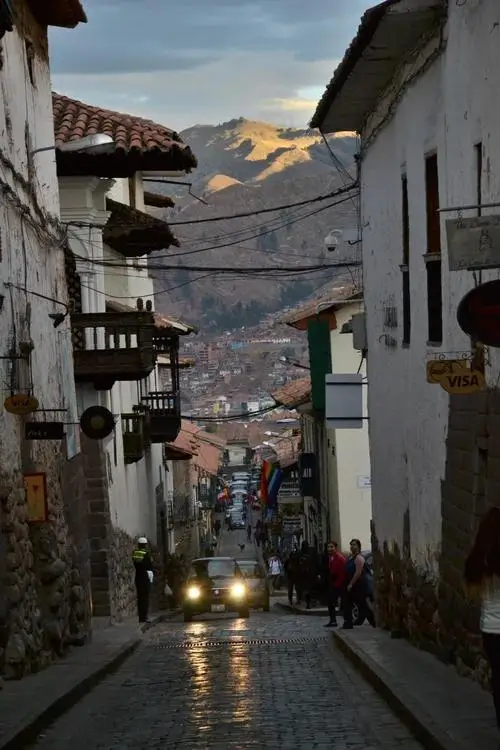
If you are travelling with us, this decision is already made for you: airport pickup and transfer to your hotel are included in every one of our packages, from the 4-day Cusco and Machu Picchu tour up through the longer itineraries. A driver meets you at arrivals with your name, so there is no fare to negotiate and no route to figure out on your first hour in a high-altitude city. That is a small detail on paper, but it is one less decision to make while your body is still adjusting to 3,399 meters.
If you are arranging your own transfer instead, use the official taxi booth inside the arrivals area rather than accepting a ride from someone approaching you in the parking area, and agree the fare before the car leaves. Ride-hailing apps operate in Cusco and are a reasonable alternative, though the pickup point is sometimes a short walk from the terminal exit rather than right at the curb.
Why morning flights are the safe choice
Weather at altitude tends to build through the day, so morning flights into Cusco are generally more reliable than afternoon ones. This is a normal pattern for airports at elevation, not something specific to one airline or one season, and it is worth paying a little more for an early departure out of Lima rather than booking the cheapest slot of the day. Domestic flights in Peru covers the airlines, routes, and timing in more depth.
The practical payoff is buffer. If your flight is scheduled for the morning and something runs an hour or two late, it barely touches your day. If you were booked on one of the last flights out and it delays or cancels, you can lose the whole day, which matters if your itinerary starts moving the next morning, whether that is the Sacred Valley, a Machu Picchu train, or an early departure to Rainbow Mountain.
When weather closes the airport
Occasionally, weather is severe enough that flights into or out of Cusco are delayed for hours rather than just running late, most often earlier or later in the day when conditions are less settled. This is not predictable far in advance and it is not unique to any one carrier, so switching airlines is not a meaningful mitigation.
What does help is not building your itinerary so tightly that a single delayed flight breaks it. If your package includes an included transfer and a flexible first day rather than a fixed-time activity right after landing, a weather delay becomes an inconvenience rather than a crisis. If a flight does end up delayed for hours, your airline will handle rebooking directly, and having your accommodation and transfer already arranged through your tour means one less thing to sort out while you wait. What a Peru package includes explains how our itineraries are built with that kind of slack in mind, and once you land, where to stay in Cusco can help you choose a base that keeps you close to the historic center if your plans shift.
Departure day: timing your return flight
The same logic that protects your arrival should protect your departure. If your Machu Picchu visit or a Sacred Valley excursion is scheduled for the same day as your flight out of Cusco, a late train back from Aguas Calientes or a slow morning on the road can put that flight at risk.
Build at least half a day of buffer between your last activity and your departure flight, and treat a morning flight out as the safer choice on departure day for the same weather reasons as on arrival. If your schedule is genuinely tight, tell your guide before the last full day of activities so pickup and transfer times can be planned around your flight rather than the other way around, since transfer to the airport is included in your package regardless of which day it falls on.
This is also the point in the trip where altitude works in your favor rather than against it. By the time you are flying out, your body has had days to adjust to 3,399 meters, so the physical strain of the airport itself is far less of a factor than it was on arrival. The remaining risk is entirely about weather and timing, which is exactly why the buffer matters more than anything else on this last day.
Frequently Asked Questions
What is the name of Cusco’s airport? Alejandro Velasco Astete Airport, located within the city near the San Sebastián district, a short ride from the historic center.
Is airport transfer included in Peru Andes Discovery tours? Yes. Every package includes pickup at arrival and transfer to the airport at departure, with a driver meeting you by name.
Why do Cusco flights get delayed? Weather at altitude builds more often in the afternoon than the morning, which is a normal pattern for mountain airports generally. It is not tied to a specific airline or season, so morning flights are the more reliable choice.
How long does it take to get from Cusco airport to the historic center? The airport sits inside the city, so the transfer is short, generally well under half an hour depending on where in Cusco your hotel is located.
Can I fly directly into Cusco from outside Peru? Direct international routes into Cusco are limited. Most travellers fly into Lima first and connect to Cusco on a domestic flight, so plan your international arrival with that connection in mind rather than assuming a direct flight is available from your home country.