
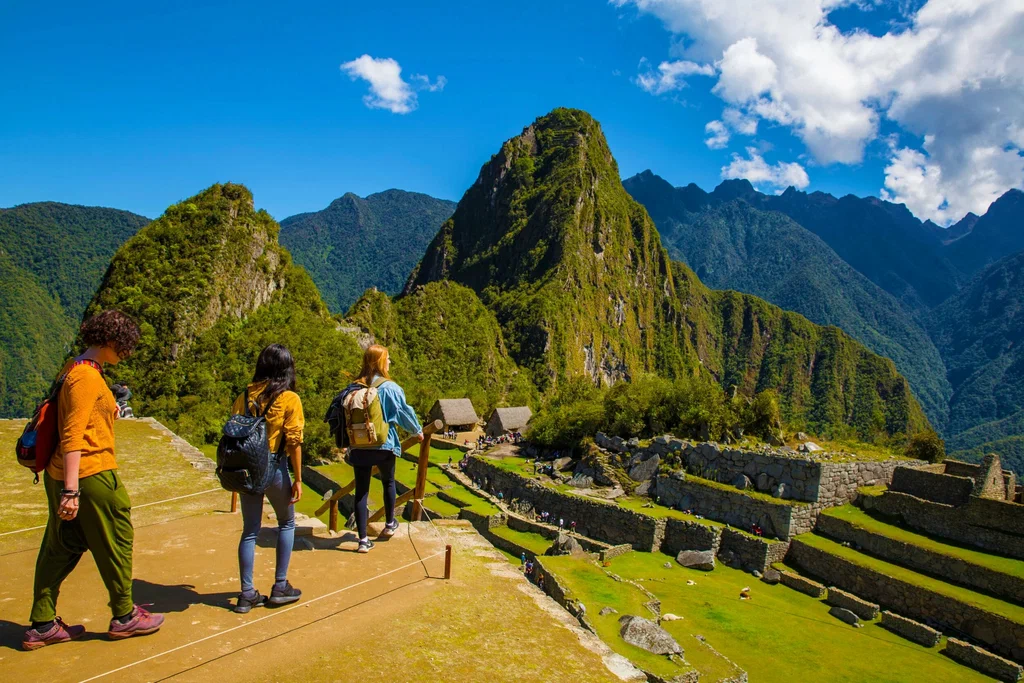
A Peru trip runs from around $960 per person for a compact 4-day Cusco and Machu Picchu package to well over $2,000 for longer, more complete itineraries — and that’s before daily spending on food, drinks and souvenirs, which adds roughly $20-50 per person per day depending on your style. The biggest cost driver isn’t trip length on its own, it’s what’s bundled into the package versus what you pay separately: entrance tickets, train class, hotel category and season all move the number more than days alone. Our full guide to Peru tour packages is the place to compare full itineraries before narrowing down by budget.
The fixed costs nobody avoids
Some costs apply regardless of how you travel or how long you stay. Machu Picchu’s entrance ticket is the clearest example — every visitor pays it, package or independent. Domestic flights, most commonly Lima–Cusco at roughly 1 hour 20 minutes on LATAM, Sky or JetSmart, aren’t included in any package and aren’t optional if your route passes through Lima. Ground transport to and from Ollantaytambo, about 1.5 hours by private vehicle from Cusco, and the Ollantaytambo–Aguas Calientes train, about 1 hour 40 minutes each way, are fixed logistics costs baked into every itinerary that reaches Machu Picchu, whether you book them yourself or they’re included in a package price.
International flights sit outside all of this and vary too much by origin city to estimate meaningfully here — budget for them separately against your own departure point.
Cost by trip length: 4, 7, 10 and 14 days
Our 4-day Cusco and Machu Picchu tour starts at $960 per person. The 6-day version starts at $1,420, and the 7-day Cusco and Machu Picchu tour starts at $1,750. The 8-day package starts at $2,050.
Beyond 8 days, pricing shifts to itineraries that add distinct regions rather than just more time in the same one. The 10-day Cusco, Puno and Lima tour, and our 14-Day Peru Mystic Tour, both add meaningfully more ground — Lake Titicaca and Lima on the 10-day route, coastal Peru and ceremonial stops on the 14-day route — so the per-day cost doesn’t scale purely linearly with the 4-8 day range above. For a length-by-length comparison of what each trip actually covers rather than just cost, how many days you need in Peru is the companion piece to this one.
What drives the price up: season, trains, hotels
Season is the single biggest lever outside of trip length itself. Dry season, roughly April/May through October/November, brings better weather, bigger crowds and higher prices across hotels, trains and tours. Rainy season, November/December through March/April, brings lower prices and thinner crowds at the cost of more rain risk. May, June and July are the clearest months if weather certainty matters to you, and they’re also priced accordingly.
Train class is the next lever. Expedition class is included as standard across our packages; Vistadome is the paid upgrade, and pricing between them reflects panoramic-window seating rather than any difference in the 1 hour 40 minute journey time itself. Hotel category works the same way — our packages run 3-star, or 3-4 star depending on the itinerary, with 4-5 star upgrades available on request. For the fuller comparison of what a luxury-tier upgrade actually changes versus what it doesn’t, luxury vs mid-range packages covers that decision directly.
Machu Picchu specifically: the ticket, train and bus breakdown
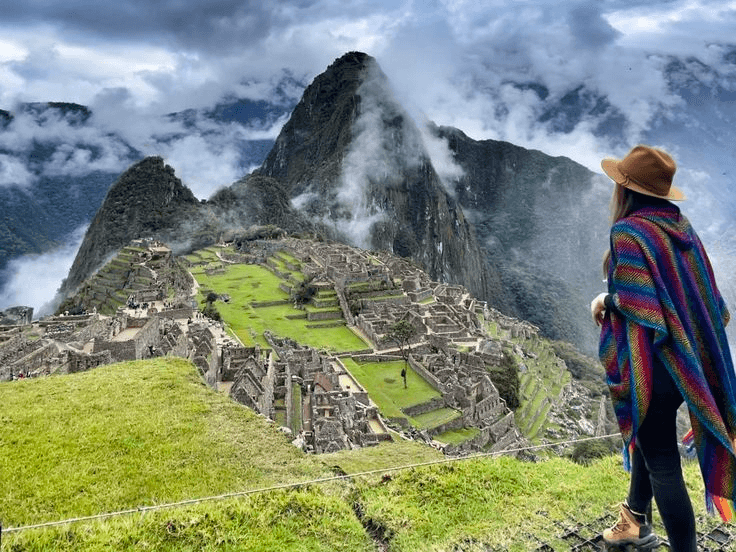
Booked independently, Machu Picchu access breaks into three separate line items. The standard entrance ticket runs roughly $40-55 for foreign adults depending on circuit, set by Peru’s Ministry of Culture and subject to periodic adjustment — this figure moves, so treat it as a reference rather than a locked-in number. The Ollantaytambo–Aguas Calientes train runs roughly $110-190 round trip depending on class, matching our included Expedition service at the lower end and Vistadome toward the upper end. The Consettur shuttle bus between Aguas Calientes and the Machu Picchu entrance runs roughly $24-35 round trip.
Huayna Picchu, if you want to climb it, is a separate permit on top of the standard entrance ticket, limited to 400 permits a day across two entry groups — book 2-4 months ahead regardless of season, since it sells out before the standard ticket does.
Daily spending: food, drinks, souvenirs
Daily spending outside your package sits in a wide range depending on style. Budget-conscious travellers eating at markets and set-menu lunches (menú del día) typically spend $10-20 per day on food. Mid-range travellers eating at proper sit-down restaurants for most meals typically spend $20-40 per day. These figures are general market averages, not agency-specific data, and they shift with the sol-to-dollar exchange rate, so treat them as a planning reference rather than a fixed budget line.
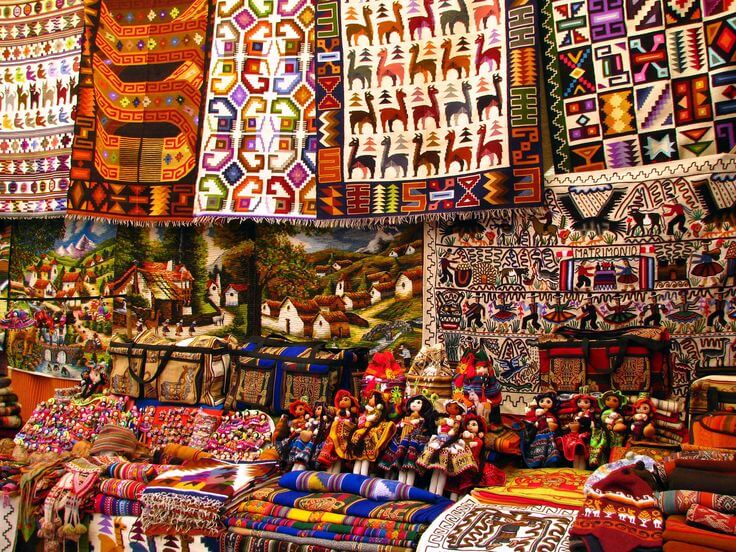
Souvenirs and incidentals — alpaca textiles, coca products, small crafts — vary enormously by what you buy, but most travellers find $50-150 total across a trip covers meaningful purchases without a dedicated shopping budget. Drinks, particularly alcoholic ones, run close to what you’d expect in any Latin American tourist center: a local beer at a restaurant in the $3-6 range, a pisco sour typically $6-10.
Budget, mid-range and high-end compared
At the budget end, you’re looking at our base package price plus modest daily spending — market meals, no hotel upgrades, Expedition-class train. At mid-range, add some restaurant meals, occasional souvenir purchases, and possibly a Vistadome upgrade. At the high end, hotel upgrades to 4-5 star, more restaurant dining including at least one notable meal out, and potentially premium train service push the total well above the base package price.
Where you can genuinely save
Travelling in rainy season, particularly November or March at the shoulder edges rather than the wettest months, cuts hotel and train costs while keeping most sites fully accessible. Sticking with Expedition-class train rather than upgrading saves real money without changing the route or journey time. Eating at menú del día lunches rather than tourist-menu dinners in Cusco and the Sacred Valley cuts daily food spending significantly without a meaningful drop in quality — some of the best value meals in Cusco are these set lunches, not the restaurants aimed at visitors.
Booking early is a saving in itself, since last-minute train and entrance-ticket availability during peak season sometimes forces a pricier remaining option rather than the cheapest one. If you’re weighing whether a package or independent planning saves more overall once every line item is accounted for, package tour vs travelling independently breaks down that comparison in full, and what a Peru package includes is worth checking so you’re comparing like for like rather than a package price against an independent budget that’s missing line items.
Frequently Asked Questions
How much does a trip to Peru cost per person? It depends heavily on trip length and package: from around $960 for a 4-day Cusco and Machu Picchu trip to $2,050 or more for 8 days, plus roughly $10-40 per person per day in additional food, drinks and souvenir spending.
Is Machu Picchu expensive to visit? The entrance ticket alone runs roughly $40-55, but full independent access including the train and shuttle bus adds up to $175-280 or more per person. Package prices bundle these costs into a single upfront number.
What’s the cheapest way to see Machu Picchu? Travelling in rainy season shoulder months (November or March), sticking with Expedition-class train rather than upgrading, and booking well ahead to avoid last-minute pricing are the most reliable ways to reduce cost without cutting the core experience.
Does trip cost scale evenly with more days? Not exactly. Costs from 4 to 8 days scale fairly predictably with added nights and guiding, but longer itineraries like the 10-day or 14-day routes add entirely new regions — Lake Titicaca, Lima, coastal Peru — so the per-day cost reflects new ground covered, not just more time in the same place.