

High season in Peru runs from June to August. Low season runs from November to March. Between them, April, May, September and October are the shoulder months. High season gives you the clearest skies, but also the highest prices, the biggest crowds and the earliest sell-outs. Low season gives you green landscapes, empty trails and lower prices, in exchange for rain. For most travellers the best value is in the shoulder months, and especially in May and September.
We run our own tours from Cusco, so we see the difference between seasons every year. If you are still choosing a trip, start with our full guide to Peru tour packages. For the full calendar, see the month-by-month guide to visiting Peru.
What counts as high season in Peru
Peru’s seasons follow the Andes, not the calendar of the country you fly from. Two things define them: weather and demand.
The weather splits the year in two. The dry season runs from April or May to October or November, with the best conditions and the most visitors. The rainy season runs from November or December to March or April, and it is greener and quieter, with more risk of rain. The clearest months are May, June and July.
Demand splits the year differently. The dry season is the busy season, but within it demand peaks in three months.
- June: Inti Raymi on the 24th makes it the most requested month of the year.
- July: Peak visitor numbers, plus the national holidays on the 28th and 29th.
- August: Still busy, with dry, windy weather and strong sun at midday.
So we use three tiers.
| High season | Shoulder season | Low season | |
|---|---|---|---|
| Months | June to August | April, May, September, October | November to March |
| Weather | Dry and clear, very cold nights | Mostly dry, with some green left in April and May | Rain, mist, green landscapes |
| Crowds | Peak | Moderate | Low to very low |
| Relative price | Highest | Middle | Lowest |
| Availability | Sells out first | Good if you book ahead | Easiest, except Christmas week |
Two dates break the pattern. Holy Week in April lifts demand for a few days in a shoulder month. Christmas week lifts demand at Machu Picchu in a low-season month.
What you pay more for, and how much more
We cannot give you a single percentage for the gap between seasons, and you should be wary of anyone who does. The difference depends on your dates, your hotel category, your group size and how early you book. What we can tell you is where the gap shows up.
Tours and packages. Prices rise as you move into the dry season and peak in June and July. The published “from” prices are starting points, such as $1,420 per person for the 6-day Cusco and Machu Picchu tour. For a firm figure on your dates, ask us for a quote.
Hotels. Cusco rooms are scarcest around Inti Raymi and the July national holidays. Our packages use 3-star hotels, or 3-4 star depending on the package, and upgrades to 4-5 star are available on request. Upgrades cost more, and they cost more still at peak.
Machu Picchu access. Entry is by assigned time slot. Huayna Picchu has 400 permits a day, in two groups. In the busiest weeks the slots you want go first, and the choice you make late is the choice that is left.
Costs that sit outside the package. Flights are not included in any of our packages. Check airfares for your dates separately, and do it early. Tips are not included either. As a guide, allow USD 5-10 per day per guide in a group.
For a wider look at budgeting, read what a Peru trip costs.
Crowds: where you actually feel them
Crowds in Peru are not spread evenly. You feel them where capacity is fixed.
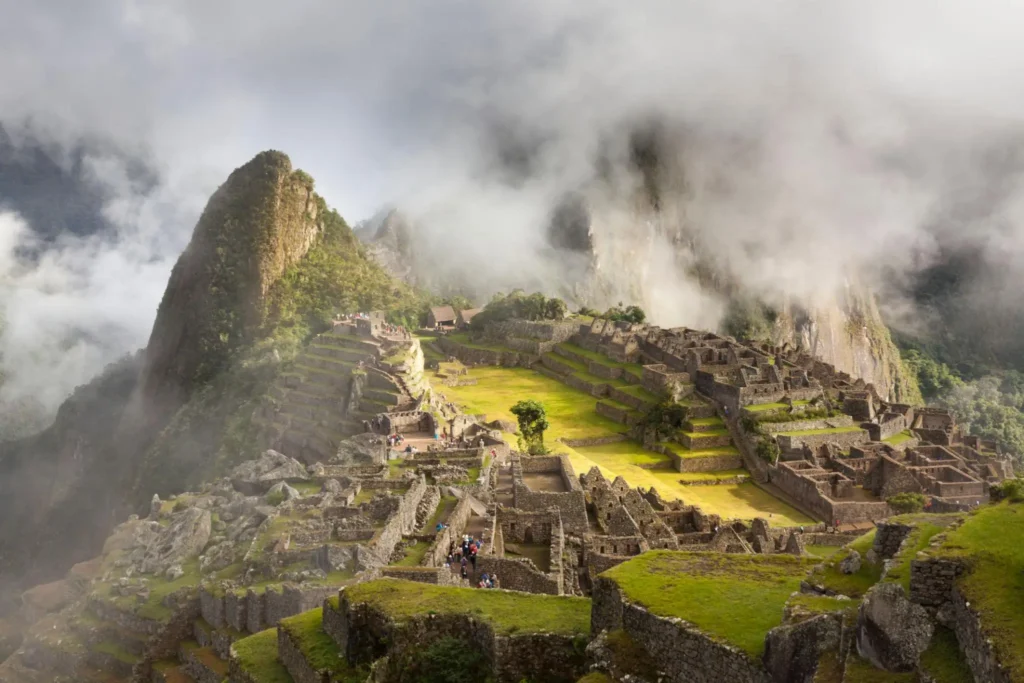
Machu Picchu. The site opens at 6:00 AM and closes at 5:30 PM, and entry is by assigned time. A licensed guide is mandatory, and has been since 2024. A guided visit takes 2.5 hours. In peak months, many groups share the same circuits, so the morning slots fill first.
Huayna Picchu. The climb takes 1.5 hours up and 1 hour down. Only 400 people a day are allowed, so it is the first thing to sell out. We advise reserving it 2 to 4 months ahead.
The transport chain. The train from Ollantaytambo to Aguas Calientes takes 1 hour 40 minutes in Expedition class. The CONSETTUR bus from Aguas Calientes to Machu Picchu takes 30 minutes and leaves every 10 minutes. At peak, you share both with many more people.
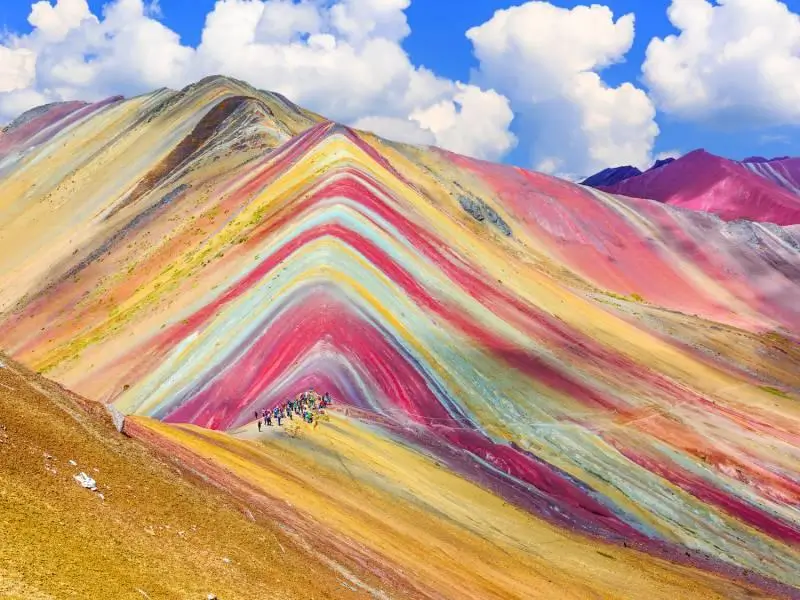
Rainbow Mountain. Vinicunca is at 5,036 m, and peak months bring the most visitors. June and July are the most crowded, and the dawn start is very cold.
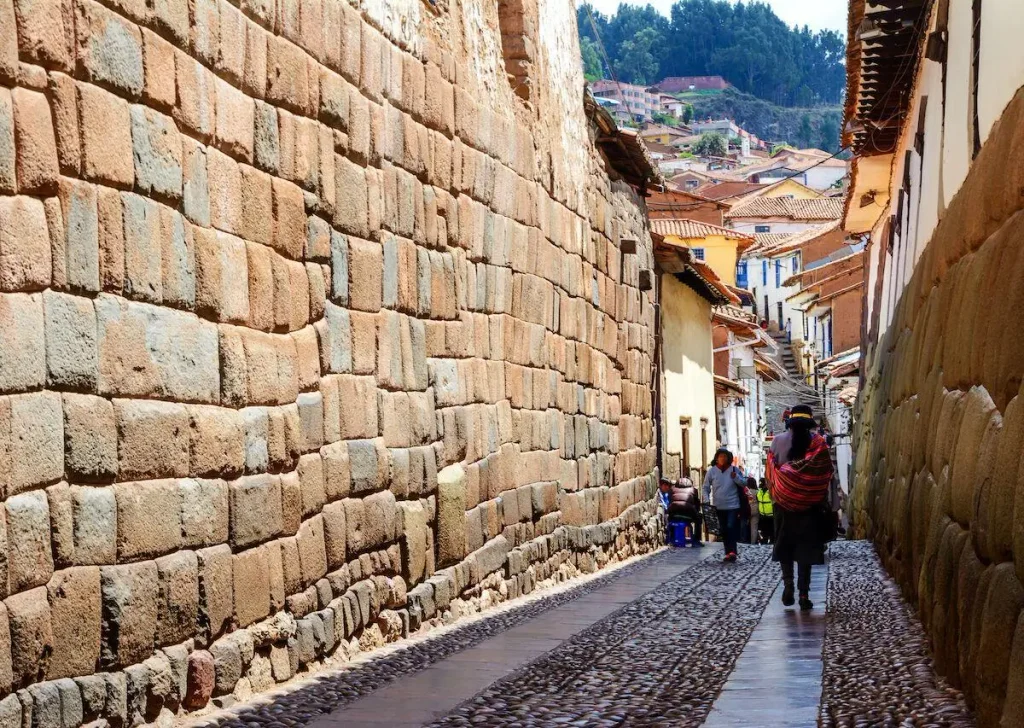
Cusco itself. The city is busiest around festivals: Inti Raymi in June, the national holidays in late July, and Holy Week in April.
The pattern is simple. If a place has a fixed number of entries, a fixed number of seats or a single path, you will feel high season there.
The shoulder months almost nobody books
Most visitors aim for July. A smaller group has worked out that July is not the best month. Two months in particular are underrated: May and September.
May. It is one of the clearest months of the year, and the clearest period runs May to July. The rains have just ended, so the landscape keeps a residual green. You get the clear skies of high season without the crush of June. It is a very good month for photography at Machu Picchu. The Cruz Velacuy festival and the Qoyllur Rit’i pilgrimage fall around this time, which makes May culturally rich as well. Qoyllur Rit’i moves each year, so check the date when you book.
September. The weather stays dry, but visitor numbers fall. It is one of the best balances of good weather to few people in the whole year. It is also less well known as a Machu Picchu month than July, so it gets less attention than it deserves.
April and October are worth considering too. April is the start of the dry season, and the hillsides are still green. Holy Week raises demand for a few days. October brings isolated showers, mostly in the afternoon, with good prices and moderate crowds.
If your dates are flexible, May and September are where we send travellers who ask for the best of everything. You give up very little weather and gain a great deal of space.
For more on the dry months, see the month-by-month guide to visiting Peru.
Our 6-day Cusco and Machu Picchu tour is a natural fit for the shoulder months. Read more about the 6-day Cusco and Machu Picchu tour: it starts from $1,420 per person and includes a private professional guide, private ground transport and hotel pickups.
What low season genuinely costs you
Low season is a real option, but you should know exactly what you are accepting.
Rain. November to March brings the most rain. February is the wettest month. Showers can arrive in the afternoon in early season and last longer later on.
Mist and cloud. Machu Picchu is almost 1,000 m below Cusco, and it holds more moisture. Mornings can be thick with mist, and views can come and go.
The Inca Trail closes in February. The trail shuts for maintenance. Machu Picchu itself stays open, but you reach it by train. Rail disruptions are also more likely in the wettest weeks.
Rainbow Mountain. Snow on the summit can cover the colours. The risk is highest from December to February. If Vinicunca is why you are coming, avoid those months.
Muddy trails. Walking routes turn slippery and slower.
Christmas week. Demand at Machu Picchu rises in the last week of December, so low season is not low all month.
The upside is real: fewer people, lower prices, a lush landscape and easier availability. It suits travellers with flexible schedules and a tolerance for weather. For a fuller picture, read travelling Peru in the rainy season.
Booking windows for each season
How early you book depends on the season.
High season (June to August): book three months ahead. This is the standard for Machu Picchu entry. Reserve Huayna Picchu 2 to 4 months ahead, because it is the first to sell out. Inti Raymi and the July holidays need the earliest planning.
Shoulder season (April, May, September, October): book early. You will find more room than in July, but not unlimited room. Holy Week and the weeks around Qoyllur Rit’i need earlier action than the months around them.
Low season (November to March): you have more flexibility. Entry is easier to secure at short notice. The exception is the last week of December.
Some rules apply in every season. Your passport is required for the train and for entry to Machu Picchu, and photocopies are not accepted. The name on your ticket must match your passport exactly. Check this before you pay, because a mismatch can stop you at the gate.
For a full timeline, read when to book your Peru tour.
Which season suits which traveller
You want the clearest skies and accept the crowds: go in June or July. Book three months ahead and pack for very cold nights.
You want good weather and room to breathe: go in May or September. This is our most common advice.
You want the lowest price and can live with rain: go from November to March, outside Christmas week. Avoid February if you want to trek the Inca Trail.
You want to see Rainbow Mountain in colour: choose the dry season. Avoid December to February.
You want a long, multi-region route: choose your season by the region where you will spend the most time. The 10-day Cusco, Puno and Lima tour covers the highlands and the coast in one trip.
Send us your dates at info@peruandesdiscovery.com, and we will tell you what is available and what each season would mean for your route.
Frequently asked questions
When is high season in Peru?
High season runs from June to August. These are the clearest and busiest months, with the highest prices and the earliest sell-outs. Inti Raymi on 24 June and the national holidays on 28 and 29 July add to demand.
What is the cheapest time to visit Peru?
The rainy season, from November to March, has the lowest prices and the fewest people. Christmas week is the exception. October offers good value with mostly dry weather.
Is May or September better than July?
For many travellers, yes. May and September are dry and clear, but quieter than July. You get most of the weather with far fewer people. July is the peak, so it is the most expensive and the most crowded.
How far ahead should I book for high season?
Book three months ahead for June to August. Reserve Huayna Picchu 2 to 4 months ahead, because only 400 permits are issued each day.