

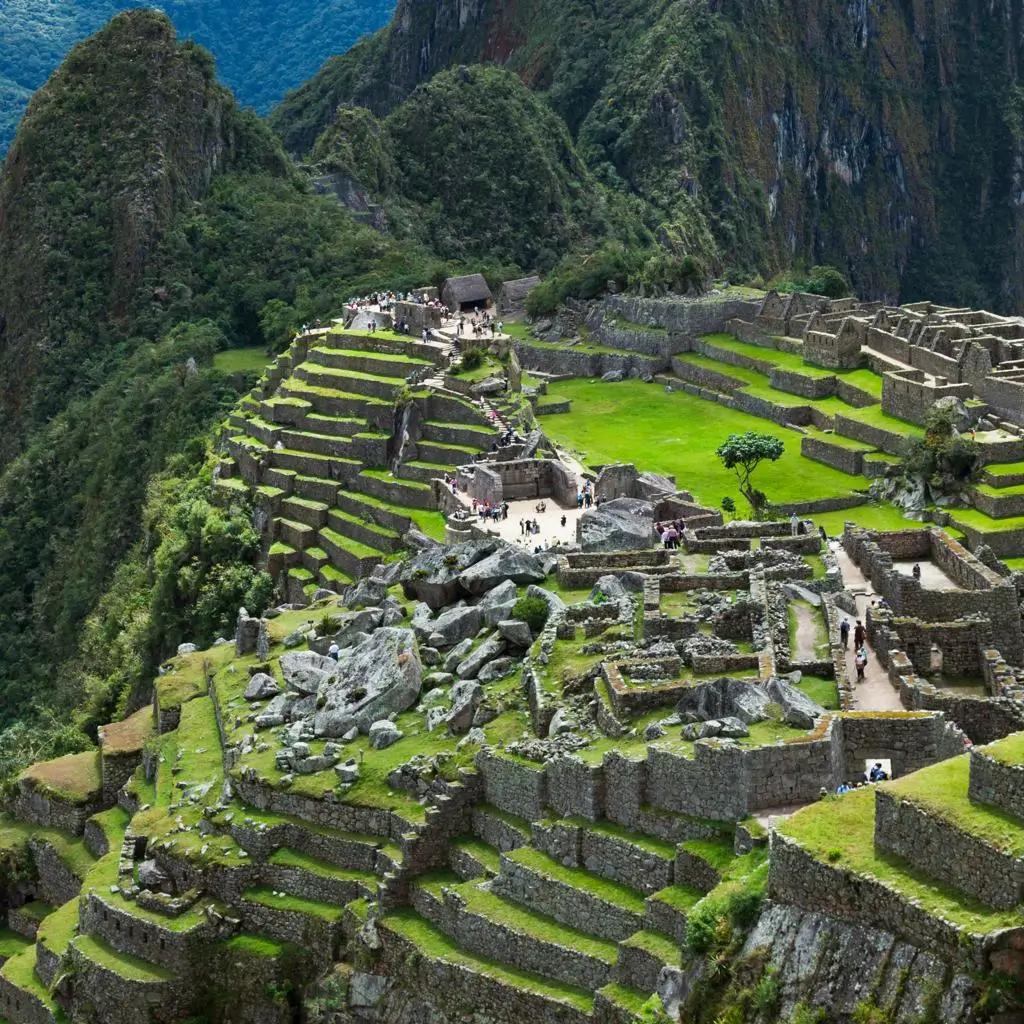
Machu Picchu was built around 1450 under the Inca emperor Pachacutec, and it was abandoned before the Spanish conquest reached the region, which is the main reason it survived intact rather than being dismantled or built over the way many Inca sites in Cusco were. What it was actually built for is less settled: the leading theories point to a royal estate, a religious sanctuary, or an astronomical observatory, and serious researchers disagree on which explanation fits best, or whether it served more than one purpose at once. This article lays out what’s reasonably established, what’s still genuinely debated, and how the site went from an abandoned royal retreat to the most recognized ruin in South America. For more on visiting the site itself, see our complete Machu Picchu guide.
When it was built and by whom
Machu Picchu was built during the reign of Pachacutec Inca Yupanqui, the ninth Sapa Inca, whose rule in the mid-15th century marked the rapid territorial and architectural expansion of the Inca Empire. Construction is generally dated to around 1450, placing it firmly within the empire’s period of greatest growth rather than its earlier, more modest origins.
This timing matters for understanding the site correctly: Machu Picchu was not an ancient ruin even to the Inca themselves. It was a relatively recent construction, built and occupied for perhaps only a century before the site was abandoned, which is a short working life for a site now associated with such deep antiquity in the popular imagination.
What it was actually for: the leading theories
No single, universally accepted answer exists for what Machu Picchu was built to be, and it’s worth treating every explanation below as a leading theory rather than settled fact, since that’s genuinely where the scholarship stands.
| Theory | Core argument |
|---|---|
| Royal estate | Built as a private retreat for Pachacutec and his court, away from the capital |
| Religious sanctuary | Layout and structures suggest a ceremonial and spiritual function tied to sacred geography |
| Astronomical observatory | Certain structures align with solstices and other celestial events |
| Combination of the above | Many researchers argue the site likely served several of these purposes simultaneously rather than one exclusively |
The royal estate theory has probably the widest support, partly because the site’s scale and quality of construction fit the pattern of other known Inca royal retreats built for the elite rather than ordinary settlement. Under this theory, Machu Picchu functioned similarly to a private country residence, a place for the emperor and his court to withdraw from the capital, entertain, and manage estate lands, while remaining within a network of similar royal properties scattered through the empire.
But the religious and astronomical elements are not minor details layered on top of a vacation property; the precision of certain alignments and the presence of structures with clear ceremonial functions suggest spiritual purpose was central rather than incidental, whatever else the site was also used for. The Intihuatana stone, for instance, is widely interpreted as having served a ritual or astronomical function tied to solar observation, and its positioning within the site suggests deliberate planning around celestial events rather than a decorative afterthought.
What most contemporary researchers agree on, even without consensus on a single primary function, is that separating “royal” from “religious” purposes imposes a modern distinction that likely didn’t exist in Inca thinking the same way. Inca rulers were themselves considered divine or semi-divine figures, so a residence built for an emperor was, by definition, also a sacred space in a way that doesn’t map cleanly onto a single category from our own vocabulary.
Why the Spanish never found it
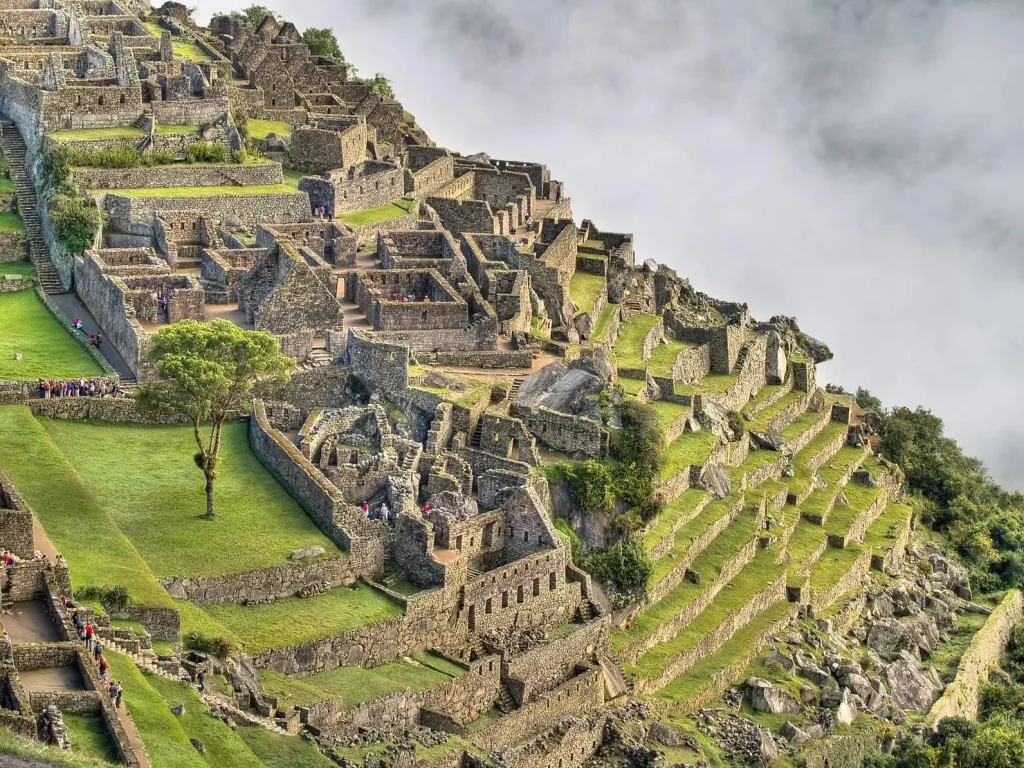
Machu Picchu’s location is the simplest and most convincing explanation for why Spanish conquistadors never recorded finding it, despite conquering the Inca capital of Cusco and much of the empire within a few decades. The site sits on a remote ridge between two peaks, well off the main Inca road network the Spanish used to move through the empire, and shrouded for much of the year in cloud forest that obscures it from any distant vantage point.
It’s also worth noting that Machu Picchu was likely already abandoned or largely depopulated by the time the Spanish arrived in the Cusco region, which removes any reason a conquest-era expedition would have gone looking for it specifically. An empty site off the beaten path, in territory the Spanish had less immediate reason to explore closely, is a plausible enough explanation without needing anything more dramatic.
The abandonment
Why Machu Picchu was abandoned is, like its original purpose, genuinely uncertain, and multiple explanations are taken seriously by researchers rather than one clear consensus. Some point to the smallpox epidemic that swept ahead of the physical Spanish conquest, decimating Inca populations through contact and trade networks before Europeans themselves arrived in a given region; disease moved faster than armies, and it’s entirely plausible a site like Machu Picchu lost much of its population, and therefore its reason to function, before a single Spanish soldier came anywhere near it.
Others point to the Inca civil war between Huáscar and Atahualpa, which fractured the empire’s cohesion in the years just before the Spanish conquest, potentially disrupting the resources, labor, and administrative support a site like Machu Picchu depended on to keep functioning as a royal estate. A site built to serve an emperor’s court doesn’t continue serving that purpose once the empire’s leadership structure has collapsed into civil conflict.
A more practical theory points to resource scarcity, its water sources or agricultural capacity struggling to sustain the population as needs grew, independent of any wider political upheaval. Machu Picchu’s terraced agriculture was sophisticated, but the site’s mountaintop location placed real limits on how much food and water it could reliably produce for a growing population over time.
None of these explanations excludes the others, and the honest answer is that Machu Picchu’s abandonment likely resulted from some combination of imperial collapse and practical strain, rather than one single dramatic event. What’s clearer is the outcome: whatever combination of causes applied, the site was empty, or nearly so, well before the Spanish conquest reached the wider region, which is precisely what kept it out of colonial records and largely undisturbed for the following centuries.
Hiram Bingham and the 1911 ‘discovery’
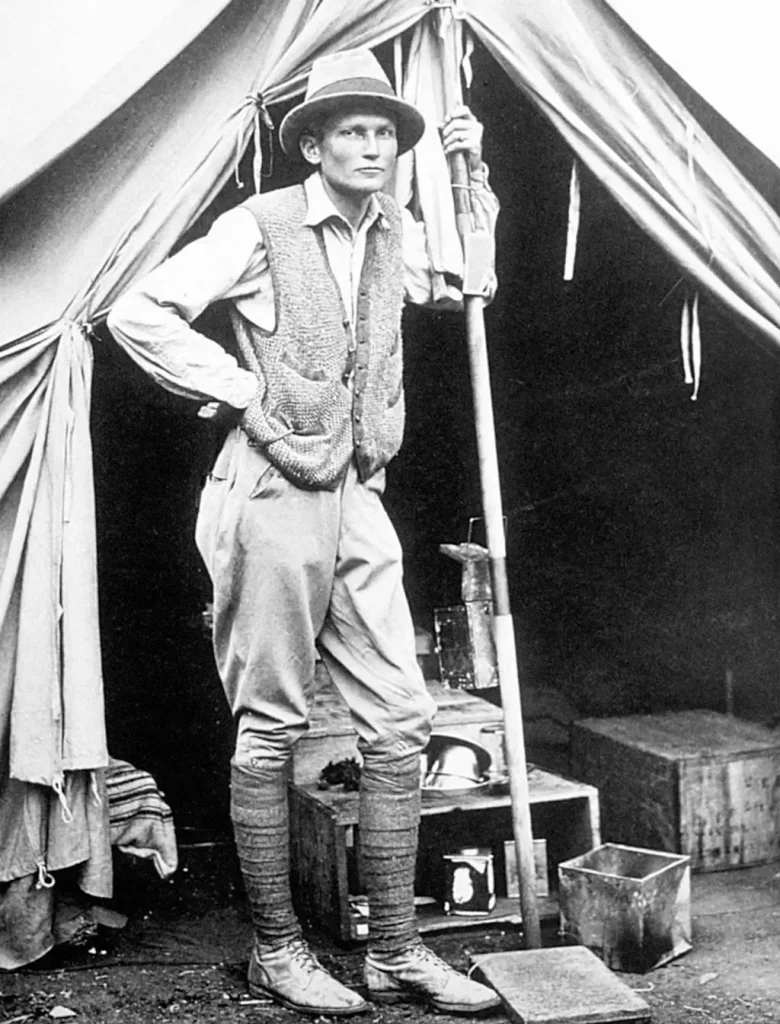
Hiram Bingham, an American historian and explorer from Yale University, is popularly credited with discovering Machu Picchu in 1911, and the word “discovery” deserves the quotation marks it usually gets in serious accounts. Bingham was guided to the site by a local farmer, and families were already living on and farming parts of the ruins when his expedition arrived; Machu Picchu had never been genuinely lost to the people living in the region.
What Bingham’s expedition actually did was bring the site to international academic and public attention for the first time, documenting it, publishing on it, and eventually featuring it in National Geographic, which is what launched Machu Picchu toward the global recognition it has today. Bingham himself was initially searching for a different lost city, Vilcabamba, the Inca’s last refuge from Spanish forces, and Machu Picchu was, in a sense, a discovery he stumbled into while looking for something else entirely, which adds a layer of irony to how the story is usually told.
That’s a meaningfully different achievement than discovery in the literal sense, and it’s worth understanding the distinction rather than repeating the popular but imprecise version of the story. Bingham’s own early theories about the site’s identity and purpose, including his initial belief that he had found Vilcabamba itself, turned out to be incorrect, which is itself a useful reminder that even the expedition credited with bringing Machu Picchu to the world got some of its own conclusions wrong at the time.
What the name really means
“Machu Picchu” comes from Quechua, and it translates roughly to “Old Mountain” or “Old Peak,” referring to the mountain the site sits below rather than the ruins themselves. This sits in deliberate contrast to Huayna Picchu, the sharper peak that rises behind the site in the classic postcard view, whose name translates to “Young Mountain” or “Young Peak.”
The naming pair reflects a broader Andean pattern of describing landscape features in relative, paired terms, old and young, rather than assigning names purely for their own sake. It’s a useful detail for understanding the site’s own place-based logic: the ruins were named for their setting, not the other way around.
What modern research has changed
Machu Picchu was designated a UNESCO World Heritage Site in 1983, which formalized its status as a site of global cultural significance and brought increased resources toward its study and preservation. Since then, ongoing archaeological and astronomical research has continued to refine, and in some cases challenge, earlier assumptions about the site.
One notable area of more recent research involves radiocarbon dating of human remains found at the site, which has suggested occupation may have begun somewhat earlier than the traditional circa-1450 date historians long assumed, potentially placing initial construction and use a couple of decades earlier under Pachacutec’s reign. This kind of research doesn’t overturn the broad picture, Pachacutec-era construction, pre-conquest abandonment, but it’s a good example of how even a site this thoroughly studied continues to have its details actively revised as methods improve.
Other ongoing work focuses less on dates and more on function, using detailed architectural surveys and comparisons with other Inca royal sites to test the leading theories against each other rather than simply repeating them. This kind of comparative research is slow and rarely produces a single headline-worthy conclusion, but it’s the reason our understanding of Machu Picchu’s purpose has grown more nuanced, if not more definitively settled, over the decades since Bingham’s expedition first brought the site to wider attention.
If you want to go beyond the history and into the site’s actual structures, the Temple of the Sun and main structures covers what you’ll actually see on a guided visit, and the Sun Gate and the Inca Bridge covers two of the site’s more distinctive secondary features. For the spiritual and astronomical dimension touched on above, Andean cosmovision explained goes deeper into the worldview that likely shaped the site’s ceremonial elements.
If this history has you ready to see the site itself, our 2-day Machu Picchu tour from Cusco is the most direct way to visit, and for a fuller Andean itinerary around it, the 7-day Cusco and Machu Picchu tour builds in the Sacred Valley alongside it. Whichever you choose, which circuit to buy is worth reading before you book your entrance ticket, since the site’s different circuits determine which structures discussed here you’ll actually walk past on the day.
Frequently Asked Questions
Who built Machu Picchu? Machu Picchu was built under the Inca emperor Pachacutec, around 1450, during the period of the empire’s rapid expansion.
What was Machu Picchu used for? The leading theories describe it as a royal estate, a religious sanctuary, or an astronomical observatory, and many researchers believe it likely served several of these purposes together rather than one alone.
Why did the Spanish never find Machu Picchu? Its remote location off the main Inca road network, combined with dense cloud forest cover and the fact that the site was likely already abandoned by the time of the conquest, meant it was never recorded by Spanish chroniclers.
Did Hiram Bingham really discover Machu Picchu? Not in the literal sense. Local families were already living on and farming the site when Bingham arrived in 1911, guided by a local farmer. What his expedition did was bring the site to international attention for the first time.