

Yes, Machu Picchu works well as a family destination, and the logistics are more forgiving than most parents expect. The citadel itself sits at 2,430 m, which is lower than Cusco at 3,399 m, so many families actually find their kids feel better here than in the city. The main adjustments are around the train, the bus queue, and keeping a young child engaged during a guided visit. For the full picture beyond the family angle, see our complete Machu Picchu guide.
Is Machu Picchu suitable for children?
There’s no reason a family trip to Machu Picchu should be harder than any other part of a Peru itinerary. The visit itself is a walk through ruins on stone paths, not a hike, and the guided tour lasts 2.5 hours — long for a young child to stay focused, but not physically demanding in the way people sometimes assume. The bigger factors are altitude adjustment before you arrive and how you manage a full travel day with kids: flight, train, bus, and the site itself, often in one stretch.
For families weighing Machu Picchu against a wider Peru trip, see Peru tour packages for families for how it fits into a longer itinerary.
Altitude: the citadel is lower than Cusco
This is the detail most parents miss. Cusco sits at 3,399 m, while Machu Picchu itself is at 2,430 m — genuinely lower ground. If your child struggled with the altitude in Cusco during the first days of the trip, the day at Machu Picchu is often when they perk back up, not when symptoms get worse. That said, the days in Cusco beforehand still matter for how everyone feels overall, so build in time to settle before pushing on to the train.
The train and the bus with kids
Getting to Machu Picchu from Ollantaytambo means the train, then the CONSETTUR bus for the final stretch. The bus ride from Aguas Calientes up to the citadel takes 30 minutes, with buses leaving roughly every 10 minutes — frequent enough that a family group is never stuck waiting long, even with a child who needs a bathroom break beforehand.
The train itself is generally an easy part of the day for kids: seated, scenic, and a natural point to rest before the site. Between the flight into Cusco, the drive to Ollantaytambo, the train, and the bus, it’s a full day of transitions, so pace expectations accordingly rather than planning anything strenuous either side of it.
Strollers and carriers: what works
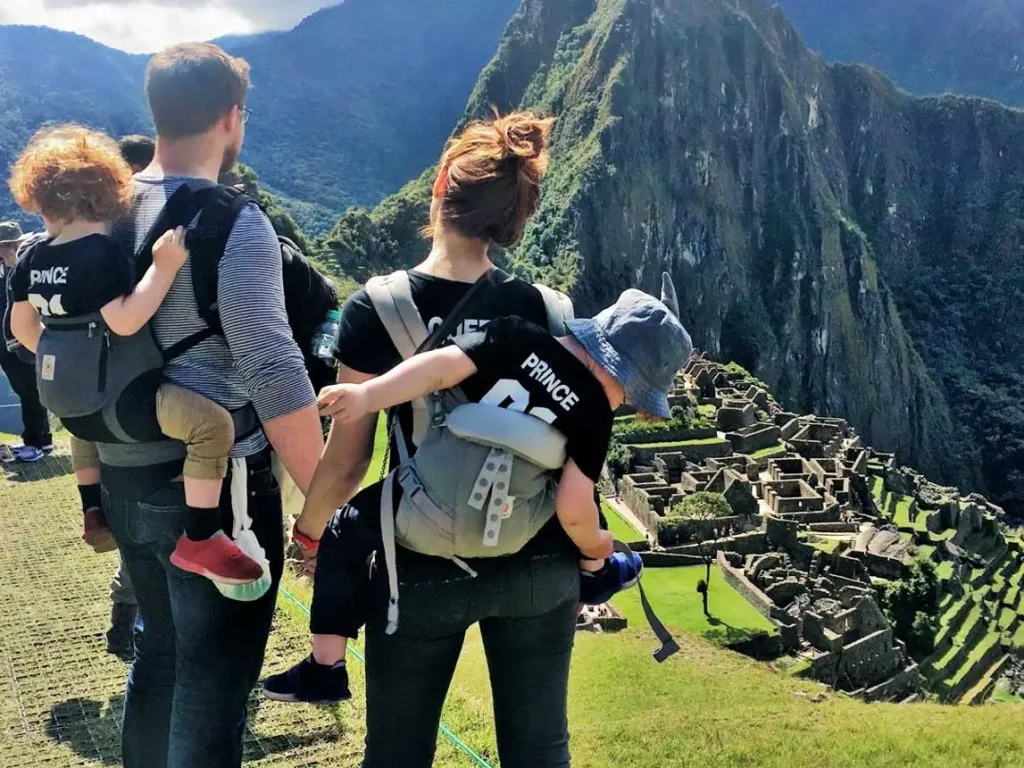
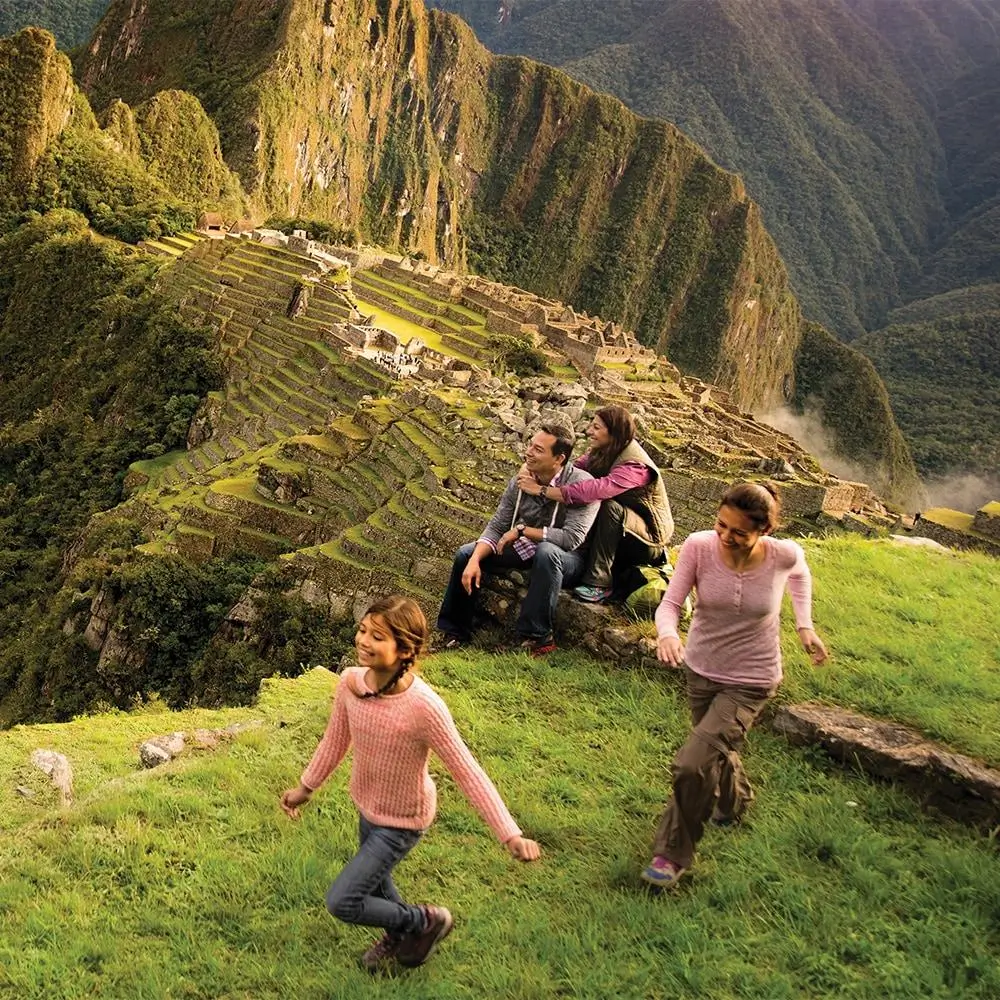
A stroller is not practical once you’re inside the citadel — the paths are stone, uneven in places, and narrow on some sections, and circuits are one-way with no room to manoeuvre a stroller against the flow of other visitors. A carrier or simply holding a younger child’s hand works far better for the visit itself. A lightweight stroller can still be useful in Aguas Calientes town, where the ground is flatter, even if it stays behind for the climb up to the site.
Which circuit suits a family
Machu Picchu is split into circuits with different routes and stair sections, and some are gentler underfoot than others. Rather than guessing, check which circuit to buy before booking, since the right choice depends on your child’s age and stamina as much as on what you want to see. If mobility is a concern for anyone in the group, not just kids, Machu Picchu accessibility covers the terrain in more detail.
Families travelling with younger children often find the 4-day Cusco and Machu Picchu tour gives enough time to pace the trip without over-extending anyone, while the 6-day Cusco and Machu Picchu tour builds in more acclimatization days before the visit itself, plus a private guide throughout.
| Factor | What it means for families |
|---|---|
| Machu Picchu altitude | 2,430 m — lower than Cusco |
| Cusco altitude | 3,399 m — where symptoms are more likely |
| Bus ride up | 30 min, departs every 10 min |
| Guided tour length | 2.5 hours |
| Stroller inside citadel | Not practical — carrier or hand-holding instead |
Keeping a 2.5-hour guided tour interesting
Two and a half hours is a long stretch for a young child to stay engaged with a formal guided tour. What tends to work is letting your guide know in advance that you have kids in the group — a good guide will naturally pull in details that land better with children: how the stones fit without mortar, what animals lived here, the shapes carved into the rock. Bringing a small snack, a water bottle, and building in a few minutes to simply sit and look rather than keep moving all help stretch a child’s attention across the full visit.
What to bring and what to skip
Pack light but be deliberate: sun protection, water, and snacks matter more here than almost anything else, since there is nowhere to buy supplies once you’re inside the site. Leave anything bulky at the hotel — daypacks and bags are subject to the site’s rules, so it’s worth checking Machu Picchu rules and banned items before you pack, particularly around bag size and what’s allowed in.
FAQs
Is Machu Picchu too high for children?
The citadel itself, at 2,430 m, is lower than Cusco at 3,399 m, so many children feel better here than earlier in the trip. How your child handles the days in Cusco beforehand is the bigger factor to plan around.
Can we bring a stroller to Machu Picchu?
Not practically inside the citadel — the paths are stone and uneven, and circuits are one-way. A carrier or holding hands works better for the visit itself; a stroller can still help around Aguas Calientes town.
How long is the visit, and will my child manage it?
The guided tour runs 2.5 hours. It’s a walk, not a hike, but it is a long stretch for a young child’s attention — a good guide can help by tailoring the commentary, and short pauses to rest help too.
Which tour is best for families?
It depends on your children’s ages and how much acclimatization time you want beforehand. The 4-day and 6-day Cusco and Machu Picchu tours both work well for families — worth discussing your specific group when you book.