

A standard Peru itinerary moves through three distinct climates in a matter of days: the dry coastal desert around Lima, the cold high-altitude Andes around Cusco and Rainbow Mountain, and the warmer, humid cloud forest at Machu Picchu itself, despite Machu Picchu sitting at a lower elevation than Cusco. Packing for one climate and hoping it covers the rest is the most common mistake travellers make. The fix is a layering system built to move between all three without overpacking, plus a short list of items that matter more here than on a typical trip. For the full range of what a Peru itinerary can include, see our full guide to Peru tour packages.
This is a different packing problem than a dedicated multi-day trek. If you are specifically preparing for the Inca Trail, that itinerary has its own gear list built around days on the trail rather than around moving between cities and climates; this guide is for the more common multi-destination trip most of our travellers actually take.
Packing for three climate zones in one suitcase
Each destination on a standard Peru trip has its own baseline conditions, and none of them match the others closely enough to pack for just one.
| Destination | Elevation | Typical conditions |
|---|---|---|
| Lima | Sea level | Mild, often overcast, coastal humidity |
| Cusco and the Sacred Valley | 3,399 m / around 2,800 m | Cold mornings and nights, strong sun midday, thin dry air |
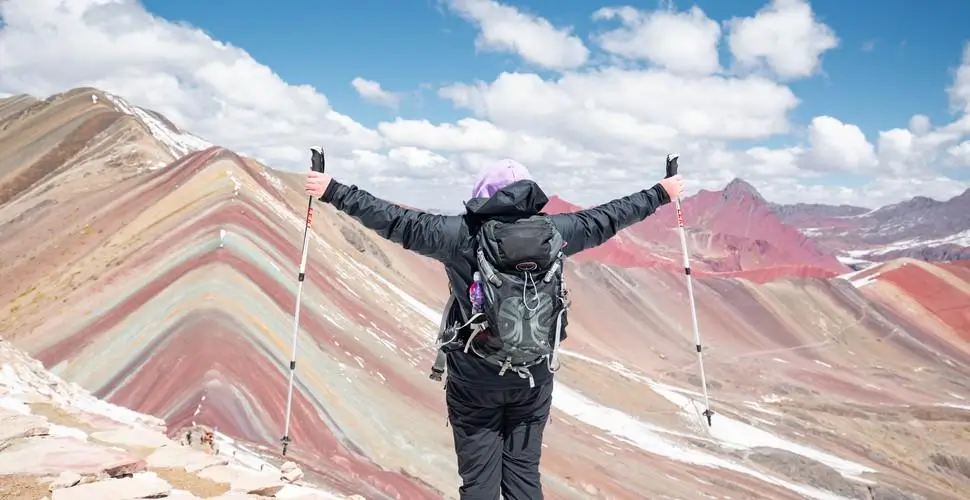
| Rainbow Mountain | 5,036 m | Genuinely cold, high wind, thin air |
| Machu Picchu | 2,430 m | Warmer and more humid than Cusco, cloud forest microclimate, rain possible year-round |
The temptation is to pack for the coldest point, Rainbow Mountain, and assume everything else is covered. That leaves you overheating and overdressed in Lima and at Machu Picchu, where the climate is closer to warm and damp than cold and dry. The better approach is packing pieces that layer, not packing for the single most extreme day.
The layering system that actually works in the Andes
Three layers cover essentially every condition on a standard itinerary:
- A base layer that manages moisture, worn most days regardless of destination.
- A mid layer, typically a fleece or light insulated jacket, added in Cusco and essential at Rainbow Mountain.
- An outer layer that blocks wind and rain, useful everywhere but non-negotiable at altitude and at Machu Picchu, where rain is possible in any season.
The point of this system is that you are adding and removing layers through the day, not switching your whole outfit between destinations. A cold morning in Cusco that warms up considerably by midday, a windy exposed climb at Rainbow Mountain, and a humid, occasionally rainy morning at Machu Picchu are three different combinations of the same three layers, not three different suitcases.
Materials matter as much as the number of layers. Merino wool and synthetic technical fabrics dry faster and regulate temperature better than cotton, which stays wet once it’s damp and offers little insulation when it does. This is worth prioritizing for your base layer specifically, since it is the piece in direct contact with your skin through the widest range of conditions on the trip.
Footwear: one pair is not enough
A single pair of shoes cannot reasonably cover cobblestone streets in Cusco, a day trek to Rainbow Mountain, and a guided walk around Machu Picchu’s stone terraces. Plan on at least two:
- A comfortable walking or light hiking shoe for everyday use in Cusco, the Sacred Valley, and Machu Picchu’s guided visit, where terrain is uneven but not technical.
- A proper hiking boot with ankle support and good traction for Rainbow Mountain specifically, where the elevation, wind, and trail surface are more demanding than anywhere else on a standard itinerary.
A second pair of everyday shoes for the evening, once your feet have been in boots or hiking shoes all day, is a small comfort worth the extra space in your bag, particularly on longer itineraries where you are wearing the same pair repeatedly.
Socks deserve more thought than they usually get. Pack more pairs of moisture-wicking socks than you think you need, since wet or cotton socks are one of the more common causes of blisters on the Rainbow Mountain walk specifically, where the combination of cold, altitude, and several hours on your feet punishes poor sock choices more than it would on a shorter city walk.
Sun protection at altitude
The sun at 3,399 meters and higher is considerably stronger than the same sun at sea level, and it is easy to underestimate because the air itself is cold. Sunburn at altitude happens faster and on cooler days than most travellers expect, precisely because the cold air masks how strong the UV exposure actually is.
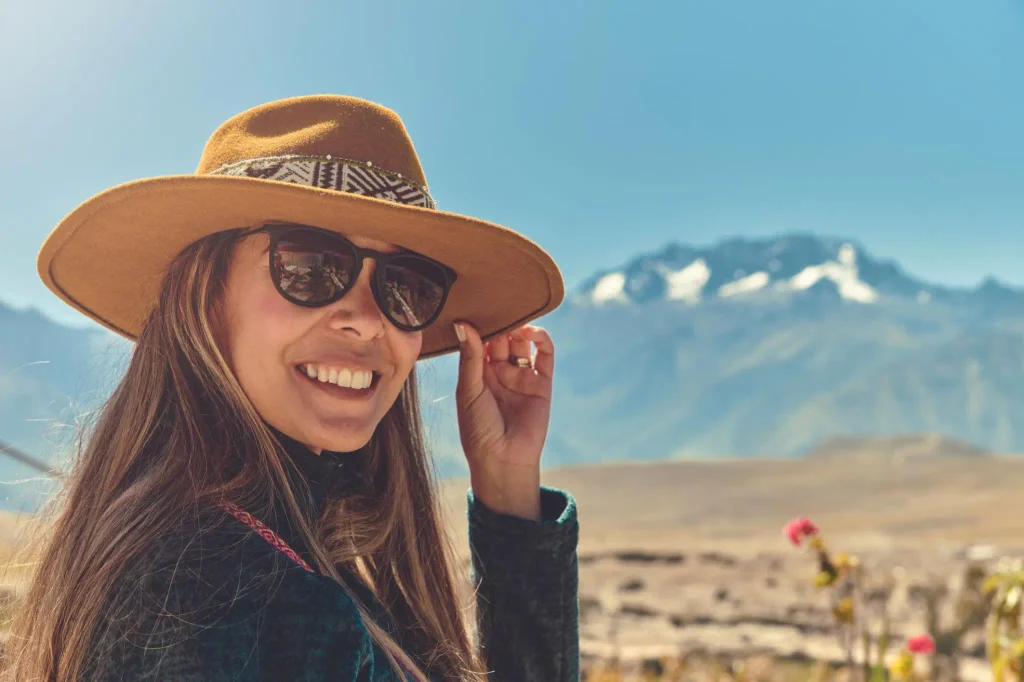
Pack a high-SPF sunscreen and reapply it more often than you would at home, a hat that shades your face and neck, and sunglasses with real UV protection rather than a cosmetic pair. This matters most at Rainbow Mountain, where you are at 5,036 meters with no shade for most of the walk, but it applies to a normal day in the Sacred Valley too, not just the more obviously extreme parts of the trip.
Documents, money and electronics
A short, non-negotiable list belongs in your daypack rather than your checked luggage, since these are the items you need on tour days rather than at the hotel:
- Passport, the original, not a copy. It is required for the Machu Picchu train and entrance, and no substitute is accepted.
- Printed and digital copies of your Machu Picchu and train tickets.
- Cash in soles, including small notes, since cards do not work reliably outside cities.
- A universal or Peru-compatible power adapter, plus a portable charger for days that involve a lot of photography and little access to an outlet.
- A small first-aid kit with basics for blisters and headaches, useful on both the Rainbow Mountain trek and general altitude adjustment days.
What to wear for Machu Picchu goes deeper into the specific clothing choices for that one site, and Machu Picchu rules and banned items covers what is and is not allowed through the entrance, including luggage restrictions on the train itself. Check that article before you pack your day bag for the Machu Picchu leg specifically, since the train’s size limits affect what you can carry with you that day, not just what you bring to Peru overall.
It is worth separating what you carry for the Machu Picchu day specifically from the rest of your luggage well before that day arrives. Pack a smaller daypack with only the items above plus a layer or two, leave the rest of your belongings at your hotel or with your main luggage, and treat that daypack as the one bag you cannot afford to leave behind or overpack given the train’s restrictions.
What you can buy in Cusco and skip at home
Not everything needs to come from home. Cusco has a well-developed market for trekking and cold-weather gear aimed directly at tourists, and buying locally instead of packing it can save both suitcase space and, in some cases, money.
Alpaca wool sweaters, hats, and gloves are widely available in Cusco at a range of price points and quality levels, and they double as a genuinely useful souvenir rather than a purchase made purely out of necessity. Basic hiking accessories like trekking poles or gloves can also be found locally if you would rather not travel with them from home. What is worth bringing rather than buying locally is anything sized or fitted specifically to you, hiking boots being the clearest example, since fit matters more for footwear than for anything else on this list.
A checklist by trip length
Shorter trips can travel lighter than longer ones, but the core layering and footwear items apply regardless of how many days you are in Peru.
- A short trip, such as the 8-day Cusco and Machu Picchu tour: the full layering system, both pairs of shoes, sun protection, and the documents list above cover this comfortably in a single carry-on-sized bag plus a daypack.
- A longer, more varied trip, such as our 14-Day Peru Mystic Tour: the same core list applies, but pack for more laundry cycles rather than more items, since the itinerary moves through the coast as well as the highlands and adds more days overall. A lightweight, quick-drying base layer earns its space here more than an extra heavy layer would.
- Any trip length: what a Peru package includes is worth checking before you pack, since knowing what is already arranged, transport, some meals, guiding, tells you what you actually need to carry versus what is handled for you.
Whatever the length of your trip, the goal is the same: layers you can add and remove through the day, two pairs of shoes with different jobs, real sun protection, and your documents kept where you can reach them without digging through a packed bag.
Frequently Asked Questions
What should I pack for the different climates in Peru? Pack in layers rather than for one climate: a moisture-managing base layer, an insulating mid layer, and a wind- and rain-blocking outer layer cover Lima’s coastal mildness, Cusco and Rainbow Mountain’s cold altitude, and Machu Picchu’s warmer, humid cloud forest.
Do I need hiking boots for a Peru trip that isn’t a trek? Yes, if Rainbow Mountain is on your itinerary. Its elevation, wind, and trail surface are more demanding than the walking involved in Cusco or Machu Picchu, so a proper hiking boot with ankle support is worth packing even on a non-trekking itinerary.
Is the sun really that strong at altitude in Peru? Yes. UV exposure at 3,399 meters and above is significantly stronger than at sea level, even on a cold day, and sunburn happens faster than most travellers expect because the cold air can mask the intensity.
Can I buy warm clothing in Cusco instead of packing it? Yes. Cusco has a wide selection of alpaca wool sweaters, hats, and gloves at various price points, which is a practical way to save suitcase space, though items like hiking boots are worth bringing from home for the sake of fit.