
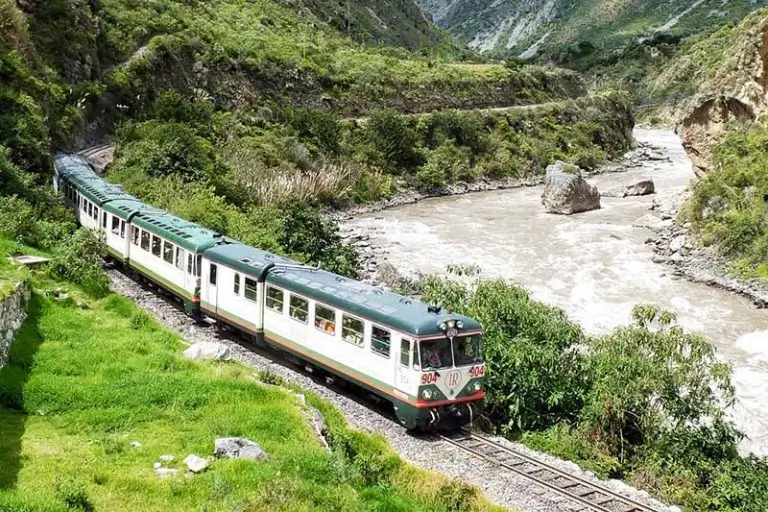
There is no road into Machu Picchu, and no direct train from Cusco itself. You get there by combining a road transfer to the Sacred Valley with either a train from Ollantaytambo, a budget van-and-walk route through Hidroeléctrica, or a multi-day trek. From door to door, the train route takes about half a day; Hidroeléctrica takes a full day each way; trekking takes three to five days. We run all three, and which one we book depends entirely on your time and budget, not on which is “best.”
If you haven’t already, read our complete Machu Picchu guide for the bigger picture — tickets, circuits, and planning your visit once you arrive. This article is only about the journey there.
The four realistic ways to get there
Ignore anything that suggests you can drive straight to the citadel — there is no road, full stop. Machu Picchu sits at 2,430 m (7,972 ft), well below Cusco’s 3,399 m (11,152 ft), and every route down to it passes through the Sacred Valley at around 2,800 m first. What actually exists:
- Train from Ollantaytambo or Poroy, the fastest and most comfortable option, used on most of our packages.
- Hidroeléctrica route — a long road transfer followed by a 2–3 hour walk along the rail line into Aguas Calientes. The cheapest option, and the slowest.
- Trekking — the Inca Trail or an alternative route like Salkantay, arriving on foot over three to five days.
- A private full-day combo some operators sell as “one day by road and rail” — really just a compressed version of option 1, useful only if you’re extremely short on time. We cover that scenario separately in visiting Machu Picchu in one day.
Every one of these ends the same way: a bus or a walk up from Aguas Calientes, timed to your entry slot. And every one requires a licensed guide at the gate — since 2024, unguided entry to Machu Picchu isn’t permitted regardless of which route brought you there, so factor a guide into your plan even if you’re arranging transport independently.
The right choice usually comes down to one question: how many days do you actually have. Two days in the region only really works with the train. A week or more opens up the trek. Hidroeléctrica sits in an odd middle ground — it costs less than the train but takes almost as long as a short trek, without the trek’s payoff.
By train: Cusco, Poroy and Ollantaytambo stations
Cusco has its own station, Poroy, but almost no operator departs from there for a same-day Machu Picchu visit — the train from Poroy takes longer and runs less frequently than the Ollantaytambo departures. In practice, nearly every itinerary — ours included — starts with a private road transfer from Cusco to Ollantaytambo, which takes 1.5 hours through the Sacred Valley, then boards the train there.
From Ollantaytambo, the train to Aguas Calientes takes 1 hour 40 minutes on the Expedition service, the class we include as standard on our packages. Vistadome is available as a paid upgrade, with larger windows and a slightly faster, more comfortable ride. We break down what you actually get with each option in the three train classes compared, and if you’re deciding between operators, see PeruRail vs IncaRail — both run the Ollantaytambo–Aguas Calientes route on similar schedules.
Train fares are sold separately from your Machu Picchu entrance ticket. Book your train and your entry time slot together — a train that lands you in Aguas Calientes at noon is wasted if your ticket is for a 7 AM entry.
Your passport is required to board — not a photocopy, and the name on your ticket has to match it exactly, the same rule that applies at the Machu Picchu gate itself. Keep it on hand at check-in, not packed away in your main luggage. On our packages, the road transfer, the train, and the entrance ticket are all booked as one sequence, so this alignment is handled before you land in Cusco rather than something you have to manage yourself the night before.
The cheap route: Hidroeléctrica by van
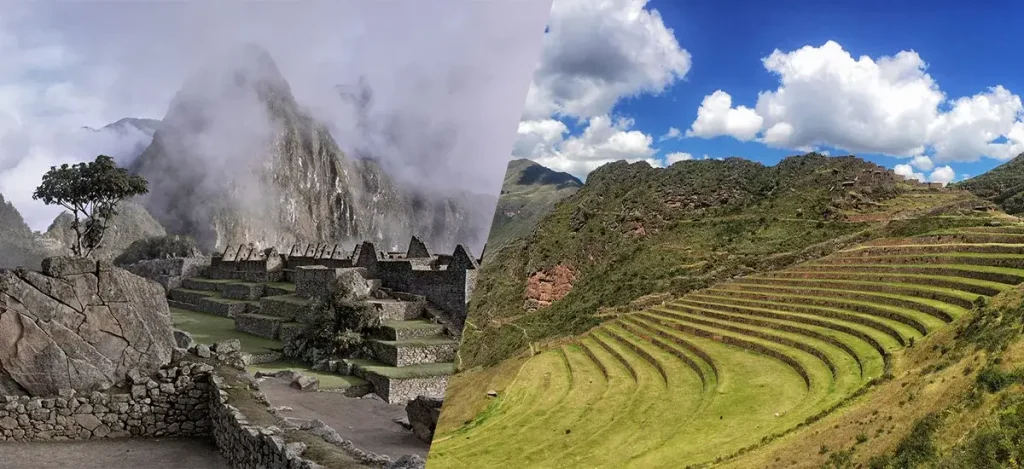
This is the budget path, and it’s honestly a different kind of day than the train. You take a road transfer from Cusco toward Santa María and Santa Teresa, ending at the Hidroeléctrica station — a trip that public route reports put at around six to seven hours by van. From there, you walk along the rail line beside the Urubamba River into Aguas Calientes, a flat, well-marked walk that typically takes two to three hours. Add it up and you’re looking at somewhere around ten to twelve hours of travel each way, door to door, more if the rainy season slows the road.
Our honest take: it’s a real way to cut costs, and some travelers genuinely enjoy the walk — it’s scenic, not technical, and doesn’t require trekking fitness. But it eats an entire day in each direction, and combined with a Machu Picchu visit, most people end up doing it as an overnight in Aguas Calientes rather than a same-day trip. If your time in Peru is limited, the money saved usually isn’t worth what it costs you elsewhere in the itinerary. We don’t build Hidroeléctrica into our standard packages for that reason — it shows up mainly as a request from budget-focused independent travelers, and when it does, we’re upfront about the trade-off before booking it.
One more practical note: the walk from Hidroeléctrica follows the same rail corridor the train uses, so you’re sharing the path with occasional train traffic — not dangerous, but worth knowing before you picture an empty jungle trail. Bring water and sun protection; there’s little shade for most of the route, and the two-to-three-hour estimate assumes a steady pace, not stops for photos every few minutes.
On foot: Inca Trail and alternative treks
The classic route is the 4-day Inca Trail, ending at Machu Picchu through the Sun Gate on the morning of day four. It requires a licensed operator — independent trekking isn’t permitted — and permits are capped at 500 per day including guides, cooks, and porters, which means real demand for June–August dates well before the season starts. We run the classic 4-day Inca Trail with our own crew and can talk you through timing if you’re set on this route.
Alternative treks — Salkantay, Lares, Choquequirao — don’t require a permit system and run closer to your preferred dates with more flexibility, at the cost of not walking the original Inca stonework into the site. If you’re weighing a trek against the train entirely, we lay out the real trade-offs — time, fitness, cost, and what you actually see — in train vs trek to Machu Picchu.
Whichever trek you choose, you still end up at Aguas Calientes or the citadel gate on foot, arriving from a different direction than train travelers but converging on the same entry system. Inca Trail permits typically release around October for the following year and are sold only through licensed operators — you can’t buy one directly. For June–August departures specifically, that window closes fast; travelers set on the classic trail should lock in dates as early in the planning process as possible, well before worrying about hotels or flights.
Acclimatization matters more here than on the train route. Most Inca Trail itineraries build in at least a day or two in Cusco or the Sacred Valley before the trek starts, since starting a multi-day hike straight off a flight into 3,399 m air is a common cause of altitude problems on day one.
The final leg: bus or stairs from Aguas Calientes
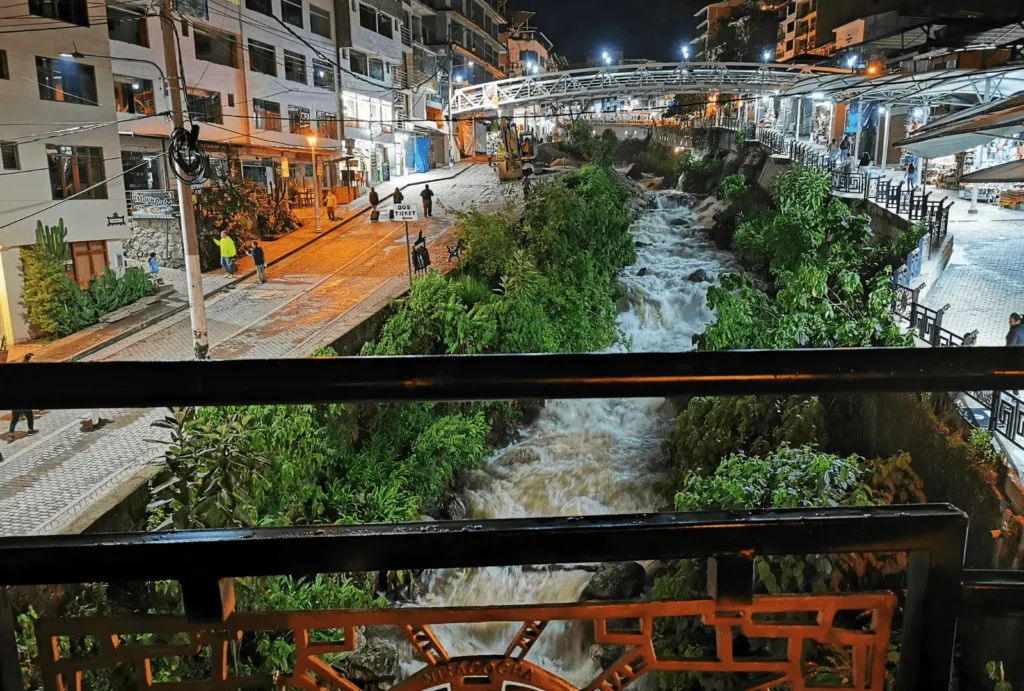
However you reach Aguas Calientes, the last stretch up to the citadel is the same for everyone. The CONSETTUR bus runs the 30-minute climb from the town to the entrance, departing roughly every 10 minutes from early morning. It’s the option we use for every client on every package — reliable, fast, and it saves your legs for the site itself.
The alternative is walking up the original stone stairway that shortcuts the switchback road — a steep, direct climb that takes roughly 1.5 to 2 hours depending on fitness and how many people are on the path that morning. Given that your Machu Picchu entry is tied to a specific time slot, we default every client to the bus — it’s the only way to guarantee you’re at the gate on time rather than gambling on the stairs.
Total time and cost for each option
| Option | Total door-to-door time | Effort | Best for |
|---|---|---|---|
| Train (Ollantaytambo–Aguas Calientes) | Half a day each way (~4–5 hrs including the road transfer) | Low | Most travelers, tight schedules, comfort |
| Hidroeléctrica (van + walk) | 10–12 hrs each way | Moderate (long day, easy walk) | Budget travelers with flexible time |
| 4-day Inca Trail | 4 days, arriving on foot day 4 | High (multi-day trek at altitude) | Trekkers wanting the historic route |
| Alternative trek (Salkantay, Lares, etc.) | 4–5 days depending on route | High | Trekkers who can’t get Inca Trail permits |
Which one we use in each of our packages
On our 2-day Machu Picchu tour from Cusco, we use the train both ways — it’s the only realistic option when the whole trip is 48 hours, and it maximizes your actual time at the site rather than in transit.
On the 4-day Cusco and Machu Picchu tour and our longer 6-, 7-, and 8-day itineraries, we also default to train, with private ground transport from your hotel to Ollantaytambo included in every package. The extra days go toward the Sacred Valley, Cusco city, and acclimatization — not toward the Hidroeléctrica route, which we don’t consider a good use of time on a trip that’s already tightly scheduled.
For clients who specifically want to walk in, we build the route around the classic Inca Trail rather than Hidroeléctrica, since the historic trail is the reason most trekkers choose to walk in the first place.
Across every package, one thing doesn’t change: private ground transport, a licensed guide, and hotel pickup are built into the price. You’re not left to figure out the Ollantaytambo transfer or the Aguas Calientes bus on your own — that logistics layer is exactly what you’re paying an operator for, whether you’re on our 2-day tour or the full week.
Frequently Asked Questions
Can I get to Machu Picchu without taking a train? Yes — the Hidroeléctrica route (road plus a 2–3 hour walk) and multi-day treks like the Inca Trail both reach Machu Picchu without a train ticket. Both take significantly longer than the train.
Is the Hidroeléctrica route safe? The walk itself is flat and well-marked, following the rail line beside the river, and doesn’t require trekking experience. The longer risk factor is the road transfer to and from Hidroeléctrica, which can be affected by weather and landslides in the rainy season.
Do I need to book the train in advance? Yes. Trains sell out on their own schedule, separate from Machu Picchu entrance tickets, especially for departures that match popular entry time slots in June–August. We book train and entrance tickets together to make sure they actually line up.
How early do I need to arrive in Aguas Calientes before my Machu Picchu entry time? We recommend being in town at least the night before if your entry slot is early morning, since the first buses up fill quickly and trains don’t always land you in time for a same-day early entry.