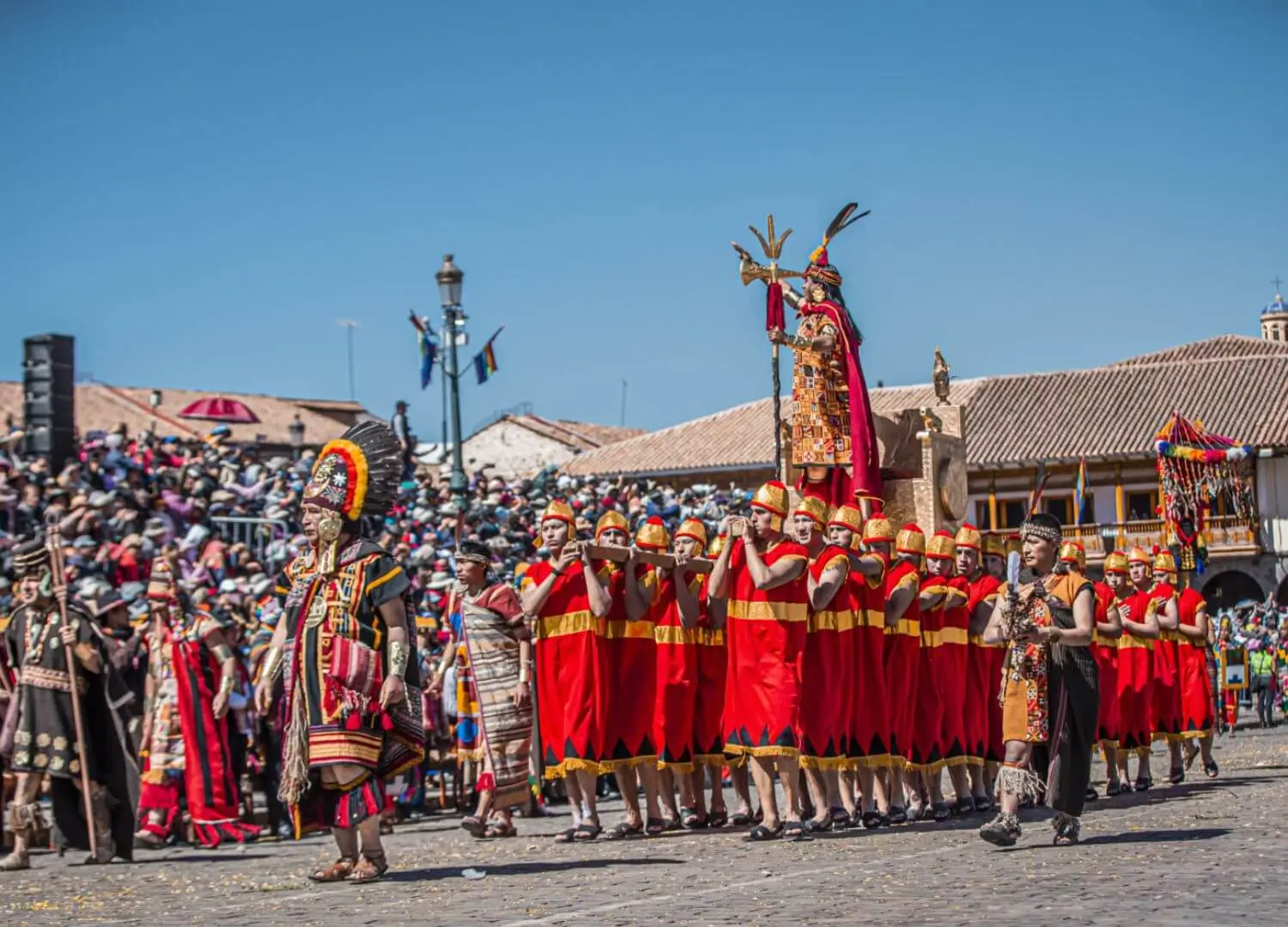
Inti Raymi is the Inca festival of the sun, celebrated every year on 24 June in Cusco, and it hasn’t moved in over five centuries of tradition — plan around that single fixed date. The day unfolds in three stages across the city: a free ceremony at Qorikancha in the morning, a free gathering in the Plaza de Armas, and the main reenactment at Sacsayhuamán in the afternoon, which is the only stage that requires a paid seat. If you’re building a Peru itinerary around this date, our full guide to Peru tour packages covers how a festival week fits against a standard Cusco and Machu Picchu route.
What Inti Raymi is and where it comes from
Inti Raymi means “festival of the sun” in Quechua. Under the Inca empire, it marked the winter solstice in the Southern Hemisphere and was one of the most important dates on the Inca religious calendar, led by the Sapa Inca himself. The ceremony gave thanks to Inti, the sun god, at the point in the year when daylight was shortest and the sun’s return mattered most for the agricultural cycle ahead.
Spanish colonial authorities banned the festival in the 16th century. It was revived in 1944 as a staged historical reenactment, written and directed as theatre rather than religious practice, and performed publicly in Cusco since. That distinction matters: what you see today is a deliberate, large-scale recreation of the original ceremony, not a continuous unbroken practice. It’s still taken seriously by the performers and by Cusco as a city — June 24 is a non-working holiday locally — but it’s staged, not clandestine ritual.
The date: why 24 June and what happens the rest of June
24 June is fixed to the winter solstice in the Southern Hemisphere, which falls around 20-21 June, with the festival date itself set slightly after by tradition rather than adjusted year to year. It does not move with the lunar calendar the way some Andean festivals do.
June in Cusco is festival month more broadly. Smaller processions, regional celebrations and preparation events run through the weeks leading up to the 24th, and the city’s tourism infrastructure — hotels, guides, transport — shifts into its highest-demand period of the year around this single date.
The three stages: Qorikancha, Plaza de Armas, Sacsayhuamán
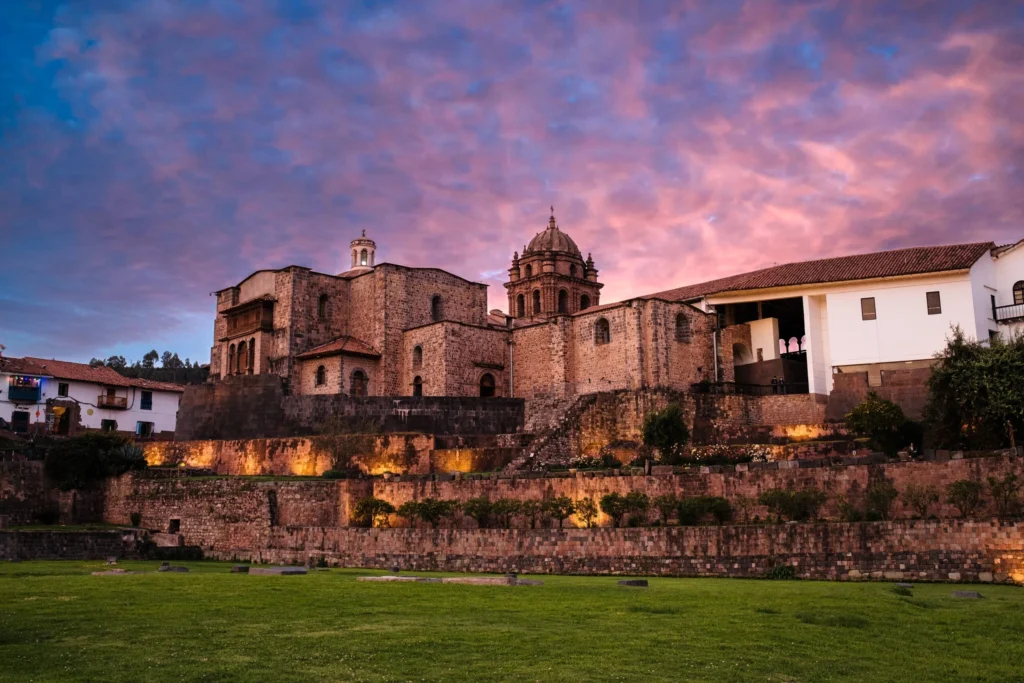
The day starts at Qorikancha, the former Temple of the Sun, at approximately 9:00 AM. The Inca, his entourage and the Coya appear, and the ceremony includes a coca and chicha ritual to open the festivities. This stage runs about 45 minutes and is free to watch from the street, though a limited paid seating area exists directly at the site.
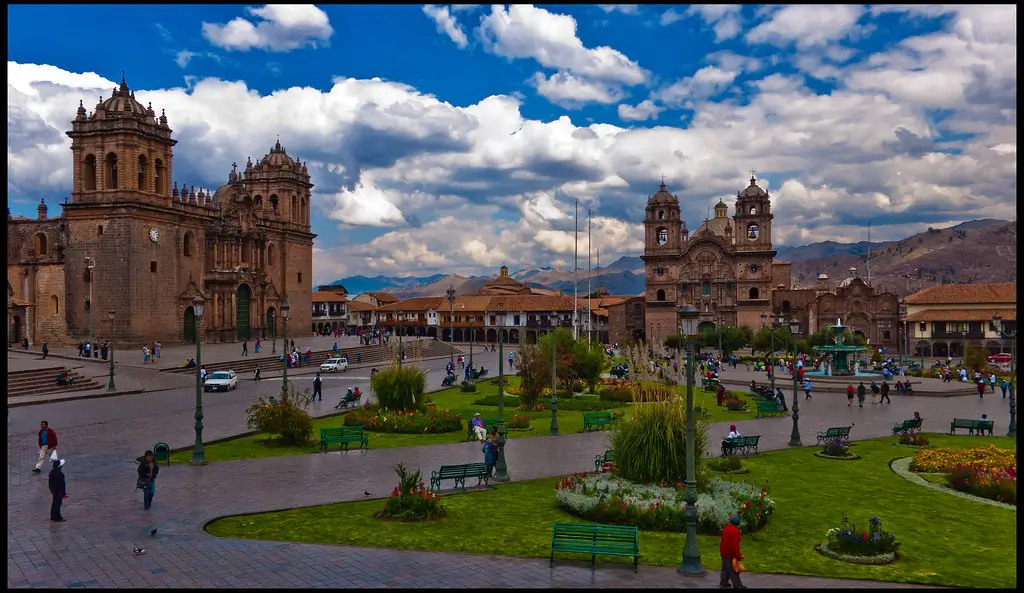
The procession then moves to the Plaza de Armas, Cusco’s main square, where the Inca addresses the city. This stage has no ticketed seating at all — you watch from the square itself, on your feet, alongside everyone else who’s shown up.
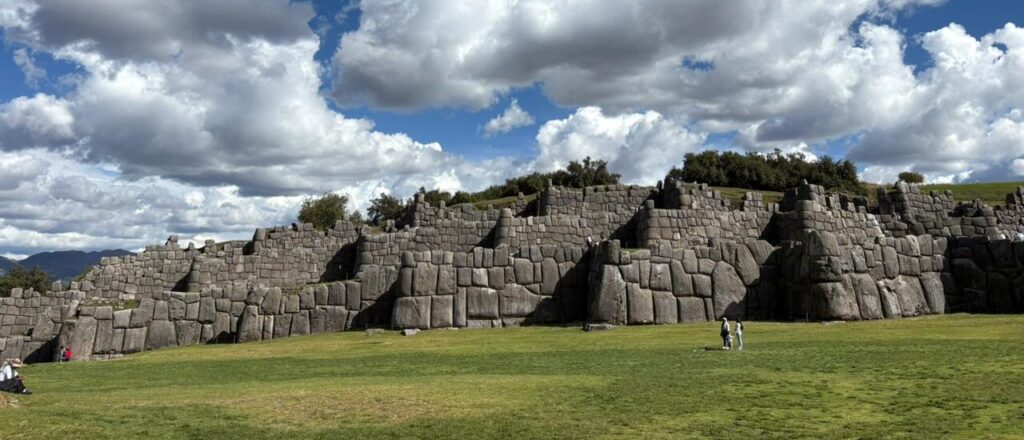
The main event is at Sacsayhuamán, the Inca fortress on the hill above the city, starting at approximately 2:00 PM and running about 2.5 hours. This is where the full reenactment takes place, with several hundred performers, and it’s the only stage where a paid ticket is required to be seated. Sacsayhuamán itself closes to regular sightseeing on the 24th because the show occupies the site.
Seating: paid stands, free areas and what you actually see from each
Sacsayhuamán seating is sold in named sections, and pricing and section names have varied across recent years and vendors. As a general reference, foreign-visitor pricing across past seasons has run roughly from the low hundreds of dollars for the outer sections up to the high two-hundreds for the most central section, with the central zone typically the most expensive and least shaded.
The lateral sections tend to offer some afternoon shade and a side-on view of the stage; the central section gives the clearest sightline to the main action but usually sits in full sun for the entire 2.5-hour show. None of the Sacsayhuamán sections are covered — if you book a seat, you’re outdoors at over 3,600 meters for the full performance regardless of section.
Watching from outside the ticketed area — the slopes above Sacsayhuamán — is technically possible and free, but it means a distant view and no guaranteed spot, since crowds gather there early.
How Cusco changes during festival week
Hotel rates around 24 June climb well above the rest of the dry season, and rooms in central Cusco sell out weeks ahead. Restaurants, taxis and city tours run at capacity. If your trip includes Machu Picchu on either side of the festival, expect the Ollantaytambo–Aguas Calientes train and Machu Picchu entry tickets to be tighter than usual too, since festival travellers stack their itineraries around the same days.
Street life shifts as well — expect processions, food stalls and street performances building for days before the 24th, especially around the Plaza de Armas and along the route up to Sacsayhuamán.
Booking timeline: when hotels and seats sell out
Sacsayhuamán seating for Inti Raymi is limited — total capacity across all sections runs in the low thousands, not an open-ended crowd — and the most central and best-shaded sections are usually the first to go. Booking two to three months ahead is the safe window if you want a specific section; leaving it to a few weeks before puts you at the mercy of whatever’s left.
Hotels in central Cusco for the nights around 24 June should be treated the same way — book as early as you’d book Machu Picchu train tickets for July, which our full guide to Peru tour packages and when to book your Peru tour both cover in more detail for the dry season generally.
If Inti Raymi is the anchor of your trip, our Inti Raymi 6-day festival tour builds the itinerary around the 24th with Machu Picchu on either side, so you’re not trying to coordinate festival seating and train tickets separately.
Beyond 24 June: the other festivals that month
Inti Raymi is the best known June date, but it’s not the only one. Corpus Christi, a Catholic feast day that typically falls in late May or June, brings its own large procession through central Cusco and predates Inti Raymi’s modern revival by centuries in continuous local practice. If your dates land in early-to-mid June rather than exactly on the 24th, you may still catch a significant Cusco festival without competing for Inti Raymi’s peak-week pricing and crowds.
For travellers stacking a full Cusco and Machu Picchu itinerary around this period, our 8-day Cusco and Machu Picchu tour has enough days built in to absorb a festival date without cutting Machu Picchu time short.
Practical survival: sun, altitude, crowds and food
Cusco sits at 3,399 meters (11,152 ft), and Sacsayhuamán sits slightly above the city itself. If Inti Raymi lands early in your trip, you’re watching a 2.5-hour outdoor show at altitude before you’re fully acclimatized — plan your arrival days accordingly. Our your first 48 hours in Cusco guide covers how to sequence acclimatization days against a fixed festival date you can’t move.
Sun exposure is the more immediate problem on the day itself. None of the Sacsayhuamán seating is shaded, the show runs through mid-afternoon, and you’re at altitude where UV exposure is stronger. Bring sunscreen, a hat, sunglasses and water, and expect to be seated for the better part of three hours once the show starts.
Crowds build early — arrive well before your section opens, since Sacsayhuamán access and security checks for thousands of ticket holders take time. Street food and vendors are widely available around the Plaza de Armas and the approach to Sacsayhuamán, but options directly at the Sacsayhuamán seating are limited, so eat beforehand if you don’t want to wait until after the show.
Understanding the ceremony’s roots also changes how you watch it — the ritual gestures, the offerings and the addresses to the sun aren’t just theatre staging, they’re drawn from real Andean religious practice still alive in Cusco communities today. Our Andean cosmovision explained article covers apus, Pachamama and the reciprocity principle of ayni that underpins what you’re watching.
| Stage | Time | What happens | Seating | Price range | What you see |
|---|---|---|---|---|---|
| Qorikancha | ~9:00 AM | Opening ceremony, coca and chicha ritual | Free to watch from street; limited paid seats at site | 5 USD | Inca, entourage and Coya at the former Temple of the Sun |
| Plaza de Armas | Mid-morning, following Qorikancha | Inca addresses the city | Free, standing, no tickets sold | Free | Procession through Cusco’s main square |
| Sacsayhuamán | ~2:00 PM, approx. 2.5 hours | Main reenactment, several hundred performers | Paid, sectioned stands (lateral and central zones) | 20 USD | Full staged ceremony; central sections offer the clearest sightline, lateral sections offer partial shade |
Frequently Asked Questions
When is Inti Raymi 2027? 24 June 2027, as it is every year — the date is fixed and doesn’t move with the lunar calendar.
Do I need a ticket to watch Inti Raymi? Only for the main Sacsayhuamán show in the afternoon. The morning ceremony at Qorikancha is free to watch from the street, and the Plaza de Armas stage has no ticketed seating at all.
How far in advance should I book Inti Raymi seats and hotels? Two to three months ahead is a safe window for both seating sections and central Cusco hotels, since the best sections and rooms sell out first.
Is Inti Raymi worth combining with Machu Picchu? Yes, though it takes planning — Machu Picchu tickets and the Ollantaytambo train get tighter around festival week too. Our Inti Raymi 6-day festival tour builds the two together, and the 8-day Cusco and Machu Picchu tour gives extra days to absorb the festival date without cutting either short.