
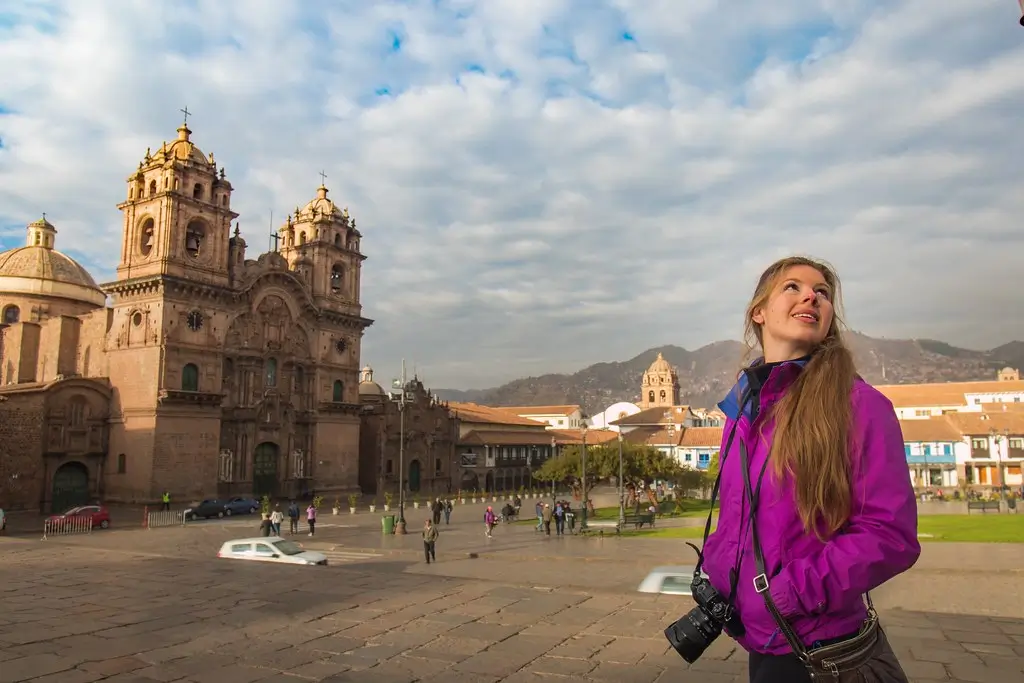
You landed in Cusco, your head feels a little heavy, and you’re staring at a map trying to figure out if you actually need someone to walk you through this city. Maybe you’re worried about the altitude slowing you down. Maybe you don’t want to overpay for something you could do on your own with a phone and a decent pair of shoes. Or maybe you’ve read horror stories about tourists getting lost, overcharged, or missing the one detail that made a plaza actually mean something.
Here’s the truth: a Cusco walking tour can go either way depending on how you plan it. Pick wrong and you’ll spend three hours staring at stone walls with no idea why they matter. Pick right and you’ll leave understanding why the Inca built at 3,399 m.s.n.m. in the first place. This guide breaks down both options with real numbers, real routes, and the kind of advice a local guide would give you over a cup of coca tea.
Cusco Walking Tour: What You’re Actually Choosing Between
Every visitor to the historic center faces the same fork in the road. You either hire someone who knows the city’s layers, or you download an offline map and figure it out yourself.
Neither option is wrong. They just serve different travelers.
Guided Tour: Structure and Context
A guided walking tour puts a trained local in front of you who explains what you’re looking at instead of leaving you to guess. Good guides in Cusco go through certification programs and carry a carnet (official ID card) issued by the regional tourism office — always ask to see it before you commit.
A private guide typically walks you through the Plaza de Armas, the Qorikancha (the former Temple of the Sun, later built over by the Convent of Santo Domingo), and up into San Blas. Along the way they explain concepts locals actually use, like ayni (reciprocal work, a core Andean value) or why the polygonal Inca stonework in Loreto Street fits without mortar.
Self-Guided Tour: Freedom and Pace
A self guided walking tour Cusco style trip means you set your own rhythm. You stop for photos as long as you want, skip a church that doesn’t interest you, and detour into a market stall selling chicharrón without anyone checking a schedule.
This works well if you’ve already read up on the sites, you’re comfortable with a Cusco self guided map, and you’re not chasing deep historical detail — you just want to see the city and breathe it in at your own speed.
Do You Need a Guide for a Cusco Walking Tour?
Short answer: not for basic orientation, but yes if you want real historical depth.
The historic center is compact and walkable without help. Street signage is decent, Google Maps works fine offline once downloaded, and most major sites (Plaza de Armas, San Blas, San Pedro Market) sit within a 20-minute walk of each other.
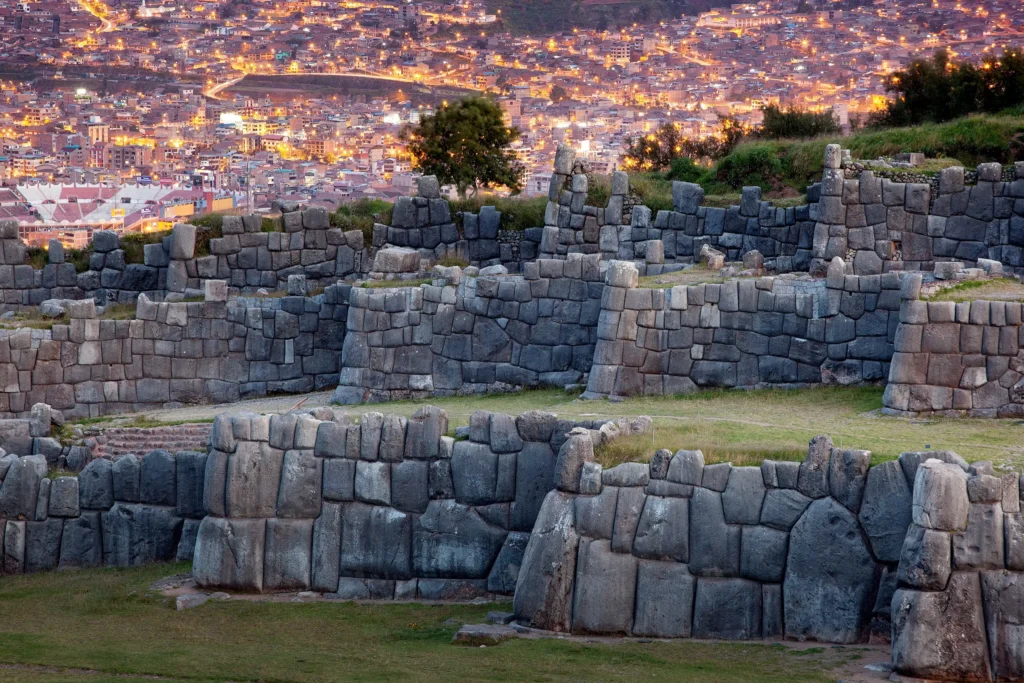
Where a guide earns their fee is context. Standing in front of the twelve-angled stone on Hatunrumiyoc Street means little without someone explaining Inca engineering. The same goes for Sacsayhuamán, the fortress complex above the city — walking it alone, you’ll see big rocks. Walking it with a guide, you’ll understand the zigzag walls were built to represent a puma’s teeth, part of the city’s original layout shaped like the animal.
Free Walking Tour Cusco vs Private Guide
Both options exist in Cusco, and they serve very different budgets.
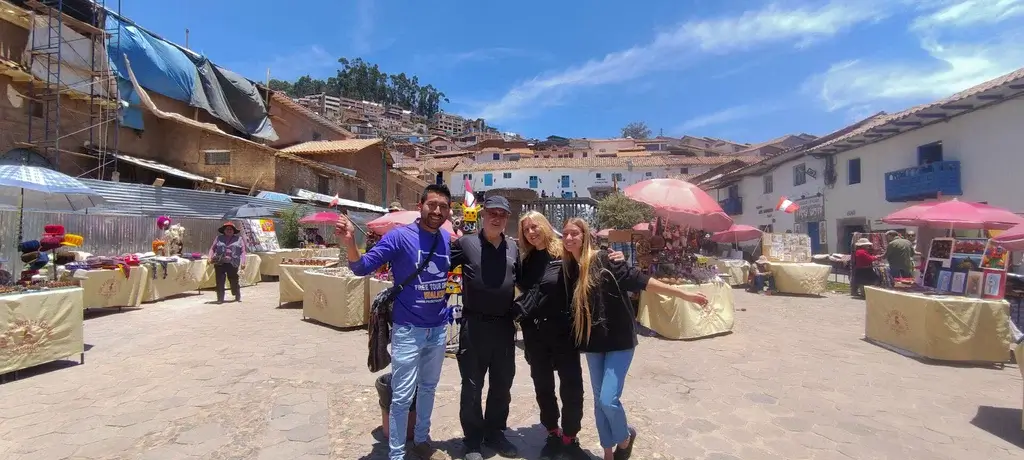
Free walking tours run daily from the Plaza de Armas, usually starting around 10:00 a.m. and 3:00 p.m. Groups can range from 10 to 25 people. You get a solid overview of the main plaza, Qorikancha’s exterior, and the San Blas neighborhood in roughly two hours.
Private guides cost more but move at your pace, answer your specific questions, and often take you off the standard loop — into a local chichería (a traditional corn-beer tavern) or a lesser-visited chapel most tour groups skip entirely.
How Much Is a Walking Tour in Cusco
Here’s what you should expect to pay in 2026, in approximate soles and dollars:
- Free walking tour: technically no fixed cost, tip-based (S/.20–40 per person is standard)
- Private guide, 2–3 hours: $25–40 USD per person or per small group, depending on the agency
- Small group guided tour (4–8 people): $15–25 USD per person
- Full-day guided city + Sacsayhuamán combo: $40–70 USD per person
Cusco Local Guide Cost: What Changes the Price
Licensed guides charge more than freelancers working outside official agencies, and for good reason — they’ve studied Peruvian history, archaeology, and often speak three languages. Group size, tour length, and whether entrance tickets (like the Boleto Turístico, which covers Qorikancha and several nearby sites) are included all shift the final price too.
Cusco Free Walking Tour Tipping Culture
Tipping isn’t optional in practice, even when the tour is labeled “free.” Guides on these tours work entirely on tips, so treat the price as pay-what-you-think-it’s-worth rather than pay-nothing.
A fair range is S/.20 to S/.40 per person for a two-hour tour, more if the guide went out of their way for you. Cash in soles is standard — small bills work better than trying to break a S/.100 note on the street.
Is Cusco Safe for a Self-Guided Walking Tour
Yes, with normal city precautions. The historic center is well-patrolled, especially around Plaza de Armas, San Blas, and the main tourist corridors during daylight hours.
Petty theft is the real risk, not violent crime. Keep your bag zipped and in front of you in San Pedro Market, and avoid flashing phones or cameras in less crowded alleys after dark. Streets around San Blas get steep and poorly lit at night, so plan your self-guided route to wrap up before sunset, which falls around 6:00 p.m. year-round due to Cusco’s proximity to the equator.
Best Time of Day for a Cusco Walking Tour
Early morning, between 7:30 and 9:30 a.m., beats every other slot. The Plaza de Armas is nearly empty, the light hits Qorikancha’s stonework at a better angle for photos, and you’ll dodge the tour buses that start arriving around 10:00 a.m.
Midday (12:00–2:00 p.m.) brings the strongest sun at this altitude — UV exposure is intense even on cloudy days, so this is a bad window for a long walk without sun protection. Late afternoon, around 4:00 to 5:30 p.m., offers a second good window with softer light and thinner crowds before the dinner rush.
Cusco Walking Tour Altitude Tips
Cusco sits at 3,399 m.s.n.m. (11,152 feet), and altitude sickness — locally called soroche — hits a real percentage of visitors in their first 24 to 48 hours.
Practical tips that actually work:
- Spend your first day walking slowly and skip any hike to Sacsayhuamán or the San Cristóbal viewpoint until day two
- Drink coca tea (mate de coca), sold everywhere and offered free at most hotel lobbies
- Avoid alcohol the first night — it worsens dehydration and altitude symptoms
- Carry acetazolamide (Diamox) if your doctor approved it before the trip, or ibuprofen for headaches
- Eat light meals; heavy food digests poorly at altitude
- Walk, don’t rush stairs — San Blas’s steep cobblestone streets will remind you fast that you’re above 3,000 meters
Cusco Historic Center Walking Route
A solid easy walking route covers these stops in order, roughly 3 to 4 hours at a relaxed pace:
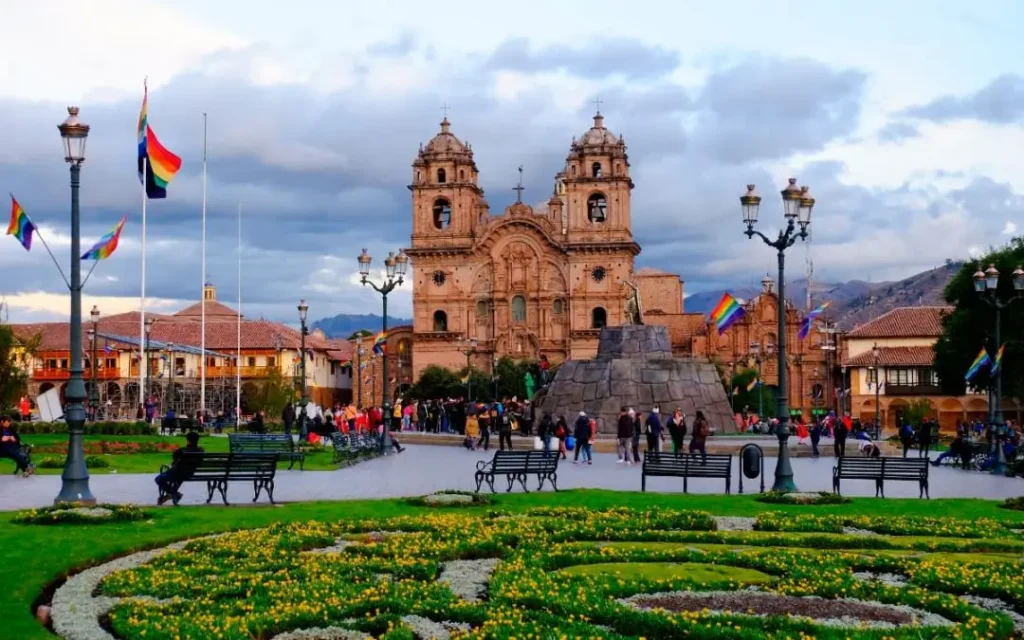
- Plaza de Armas — start here, the colonial cathedral sits on top of the former Inca palace of Kiswarkancha
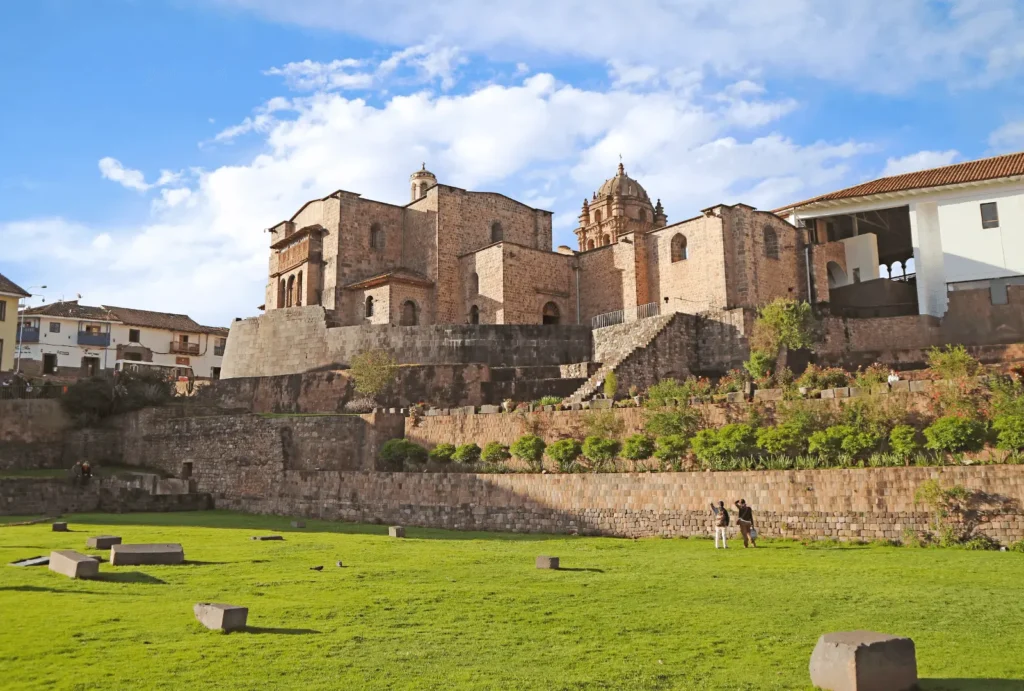
- Qorikancha — a 10-minute walk south, the most important Inca temple site in the city
- Loreto Street — narrow alley with original Inca stonework still forming the base of colonial buildings
- San Blas neighborhood — steep, artisan-heavy, and home to independent jewelry and ceramic workshops
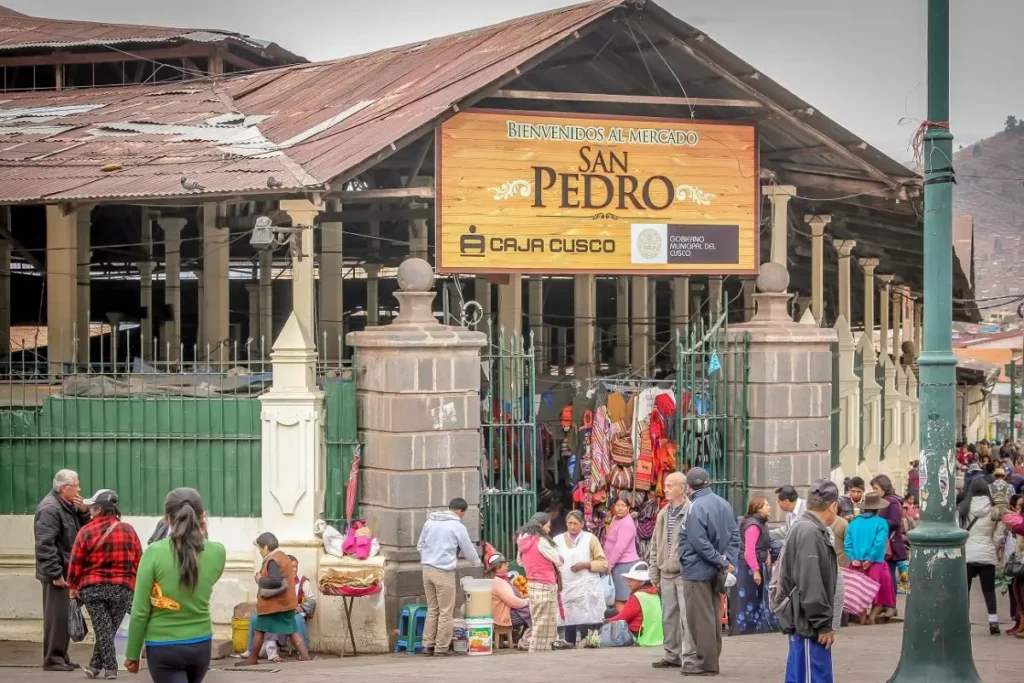
- San Pedro Market — go for the juice stalls and the cheese section, not just photos
- Plaza San Francisco — quieter, fewer tourists, good for a coffee break
San Blas Cusco Walking Tour: What Makes It Different
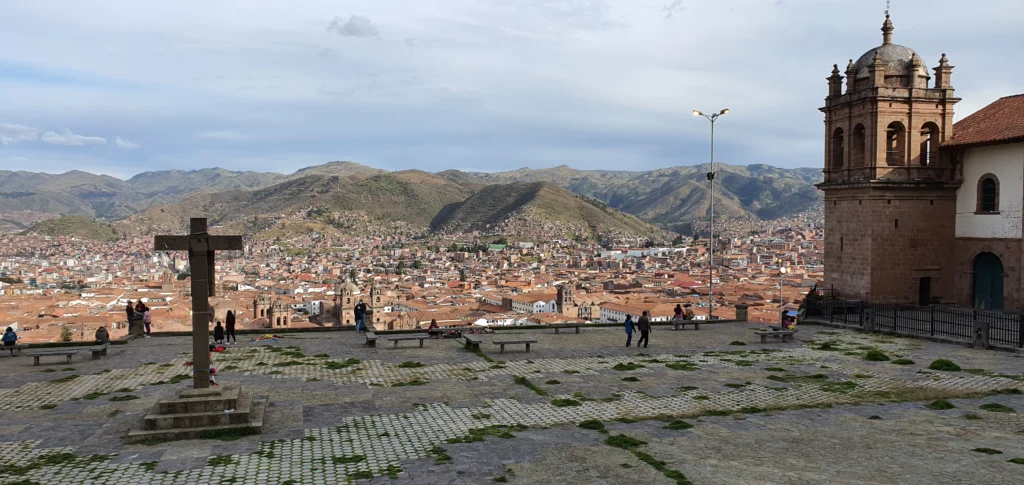
San Blas deserves its own mention because it’s steeper and slower than the rest of the center — expect narrow staircases and uneven cobblestone. It rewards patience: independent art studios, small chapels, and viewpoints over the red-tile rooftops of the whole city open up as you climb.
What to See on a Cusco Walking Tour
Beyond the obvious plazas, prioritize the Cathedral Basilica of Cusco (built starting in 1559, partly using stones taken from Sacsayhuamán), the Museo Inka for context before you visit any ruins, and the Cristo Blanco viewpoint if your legs and lungs are ready for the extra elevation gain.
Expert Tips (Things Only a Local Guide Tells You)
- Buy your Boleto Turístico only if you’re visiting multiple sites — for a single stop like Qorikancha, a direct entrance ticket is cheaper
- Avoid “guides” who approach you directly in the Plaza de Armas — legitimate guides work through registered agencies or official tourism offices, not street solicitation
- San Pedro Market’s juice bars are safe and cheap — a fresh juice runs S/.5–8 and beats anything sold in a tourist-zone café
- Wednesday and Sunday mornings get crowded near the Cathedral due to local Andean markets and church services — plan around them if you want quieter streets
- Wear layers, not just a jacket — Cusco swings from 5°C at night to 20°C at midday depending on the month, especially between May and August
- Dry season (May to September) is best for walking, with minimal rain; November through March brings frequent afternoon downpours that turn cobblestones slippery
Final Word on Your Cusco Walking Tour
Both guided and self-guided routes work in Cusco. Go self-guided if you want freedom, you’ve done your homework, and you’re comfortable navigating on your own. Go guided if you want the layers of history explained by someone who grew up here, plus the practical safety net of local knowledge on altitude, timing, and which streets to skip after dark.
Whichever you choose, respect the altitude, tip fairly, and start early.
At Peru Andes Discovery, we build private and small-group walking tours through Cusco’s historic center with certified local guides who know which alleys hide the best stories. Reach out to us to check availability and get a custom quote for your dates — we’ll match the route to your pace, your interests, and how many days you have to acclimatize before you head into the Sacred Valley.