

Yes, it’s possible. You’ll spend roughly 15 hours in transit and at the site, get about 2.5 hours actually inside Machu Picchu, and have almost no margin if anything runs late. It works as a one-off if your schedule genuinely won’t allow anything longer. It’s not the way we’d choose to see it, and it’s not what we recommend if you have any flexibility at all — but we run this exact day for clients who ask for it, and this is what it actually looks like.
For the full planning picture beyond just the day trip, read our complete Machu Picchu guide. This article is specifically about whether cramming the visit into one day from Cusco makes sense for you.
The honest answer, in the first paragraph
One day works logistically. It does not give you a relaxed visit. You’re awake before 4 AM, on a bus or train for most of the morning, inside the citadel for about 2.5 hours with a guide, and back on transport before you’ve really caught your breath. If your goal is to say you’ve seen Machu Picchu and your schedule has one day, do it. If your goal is to actually experience it — walk it at your own pace, get a second look in different light, breathe at 2,430 m without a clock running — one day isn’t that.
A one-day itinerary hour by hour
This is the shape of the day on our own one-day departures. Exact departure times shift with the season and current train schedules, so treat the clock times as illustrative and the durations as fixed — those come from how the route actually runs.
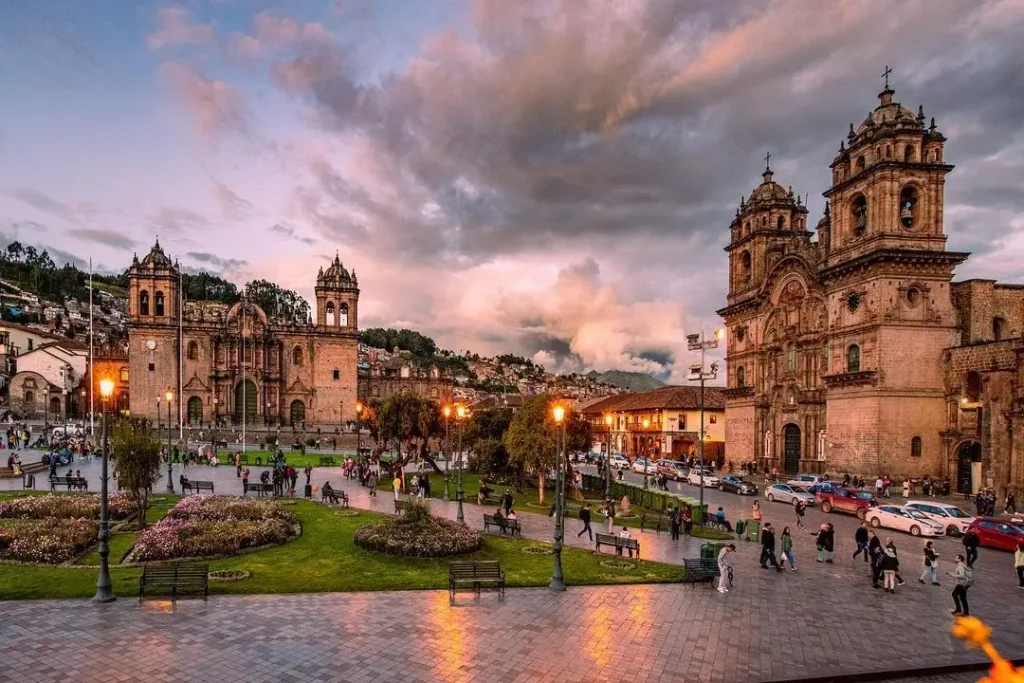
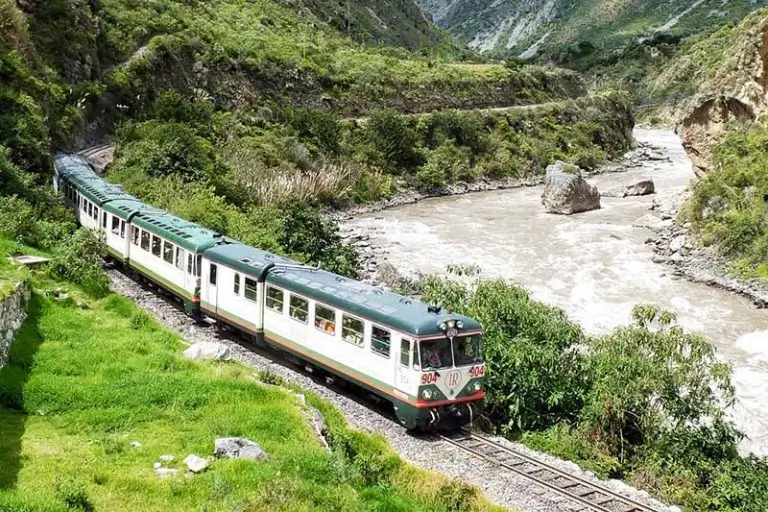
You’re picked up from your Cusco hotel in the very early morning. From there it’s a private vehicle to Ollantaytambo, 1.5 hours through the Sacred Valley, followed by the train to Aguas Calientes, 1 hour 40 minutes on the Expedition service. That’s already over 3 hours of transport before you’ve reached the town at the base of the mountain — and you’re not even at Machu Picchu yet.
From Aguas Calientes, the CONSETTUR bus takes you up the switchback road in about 30 minutes, departing every 10 minutes, so the wait itself is short. Once you’re through the gate, your guided tour runs 2.5 hours — enough to walk the core structures with context, not enough to sit somewhere quiet and just look for a while. After that, you’re back on the bus, back on the train, back in the vehicle, and back in Cusco that night.
Real Schedule (illustrative)
| Time | Where you are | What’s happening | Actual time at the site |
|---|---|---|---|
| — | Cusco hotel | Pickup | — |
| +1.5 hrs | Ollantaytambo | Board train | — |
| +1h 40 min | Aguas Calientes | Arrive, transfer to bus | — |
| +30 min | Machu Picchu entrance | Bus up, enter site | — |
| +2.5 hrs | Machu Picchu citadel | Guided tour | 2.5 hrs |
| +30 min | Aguas Calientes | Bus back down | — |
| — | Ollantaytambo | Return train | — |
| +1.5 hrs | Cusco | Drop-off at hotel | — |
Total elapsed time from pickup to drop-off runs somewhere around 14–15 hours, most of it in transit.
What you give up: time on site, light, margin for error
The 2.5-hour guided tour is fixed and it’s the same window you’d get on any of our longer packages — the difference on a one-day trip is that it’s all you get. On our 2-day Machu Picchu tour from Cusco, that same guided visit is followed by an overnight in Aguas Calientes, which opens up a second, unhurried look the next morning if you want it, or simply time to decompress before heading back.
Light is the other cost. Morning fog in the valley often takes an hour or two to clear, and a one-day itinerary locks you into whichever entry time your train allows — you don’t get to shift your slot to chase better light, the way you can when morning vs afternoon entry is actually a choice you’re making rather than a byproduct of your train time.
And then there’s margin. A one-day trip has none. Every stage — the drive, the train, the bus, the entry — is sequenced tightly enough that a delay in any one of them threatens the rest. On a multi-day trip, a late train costs you an evening. On a one-day trip, it can cost you the visit entirely.
The single point of failure: the return train
This is the part people underestimate. Your entire day is built around making one specific return train from Aguas Calientes. If your guided tour runs long, if the bus queue is worse than expected, if you linger for one more photo at the Sun Gate — you’re not just running late, you risk missing the train that gets you back to Ollantaytambo, your vehicle, and Cusco that same night.
There’s no casual backup. Trains run on a fixed schedule tied to Ministry-regulated track access, not on demand, and a missed departure means either an expensive last-minute rebooking if seats exist, or an unplanned night in Aguas Calientes — which defeats the entire point of doing this in one day. We build buffer into our own scheduling for exactly this reason, but buffer only helps so much when the whole day is compressed to begin with.
Who should still do it
This makes sense if you’re on a layover-style stop in Peru — a day or two in Cusco as part of a larger South America trip — and Machu Picchu is non-negotiable but a second day genuinely isn’t available. It also makes sense for travelers who’ve already done a longer Peru trip before and are back specifically to tick this one site, not to re-explore the region. And it’s a reasonable call if you’re confident about your fitness and unbothered by an early start and a long day of sitting — the trip itself isn’t physically hard, it’s just long.
It’s a poor fit if you’re altitude-sensitive and haven’t acclimatized in Cusco first, if you want real photography time, or if this is meant to be a highlight of the trip rather than a checkbox. It’s also a poor fit for families with young kids or anyone prone to motion sickness on winding mountain roads — the combination of an early wake-up, a long drive, and a full day of movement adds up faster for some travelers than others, and there’s no way to shorten the day once it’s underway.
One more honest consideration: group size and pacing. On a shared one-day departure, your guide is managing a full group on a fixed clock, which means less room to linger at any one structure or ask follow-up questions than you’d get on a longer trip where the pace has more give built in. If a private guide and a slower pace matter to you, that’s another reason the extra day tends to be worth it.
Why we usually suggest two days instead
Two days removes the single point of failure. You’re not racing one train — you have a full evening in Aguas Calientes and a fresh morning at the site if you want it, with the pressure gone from every stage of the day. It also means you can consider a second, optional visit or simply rest at 2,430 m before the trip back up to Cusco’s 3,399 m, which matters more than people expect if you’re not fully acclimatized.
The honest trade-off is time and cost — an extra night, an extra day away from the rest of your itinerary. But if you’re building your trip around Machu Picchu at all, the difference between “we saw it” and “we actually experienced it” usually comes down to this one extra day. That’s why our 2-day Machu Picchu tour from Cusco is what we book for most clients by default, and why the 4-day Cusco and Machu Picchu tour is worth a look if you also want proper time in the Sacred Valley beforehand. If you’re still weighing how much time to give the whole country, not just this one site, how many days you need in Peru walks through that decision directly.
If you only have one day: how to make it work
Acclimatize before you go, even by one day. Cusco sits at 3,399 m, and doing a physically long day — even a low-exertion one — without any time to adjust raises your odds of feeling rough on the trip, not during the walking, but from the early start and altitude combined.
Pack light but completely: passport (not a photocopy — required for the train and the gate, and the name must match your ticket exactly), water, sun protection, a light layer for the morning cold and the afternoon heat, and snacks, since your meal windows will be tight. Confirm your circuit and route before the day arrives; we cover the decision in which circuit to buy so you’re not choosing on the fly.
Book the earliest realistic train you can get, since it buys you the most buffer against the return-train risk described above, and confirm your logistics — train, entrance ticket, and guide — as one connected booking rather than separate pieces you’re coordinating yourself. That’s the single biggest point of failure removed before your day even starts.
Set expectations before you leave the hotel, too. This is a long day built around a short, dense visit — not a leisurely one. Knowing that going in changes how the day feels; treating it like a relaxed sightseeing outing when it’s really a tightly sequenced logistics chain is where most of the frustration we see comes from, not from the trip itself going wrong.
Frequently Asked Questions
Is one day really enough to see Machu Picchu? Enough to see it, not enough to experience it unhurried. You get about 2.5 hours on site with a guide, sandwiched between roughly 11–12 hours of transport. It works if your schedule genuinely has no flexibility; it’s not the version of the trip we’d recommend by choice.
What happens if I miss the return train on a one-day trip? There’s no casual backup — trains run on a fixed schedule. A missed departure means an expensive last-minute rebooking, if seats are available, or an unplanned night in Aguas Calientes. This is the main reason we push clients toward at least two days when possible.
Do I need to be very fit to do Machu Picchu in one day? No — the day is long, not physically demanding. The guided circuit involves walking and some stairs, but nothing beyond normal fitness. The real challenge is the early start and the total hours in transit, not the hike itself.
Is a one-day Machu Picchu trip cheaper than two days? Usually, since you save on an overnight in Aguas Calientes, one of the more expensive towns in the region per night.