

Ollantaytambo is the last town most Machu Picchu travellers pass through before boarding the train — and it’s worth more than a quick stop for a coffee. It’s the only Inca town still inhabited on its original layout, with a fortress above it that saw a real battle, and its station is where a Cusco-based trip effectively hands off to the railway. From Cusco, it’s about 1.5 hours by private vehicle, and from here the train to Aguas Calientes takes about 1 hour 40 minutes. Below, we cover the town’s history, its role in your journey, and what most visitors miss on their way through.
The only Inca town still lived in as it was built
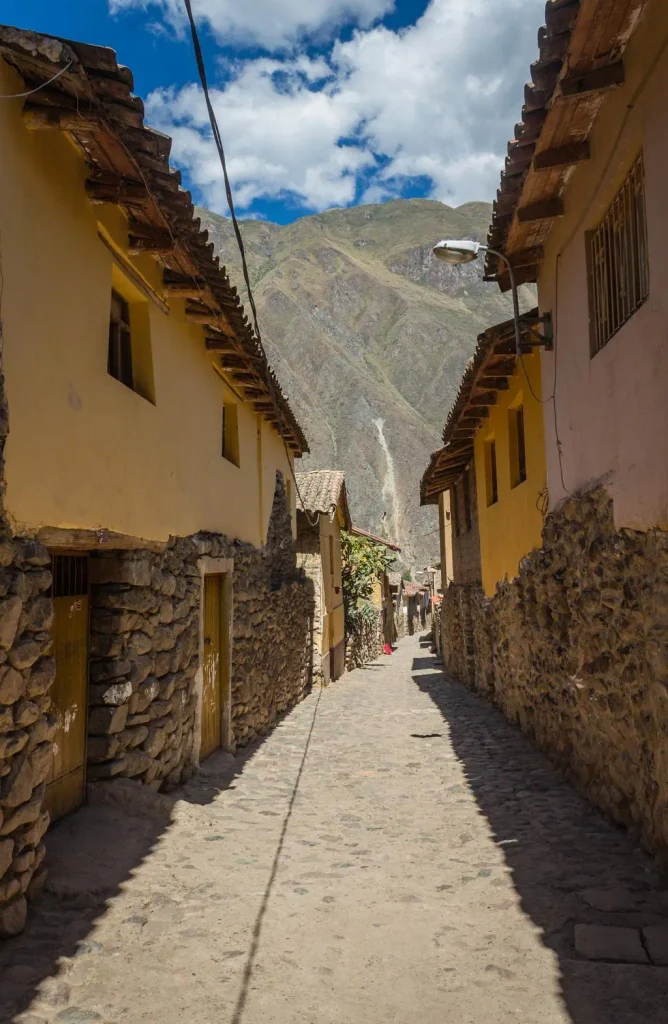
Ollantaytambo holds a genuine distinction in the Sacred Valley: it’s the only town where people still live within the original Inca urban layout, following the same street grid and stone foundations laid centuries ago. Walking through it feels different from other historical sites in the region precisely because it isn’t a preserved ruin — it’s a living town built on Inca planning. Our complete Machu Picchu guide covers the destination waiting at the end of this route, but Ollantaytambo itself is worth slowing down for on the way.
The fortress and the battle fought here
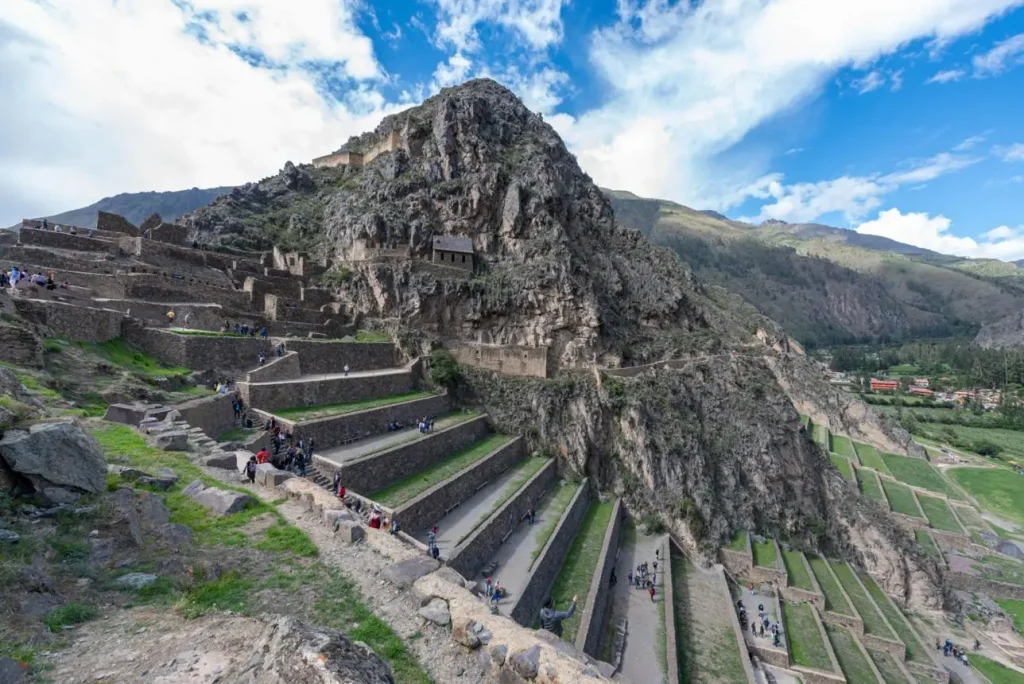
Above the town, the Ollantaytambo fortress climbs the hillside in steep terraces, and it’s one of the few Inca sites where a documented battle actually took place — Inca forces successfully defended the site against Spanish troops here, a rare instance of resistance holding in the years following the conquest. The terraces themselves are steep and require a real climb, but the view back over the town and valley from the top explains why this location was chosen and defended.
The station: where most Machu Picchu trips really begin
For most Cusco-based itineraries, Ollantaytambo’s train station is the actual starting point of the Machu Picchu leg — this is where you board for Aguas Calientes, not Cusco itself, since there’s no direct rail link from the city. If you’re comparing operators for this leg, PeruRail vs IncaRail covers the two companies running this route, and the three train classes explains the difference between the Expedition service included on our packages and the Vistadome upgrade.
Getting there from Cusco
Getting from Cusco to Ollantaytambo takes about 1.5 hours by private vehicle, and on our tours this is included as part of the itinerary rather than something you arrange separately. It’s a scenic drive through the Sacred Valley itself, so it’s rarely just a transit leg — many itineraries build in stops along the way. For the complete journey from Cusco all the way to Machu Picchu, including this drive and the train that follows, how to get to Machu Picchu from Cusco lays out every leg.
| Leg | Duration |
|---|---|
| Cusco to Ollantaytambo (private vehicle) | About 1.5 hours |
| Ollantaytambo to Aguas Calientes (train, Expedition) | About 1 hour 40 minutes |
Staying the night before an early train
If your Machu Picchu train departs early the next morning, staying overnight in Ollantaytambo the night before removes the need for an early drive from Cusco on top of an early train. It also puts you at a noticeably lower altitude than Cusco for the night, in the heart of the Sacred Valley, which many travellers find easier for sleep during the acclimatization period of a trip.
How it fits into a Sacred Valley day
Ollantaytambo often anchors the end of a full Sacred Valley day, following other stops in the region before you either continue to Aguas Calientes or head back to Cusco. The Sacred Valley full-day tour is built around exactly this kind of route, and Ollantaytambo also appears directly in our 6-day and 14-day itineraries as part of the broader journey toward Machu Picchu. For the shorter multi-day option, the 6-day Cusco and Machu Picchu tour includes it as a core stop rather than a passing one.
What most visitors miss
Because Ollantaytambo is so often treated as a transit point on the way to the train, a lot of visitors skip the fortress climb entirely or rush through it in the time before departure. The terraces reward a slower visit, and the town’s grid of original Inca streets is easy to explore on foot if you build in even 30-45 minutes beyond the station. If your Machu Picchu plans include the Sun Gate or Inca Bridge once you’re at the site, the Sun Gate and the Inca Bridge covers those separately from what Ollantaytambo itself offers.
Frequently asked questions
Is Ollantaytambo worth visiting, or just a train stop?
It’s worth visiting in its own right. It’s the only Inca town still inhabited on its original layout, with a fortress that saw a real historical battle — not just a station to pass through.
How long does it take to get from Cusco to Ollantaytambo?
About 1.5 hours by private vehicle, which is included as part of our tour itineraries.
Should I stay overnight in Ollantaytambo before an early train?
It can help, especially for a very early departure, since it removes the need for an early drive from Cusco and puts you at a lower altitude for the night.
Is Ollantaytambo included in Machu Picchu tour packages?
Yes, it features directly in our 6-day and 14-day itineraries, and it’s the standard train departure point on any Cusco-based Machu Picchu route.