
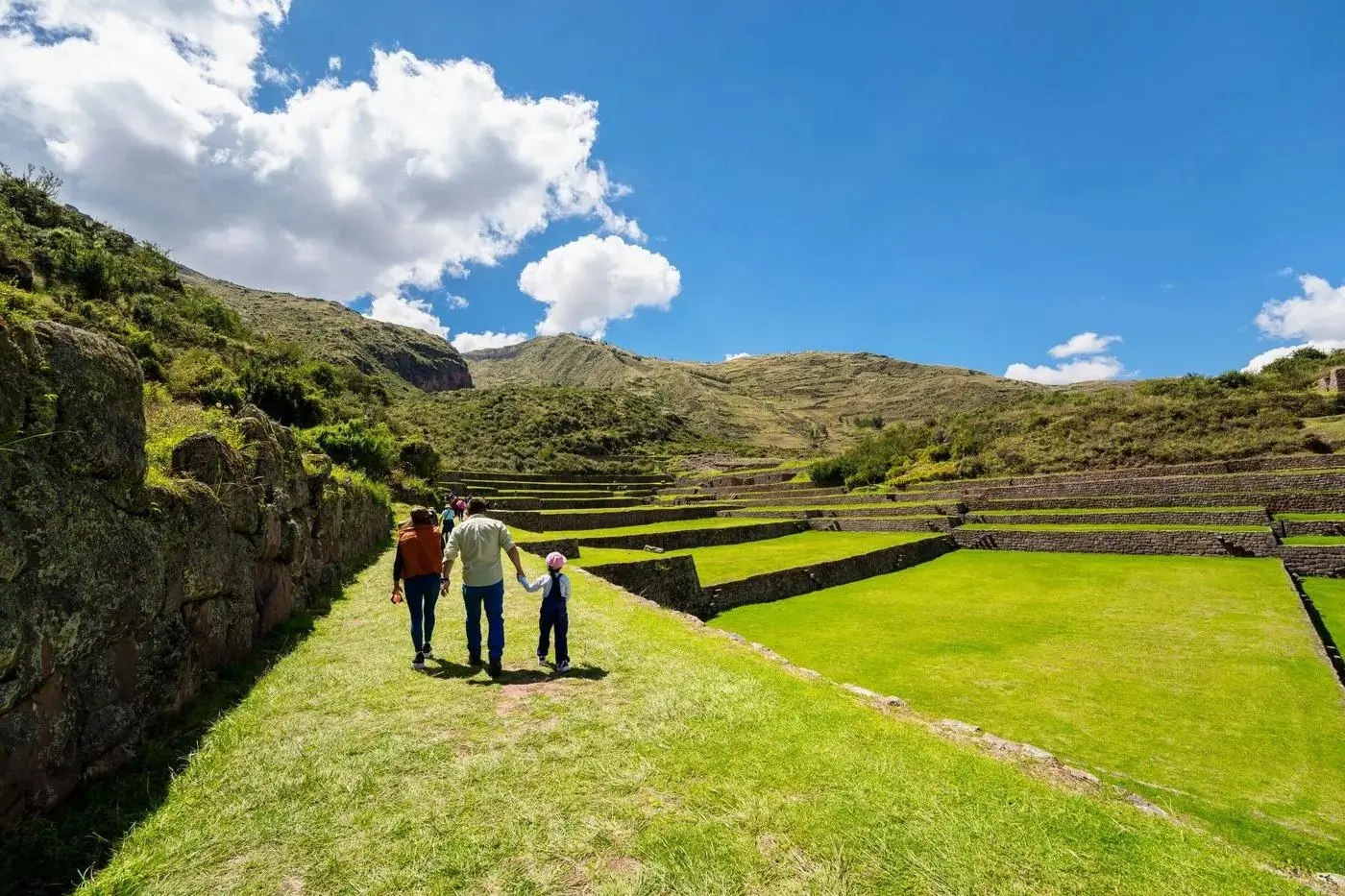
Peru works well as a family destination when the itinerary is paced around a child’s stamina rather than an adult’s, and altitude is treated honestly rather than glossed over. The single biggest advantage travelling with us gives a family is private ground transport built into every package, rather than joining a fixed group bus schedule that doesn’t bend for a tired kid or an early nap. This guide covers what actually matters when planning a Peru trip with children: altitude, pacing, food, and which of our itineraries fit a family best. For the full range of what a Peru itinerary can include, see our full guide to Peru tour packages.
Is Peru a good destination for children?
Yes, with the right expectations set in advance. Machu Picchu is genuinely engaging for most children, an actual lost city to explore rather than a museum to walk through quietly, and the Sacred Valley offers markets, animals, and open space that hold a child’s attention better than a packed itinerary of ruins alone would. What Peru is not is a destination where you can run the same pace as a childless couple and expect a child to keep up without friction.
The honest framing is that Peru rewards families who build slack into the schedule and treat the trip as an adventure to move through at a child’s pace, rather than families trying to fit an adult itinerary around a child’s presence. Families who arrive with realistic expectations, some days will be shorter than planned, some activities might get skipped if a child is tired, tend to come away happy; families expecting to check off every site on a tight adult schedule with kids in tow tend to find the trip harder than it needed to be.
Altitude and kids: the honest version
Children are affected by altitude the same way adults are, and there’s no meaningful difference in how the body responds simply because the traveller is younger. What differs is how clearly a child can communicate what they’re feeling, a headache or fatigue that an adult would mention directly might come across as a cranky mood or a refusal to walk further in a child, and it’s worth watching for that distinction rather than assuming a child who seems fine is automatically fine.
The same acclimatization principles that apply to adults apply here: arrive with a light schedule for the first day or two, keep hydration up, and don’t schedule a demanding day, like Rainbow Mountain, immediately after landing. Your first 48 hours in Cusco covers this in more general depth, and it’s worth reading with your specific child’s temperament in mind rather than as a generic checklist. If you have any concerns about a specific child’s health and altitude, that’s a conversation for your family’s doctor before you travel, not something to work out on the ground in Cusco.
It’s also worth preparing a child in advance for what altitude actually feels like, in language appropriate for their age, rather than letting the first sign of fatigue or a headache come as a surprise to them. A child who understands that feeling more tired than usual for a day or two is normal and expected tends to handle it with far less anxiety than one who doesn’t know what’s happening to their body.
Pacing an itinerary that children can sustain
The core adjustment for a family itinerary compared to a standard one is pacing, not content. The same sites are on the table, but the schedule around them needs more room.
| Adjustment | Why it matters for children |
|---|---|
| Shorter walking days | Children tire faster and less predictably than adults |
| Built-in rest blocks | A midday break prevents the late-afternoon meltdown that ruins an otherwise good day |
| Fewer fixed-time commitments per day | One major activity a day leaves room to slow down if the morning ran long |
| Flexible meal timing | Hungry children and rigid restaurant reservations don’t mix well |
None of this means doing less overall; it means spreading the same experiences across a schedule with more give in it, so a slow morning doesn’t collapse the rest of the day. A private guide, included in our 6, 7, and 8-day packages, also makes this pacing easier to manage in practice, since the day’s schedule can adjust in real time to how your family is actually doing rather than following a fixed group timetable regardless of how the morning went.
The days children enjoy most
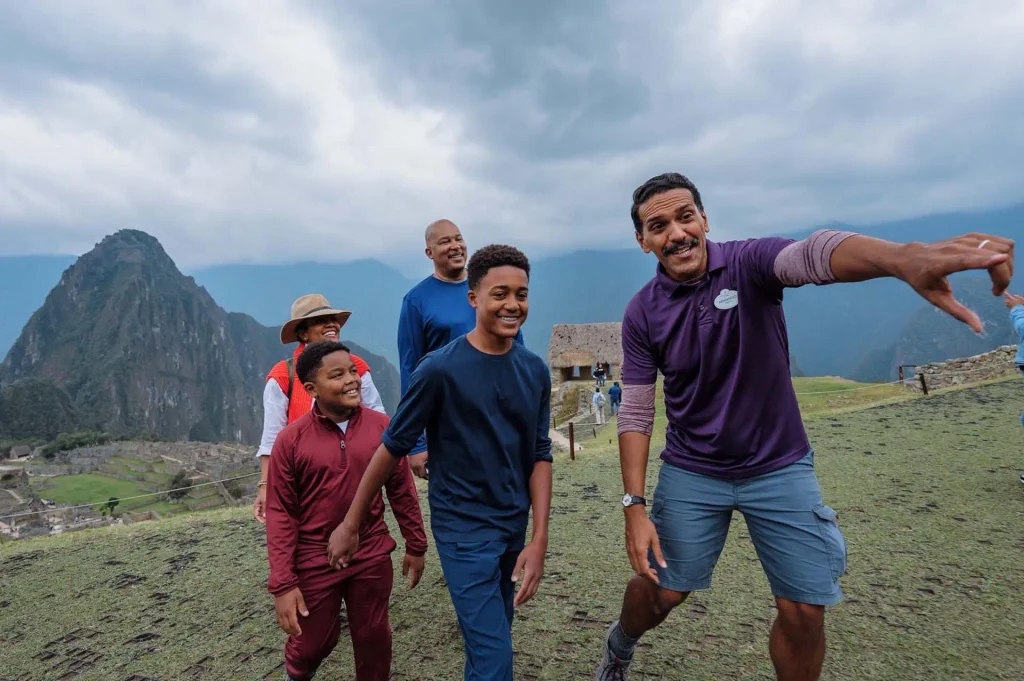
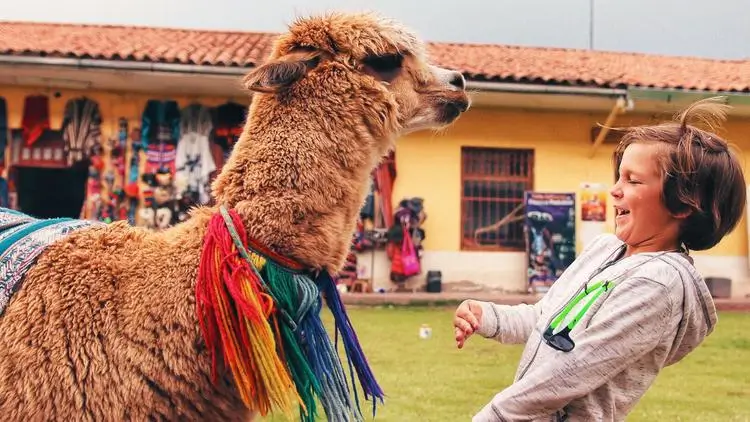
Not every day on a standard Peru itinerary lands the same way with children. The Sacred Valley tends to be a clear favourite: markets to wander, animals to see, and open outdoor space rather than a single site to walk through in sequence. Machu Picchu itself is usually a highlight too, particularly once a child understands they’re walking through an actual lost city rather than just an old ruin, which is worth explaining in terms that land for their age before you arrive rather than leaving the context to the guided tour alone. Machu Picchu with kids goes deeper into what that day specifically looks like with a family.
Rainbow Mountain is the one day on a standard itinerary that needs the most honest thinking with children specifically, given its 5,036-meter elevation and the physical demand of the walk itself. Rainbow Mountain with kids covers that decision on its own, since it deserves more space than a single paragraph here can give it.
The train journey to Aguas Calientes tends to be a genuine highlight for children in its own right, something about watching the landscape shift through a train window holds a child’s attention in a way that a car ride often doesn’t, so it’s worth treating as part of the day’s entertainment rather than just transit time to get through.
Private transport and why it changes everything with a family
Every one of our packages includes private ground transport rather than joining a shared group bus, and this matters more for families than almost any other single detail. A private vehicle means you can leave ten minutes later because a child needed one more bathroom stop, stop unscheduled if someone gets carsick on a mountain road, and skip the stress of holding up a bus full of strangers while your family gets moving in the morning.
This is also where group departures and private tours genuinely diverge in practice, not just on paper. Group departures vs private tours covers that distinction in general, but with children specifically, the flexibility private transport gives you is less a nice-to-have and more the difference between a smooth day and a stressful one.
Food and fussy eaters at altitude
Altitude can shift a child’s appetite in either direction, some children eat less than usual for the first day or two, and it’s worth not pushing a full meal if that happens, since it tends to settle back to normal as they adjust. Peru’s food scene also has enough familiar, simple options, rice, chicken, fries, plain soups, that a genuinely fussy eater isn’t left with nothing they’ll touch, even away from home.
Carrying a few familiar snacks from home for the first couple of days isn’t overcautious, it’s a reasonable buffer for the adjustment period specifically, not a sign you need to avoid local food for the whole trip. Once a child has settled into the altitude, most find they’re eating normally again within a few days, and trying local dishes becomes part of the adventure rather than a hurdle.
Which of our itineraries suit families best
Shorter, less demanding itineraries generally suit families better than our longer, more involved ones. The 4-day Cusco and Machu Picchu tour is a solid option for a family that wants the core experience, Cusco, the Sacred Valley, Machu Picchu, without an extended schedule that pushes a child’s stamina too far. For a family wanting a bit more breathing room across the same core sites, the 6-day Cusco and Machu Picchu tour spreads the same content across more days, which usually means an easier pace overall rather than more to see.
We don’t set a fixed minimum age across all our itineraries, since what’s appropriate genuinely depends on the specific tour, the walking involved, and the altitude reached. If you’re planning a family trip, tell us your children’s ages when you inquire and we’ll talk through which itinerary, and which pacing within it, actually fits your family rather than assuming one age cutoff works across every package. This conversation is worth having early, before you’ve locked in dates, since it can shape which itinerary you book rather than something to adjust after the fact.
Frequently Asked Questions
Is Machu Picchu suitable for children? Yes, most children find it genuinely engaging, especially when the history is explained in terms that land for their age beforehand. The site involves walking on uneven stone terrain, so comfortable footwear and a paced visit matter more than with a typical museum stop.
Does altitude affect children more than adults in Cusco? Children are affected by altitude in the same way adults are, though they may express symptoms like fatigue or a headache as irritability rather than describing it directly, which is worth watching for. The same gradual acclimatization approach used for adults applies to children too.
What is the minimum age for a Peru family tour? This depends on the specific itinerary rather than a single fixed number across all our packages. Tell us your children’s ages when booking and we’ll help you choose the itinerary and pacing that fits your family.
Why does private transport matter for a family trip to Peru? Private ground transport, included in every one of our packages, means your schedule can flex around your children’s needs, a late start, an unscheduled stop, rather than holding to a fixed group bus timetable.