
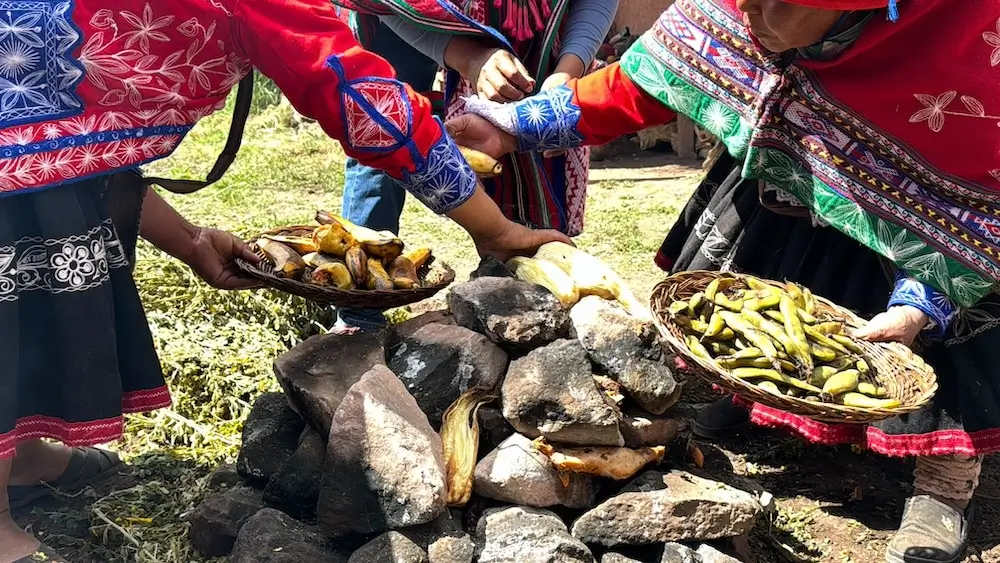
You’ve heard the word “pachamanca” thrown around by every food blog covering Peru, but nobody tells you where to actually find the real thing. Half the “traditional” menus in Cusco’s tourist zone serve a watered-down version that skips the earth oven entirely. You don’t want a plate that looks the part — you want the dish cooked the way Andean families have cooked it for centuries.
That confusion ends here. This guide breaks down what Pachamanca Cusco actually means, which towns still cook it the traditional way, and how to avoid paying tourist prices for a version that never touched real earth.
What Is Pachamanca Food, Exactly
Pachamanca comes from Quechua: pacha means earth, manka means pot. Together, it translates roughly to “earth pot” — a cooking method, not just a dish, that predates the Inca Empire by centuries, with roots tracing back to the Wari culture.
The technique buries meat, potatoes, and corn under heated stones in a hole dug directly into the ground, sealing everything with leaves and dirt to trap heat and steam. What comes out two hours later is smoky, tender, and impossible to replicate on a stovetop.
Pachamanca Ingredients That Make It Authentic
A real pachamanca layers ingredients by cooking time, with the toughest items closest to the hottest stones:
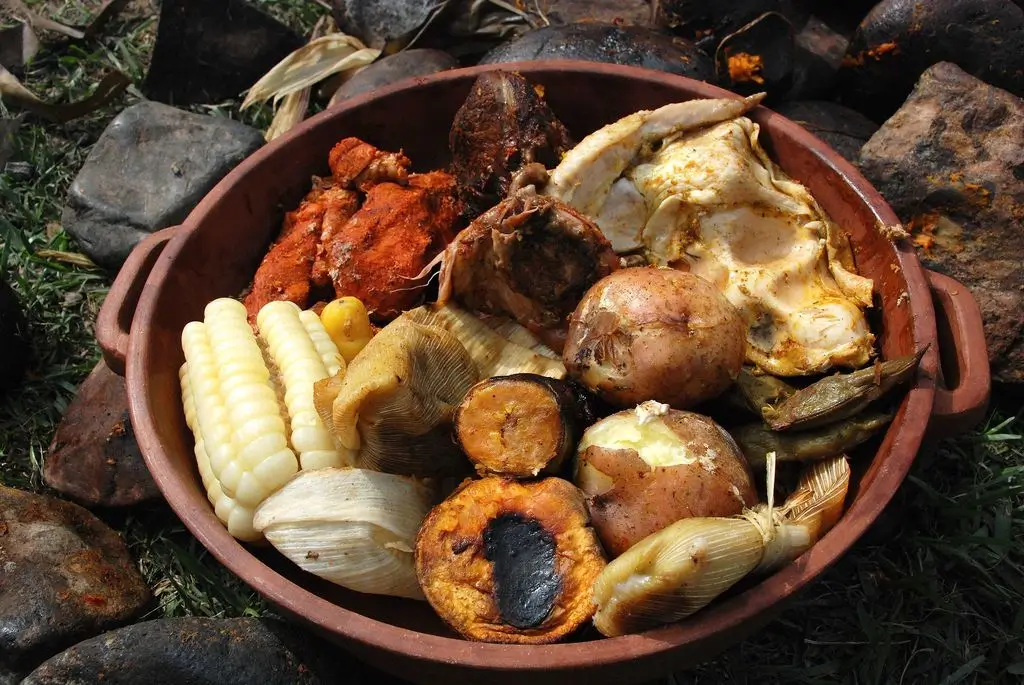
- Marinated meats — pork, chicken, and lamb are standard; some Sacred Valley versions add alpaca
- Huacatay marinade — a Peruvian black mint that gives the meat its distinct herbal edge
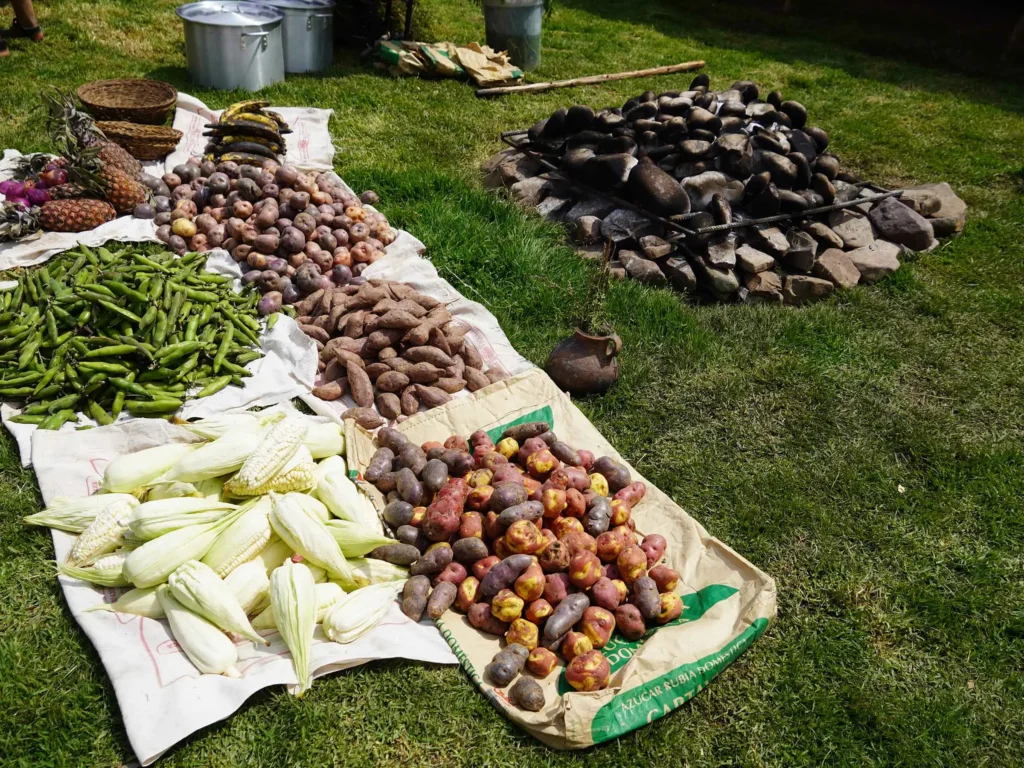
- Native potatoes (papa nativa) — Peru grows over 3,000 varieties, and Andean families pick ones that hold up to underground heat
- Habas (fava beans) and choclo (Andean corn with oversized kernels)
- Humitas — corn dough wrapped in husks, cooked alongside everything else
- Camote (sweet potato) and sometimes cheese for a lighter layer
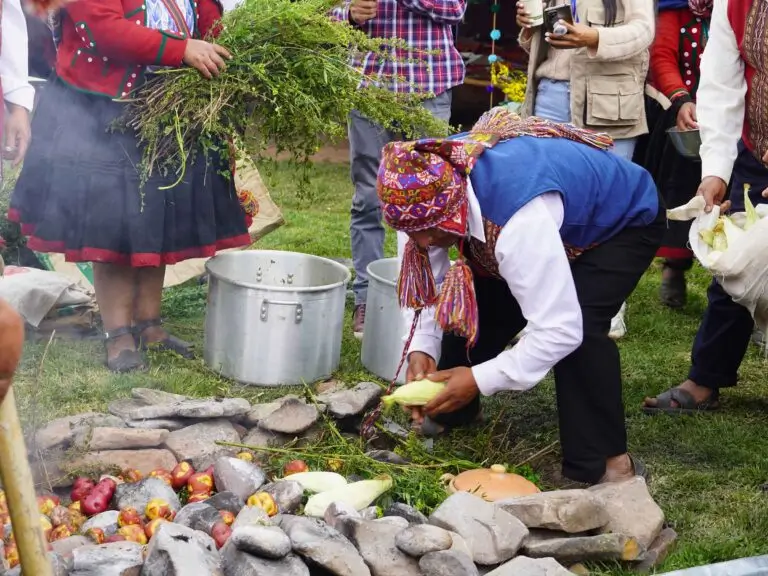
- Chilca and marmaquilla leaves — used to wrap and seal the oven, adding a smoky, herbal aroma you won’t get any other way
The Traditional Andean Earth Oven: How It Actually Works
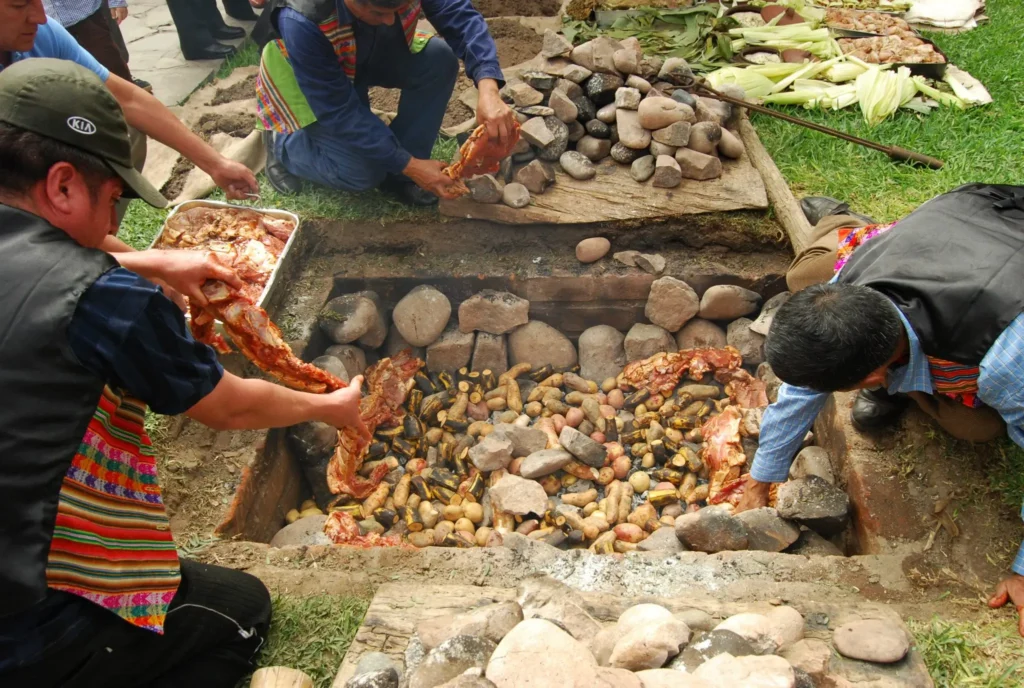
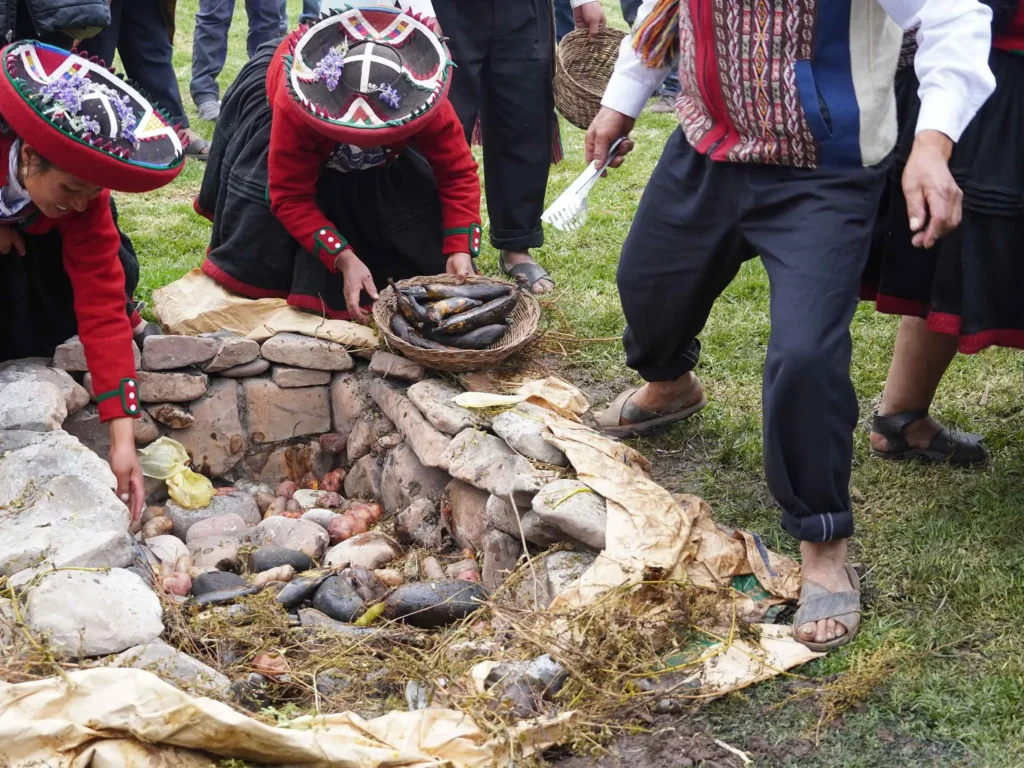
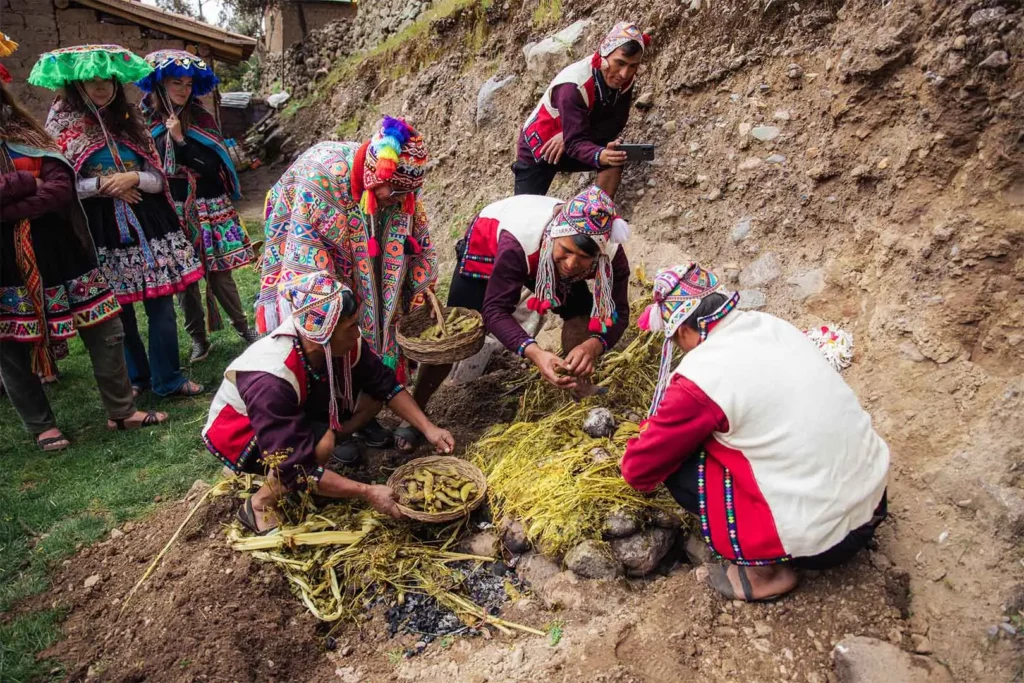
The underground oven starts with volcanic stones (huancas) heated over an open wood fire for roughly an hour, until they glow. Cooks then dig a pit, layer the hot stones at the bottom, and stack ingredients on top in a specific order — meat first, closest to the heat, vegetables and corn layered above.
The whole mound gets covered with leaves, a cloth, and finally a layer of earth to seal in steam. Cooking takes 60 to 90 minutes, and opening the pit is genuinely a moment — steam rises, herbs hit the air, and everyone gathers around before the first plate gets served.
Where to Eat Pachamanca in Cusco
Cusco city itself has a handful of restaurants running weekend pachamanca service, but the most authentic versions happen outside the city, in towns where families still cook it for their own celebrations, not just tourists.
Sacred Valley Pachamanca: The Real Deal
The Sacred Valley holds onto this tradition harder than anywhere near Cusco. Towns like Urubamba, Lamay, and Huayllabamba run community-hosted pachamanca experiences on family farms, often paired with a walk through the same potato and corn fields the meal comes from.
Tipón, roughly 25 minutes from Cusco toward the southeast, built its reputation on both cuy (guinea pig) and pachamanca — restaurants there serve it on weekends when demand is highest, using ingredients sourced from the surrounding terraces.
Best Pachamanca Cusco: What Separates Authentic from Touristy
Look for these signs before booking:
- The pit gets dug in front of you, not pre-cooked in a kitchen and plated to look rustic
- Native potato varieties appear on the plate — if it’s just standard white potatoes, question the sourcing
- Huacatay and other local herbs show up in the marinade, not generic seasoning
- The experience includes a farm or community visit, since most authentic versions tie into agricultural tourism, not standalone restaurant service
Pachamanca Tour Cusco: What a Full Experience Includes
A proper Pachamanca tour usually runs half a day and combines the meal with cultural context you won’t get from a restaurant plate alone.
Typical structure:
- Transport from Cusco into the Sacred Valley (45 minutes to 1 hour)
- A visit to a local farm or community, often including a short walk through active potato or corn fields
- Watching the stone-heating and pit-digging process firsthand
- A Pachamanca cooking class segment where guests help layer ingredients
- The reveal and shared meal, typically with chicha de jora (fermented corn beer) served alongside
Pachamanca Cooking Class Cusco: Hands-On Options
Several Sacred Valley operators now build cooking classes around the pachamanca process specifically, letting travelers season the meat, wrap humitas, and help seal the earth oven before the wait begins.
These sessions run longer than a standard meal — expect 3 to 4 hours total — but they’re worth it if you want to actually understand the technique instead of just eating the result.
Vegetarian Pachamanca Cusco: Yes, It Exists
Traditional pachamanca centers on meat, but most Sacred Valley operators now offer a vegetarian pachamanca on request, swapping meat for extra native potatoes, cheese, mushrooms, and additional corn and habas layers.
The cooking method stays identical — same stones, same pit, same herbs — so vegetarians still get the smoky, earth-cooked flavor without missing the core experience. Always confirm this option when booking, since not every family-run experience prepares it by default.
Pachamanca Cusco Price: What to Budget
- Restaurant-style pachamanca (weekend set menu in Cusco or Tipón): S/.35–55 (roughly $10–15 USD) per person
- Sacred Valley community tour with pachamanca included: $35–60 USD per person, covering transport, farm visit, and the meal
- Private cooking class experience: $50–90 USD per person, depending on group size and how hands-on the session runs
Group tours bring the per-person cost down significantly if you’re traveling with others — worth checking before booking a private slot.
Best Traditional Restaurants in Cusco for Andean Food
Beyond pachamanca specifically, a handful of Cusco restaurants build their entire menu around traditional Andean cooking, using the same native potatoes, huacatay, and slow-cooking techniques.
Look for restaurants near San Blas and the historic center that list papa nativa, cuy, and rocoto relleno on their regular menu — these are usually run by families with generational recipes, not just a tourist-facing kitchen. Ask your guide or hotel for current weekend pachamanca schedules, since availability shifts by season and by farm.
Expert Tips for an Authentic Pachamanca Experience
- Book for a weekend if possible — most family-run pachamanca experiences in the Sacred Valley run Saturday and Sunday, tied to when extended family gathers anyway
- Arrive hungry and early — the stone-heating process takes an hour before food even goes in the ground, so plan your day around a late lunch, not an early one
- Skip pachamanca advertised as available “any day, any time” — real earth-oven cooking needs prep time; instant availability usually signals a shortcut kitchen version
- Ask if the potatoes are papa nativa — a good host will name the variety; a tourist-trap operation usually won’t know or won’t care
- Pair it with chicha de jora, not soda — the fermented corn drink is what locals actually serve alongside this meal
- Bring a light jacket even in dry season — most pachamanca sites sit in open fields, and Sacred Valley afternoons cool down fast once the sun dips behind the mountains
Final Word on Pachamanca Cusco
A real Pachamanca Cusco experience means watching stones go into the ground, waiting through the smoke and the wait, and eating something that’s been cooked the same way for well over a thousand years. Skip the shortcut versions in the tourist zone and head into the Sacred Valley for the meal that actually earns its reputation.
Peru Andes Discovery partners directly with Sacred Valley families running authentic pachamanca experiences, from full cooking classes to vegetarian options on request. Contact us for a quote and we’ll build the visit around your dates, your group size, and how hands-on you want the earth oven to be.