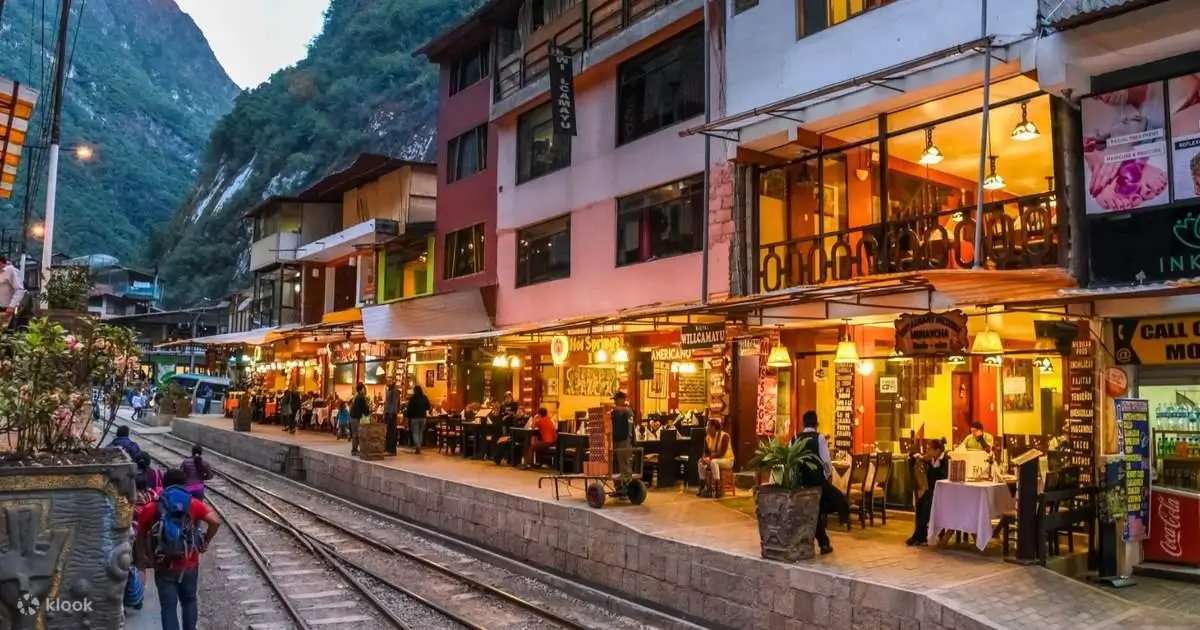
Aguas Calientes, also called Machu Picchu Pueblo, is the small town at the base of Machu Picchu — the last stop by train before the site, and where you’ll sleep if your trip includes an overnight rather than a same-day return. It exists almost entirely because of the ruins above it: there’s no road connecting it to Cusco, only the railway and a walking trail, which keeps the town compact and easy to cover on foot. Below, we cover what’s actually here — the thermal baths, the butterfly house, the food scene, and why you’ll likely sleep better here than in Cusco.
What Aguas Calientes is and why it exists
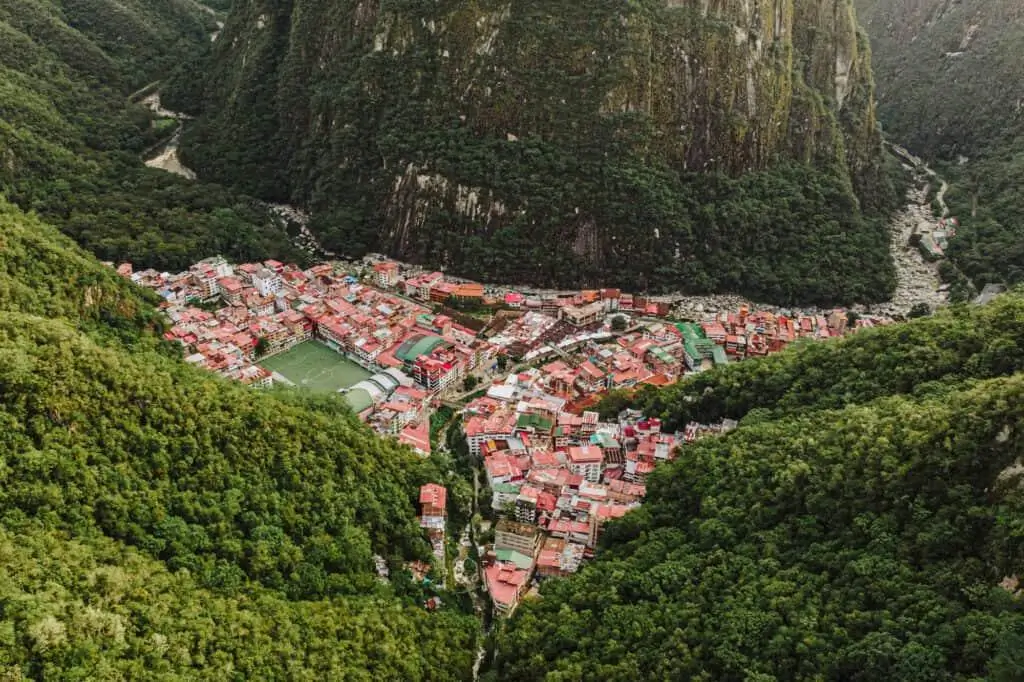
Aguas Calientes sits in a river valley below Machu Picchu, accessible only by train or on foot — there’s no road link to Cusco. The town grew up specifically to serve visitors to the ruins, so almost everything here is oriented around that: hotels, restaurants, souvenir shops, and the train station at its centre. It’s small enough to walk end to end in a matter of minutes, which makes it easy to settle into once you arrive. For the bigger picture of how a visit to the ruins actually works, our complete Machu Picchu guide covers the site itself in full.
Arriving by train: the station and the town layout
Trains from Ollantaytambo arrive directly into the town centre, putting you within walking distance of hotels, restaurants and the CONSETTUR bus terminal the moment you step off. The town is built along the river and a set of narrow streets climbing the hillside behind it, with the main plaza and market a short walk from the station. Because everything is close together, you won’t need any transport once you’re here — it’s a walking town from the moment you arrive.
For the full journey from Cusco, including the train itself, how to get to Machu Picchu from Cusco breaks down each leg of the trip.
The thermal baths
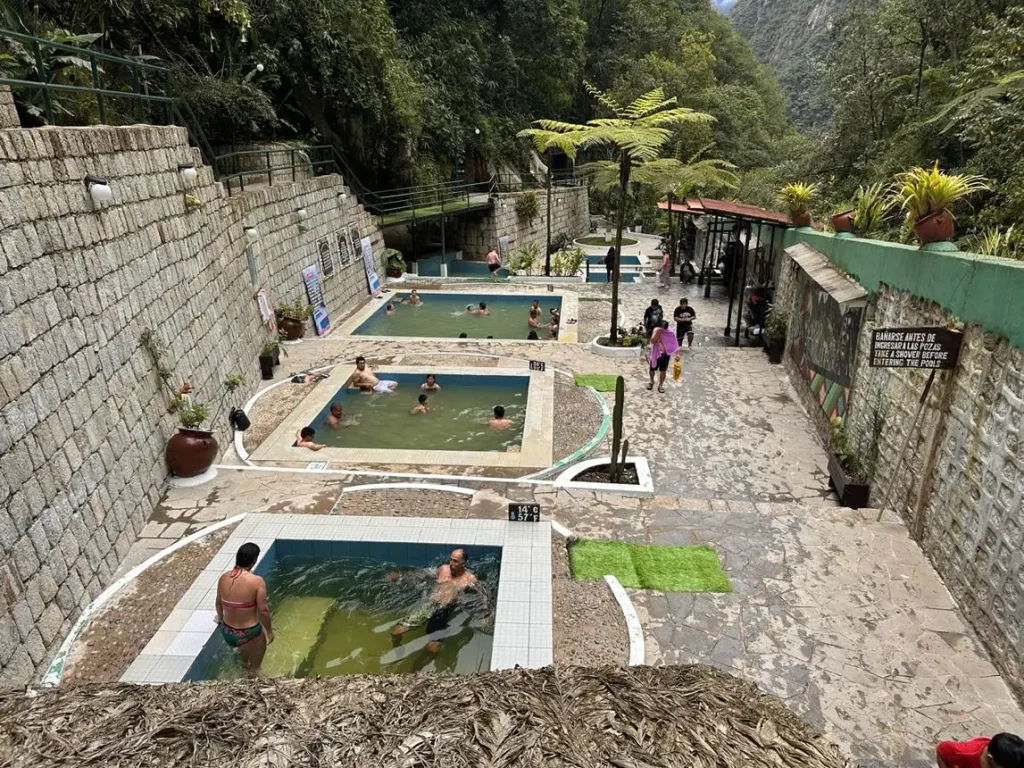
Aguas Calientes takes its name from its thermal baths, a genuine local feature and part of what gives the town its identity beyond being a gateway to the ruins. They’re a popular way to unwind after a day at altitude and on your feet, and they’re one of the stops included on our 14-Day Peru Mystic Tour itinerary. If you’re staying overnight, they’re worth building into your evening rather than treating as an afterthought.
The butterfly house and the museums
Beyond the baths, the town has a butterfly house and small museums that give you something to do beyond the ruins themselves — both also feature in our 14-day itinerary as part of a fuller exploration of the area. They’re low-key, easy additions to an afternoon if you have time before or after your Machu Picchu visit, rather than full half-day commitments.
Eating in town: expectations vs reality
Because Aguas Calientes exists for visitors, the restaurant scene leans heavily toward tourist-facing menus — pizza, pasta, and international comfort food alongside Peruvian options. It’s not the place for the most authentic Cusco-style cooking, but it’s convenient, and the range is wide enough that you won’t struggle to find something after a long day. Expect prices a notch above what you’d pay in Cusco, which is typical for a town this dependent on tourism and this hard to reach by road.
Altitude here vs Cusco: why you sleep better
This is one of the more useful things to know before you arrive: Machu Picchu, and Aguas Calientes with it, sits at 2,430 m (7,972 ft) — noticeably lower than Cusco’s 3,399 m (11,152 ft). For a lot of travellers, that difference translates directly into a better night’s sleep, since the effects of altitude generally ease the lower you go. If you’ve had a rough first day or two adjusting in Cusco, arriving here often feels like relief rather than more adjustment.
| Location | Altitude | What it means for sleep |
|---|---|---|
| Cusco | 3,399 m (11,152 ft) | Highest point of most itineraries; where altitude effects are most noticeable |
| Sacred Valley | approx. 2,800 m | A step down from Cusco, often used to ease acclimatization |
| Aguas Calientes / Machu Picchu | 2,430 m (7,972 ft) | Lowest point on the route; many travellers sleep more easily here |
How long to stay
Some travellers pass through Aguas Calientes for just a few hours between the train and their guided visit, heading straight back to the Sacred Valley or Cusco the same day. Others build in an overnight, which gives more breathing room for the baths, the museums, and a relaxed dinner without rushing for a train. Which approach suits you depends on your itinerary and pace — overnight vs same-day return walks through the trade-offs of each in detail.
If you do stay overnight, where to stay in Aguas Calientes covers what to look for, and once you’re ready to head up, the bus from Aguas Calientes explains how that final leg to the ruins works.
For travellers who want this whole experience built into a longer trip rather than a standalone visit, the 8-day Cusco and Machu Picchu tour includes time in Aguas Calientes as part of a fuller Sacred Valley itinerary, and for a focused two-day version, our 2-day Machu Picchu tour from Cusco covers the essentials without the longer commitment.
Frequently asked questions
Is Aguas Calientes the same as Machu Picchu Pueblo?
Yes, they’re the same town — Machu Picchu Pueblo is its official name, though it’s commonly known as Aguas Calientes.
Can you drive to Aguas Calientes?
No. There’s no road connecting it to Cusco or the Sacred Valley; it’s accessible only by train or on foot.
Is it worth staying overnight in Aguas Calientes?
It depends on your itinerary and pace. An overnight gives you more time for the thermal baths and museums without rushing, while a same-day visit works well if you’d rather not add an extra night away from Cusco.
Why do people sleep better in Aguas Calientes than in Cusco?
Aguas Calientes and Machu Picchu sit at 2,430 m, noticeably lower than Cusco at 3,399 m. Many travellers find the lower altitude here eases sleep, especially after adjusting to Cusco first.